Bill · H.R. 4101· House(119-HR-4101)
Cancer Drug Parity Act of 2025
- Introduced
- 6/24/2025
- Last activity
- 6/24/2025 — Referred to the House Committee on Education and Workforce.
- Sponsored by
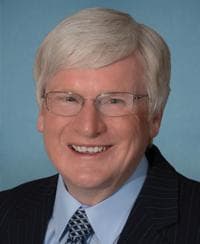
- Glenn Grothman
- Cosponsors
- - 5 - 26
- Introduced
- In Committee
What this bill would do
The Cancer Drug Parity Act of 2025 aims to amend the Employee Retirement Income Security Act of 1974. It would require group health plans to ensure cost-sharing for oral anticancer drugs is no less favorable than the cost-sharing for medications administered by a health care provider. This applies to FDA-approved medications used to kill, slow, or prevent the growth of cancerous cells that are deemed medically necessary or clinically appropriate by a physician. The bill also prevents plans from changing benefits in ways that increase out-of-pocket costs for these drugs. These changes would take effect for plan years beginning on or after January 1, 2026. Additionally, the Act mandates a GAO study to assess the impact of these changes on out-of-pocket costs.
Yes· 3 of 7
Does this make health care easier to get in general?+6
By lowering financial barriers to oral cancer medications, the bill improves access to essential treatment.
Does this give people more protection from unfair business practices?+6
The bill protects consumers from unfair out-of-pocket cost increases for vital cancer medications.
Does this lower the price of prescription medicines?+5
The bill reduces out-of-pocket costs for specific oral anticancer drugs through parity requirements.
The opposite
Would business owners be better off under this?-2
Employers may face slightly higher costs to maintain specific benefit structures.
Who it would affect, and how
Potential Positive Impacts for People
-
Reduced out-of-pocket costs for oral medications: Group health plans would be required to provide cost-sharing for prescribed, patient-administered anticancer medications that is no less favorable than the cost-sharing for medications administered intravenously or injected by a health care provider (Section 2(a)).
-
Protection against cost increases: The bill prevents health plans from changing benefits or replacing existing benefits in ways designed to increase out-of-pocket costs or reclassify benefits to increase costs for anticancer medications (Section 2(c)).
-
Protection against restrictive limitations: Plans are prohibited from applying more restrictive limitations on prescribed oral anticancer medications than on those that are administered intravenously or injected (Section 2(c)).
-
Data-driven insights for future access: The GAO is required to conduct a study to assess the impact of this law on out-of-pocket costs and provide recommendations to Congress on how to reduce financial barriers to accessing these medications (Section 3).
Potential Negative Impacts for People
-
Existing utilization controls remain: The bill does not prevent group health plans from requiring prior authorization or imposing other appropriate utilization controls when approving coverage for chemotherapy (Section 2(d)).
-
No requirement for specific medication types: The law does not require a group health plan to use orally administered anticancer medications as a replacement for other anticancer medications (Section 2(d)).
Groups and Interests Ranking
Every group the model scored this bill for, from -10 to +10. Hover a score for the reason it gave.
- Healthcare
- Improves Healthcare Access+6Reduces Prescription Drug Costs+5
- Governance And Ideology
- Improves Government Transparency+4Increases Federal Power+3
- Demographic And Interest Groups
- Good For Low Income Households+4Good For Middle Class Households+4Good For Business Owners-2
- Economy And Finance
- Improves Consumer Protection+6
- 10/9/2026
- 2 Cosponsors added.
- 8/20/2026
- 1 Cosponsor added.
- 7/27/2026
- 1 Cosponsor added.
- 3/16/2026
- 1 Cosponsor added.
- 12/18/2025
- 2 Cosponsors added.
- 11/7/2025
- 3 Cosponsors added.
- 10/24/2025
- 1 Cosponsor added.
- 10/21/2025
- 1 Cosponsor added.
- 10/17/2025
- 1 Cosponsor added.
- 10/8/2025
- 1 Cosponsor added.
- 10/3/2025
- 1 Cosponsor added.
- 9/30/2025
- 1 Cosponsor added.
- 9/15/2025
- 2 Cosponsors added.
- 9/9/2025
- 1 Cosponsor added.
- 6/25/2025
- 2 Cosponsors added.
- 6/24/2025
- Referred to the House Committee on Education and Workforce.
- 10 Cosponsors added.
- Introduced in House
One bill Congress.gov lists as related to this one — companions in the other chamber, earlier versions, and bills this one absorbed or was folded into.
 Gus Bilirakis
Republican · Florida
 Suzanne Bonamici
Democrat · Oregon
 Julia Brownley
Democrat · California
 Becca Balint
Democrat · Vermont
 Janelle Bynum
Democrat · Oregon
 Robert Bresnahan
Republican · Pennsylvania
 Ed Case
Democrat · Hawaii
 Kathy Castor
Democrat · Florida
 Herbert Conaway
Democrat · New Jersey
 Donald Davis
Democrat · North Carolina
 Sharice Davids
Democrat · Kansas
 Brian Fitzpatrick
Republican · Pennsylvania
 John Garamendi
Democrat · California
 Chrissy Houlahan
Democrat · Pennsylvania
 Jonathan Jackson
Democrat · Illinois
 William Keating
Democrat · Massachusetts
 Timothy Kennedy
Democrat · New York
 Gwen Moore
Democrat · Wisconsin
 Doris Matsui
Democrat · California
 Joseph Morelle
Democrat · New York
 Eleanor Norton
Democrat · District of Columbia
 Joe Neguse
Democrat · Colorado
 Chellie Pingree
Democrat · Maine
 Mark Pocan
Democrat · Wisconsin
 Chris Pappas
Democrat · New Hampshire
 Deborah Ross
Democrat · North Carolina
 Jamie Raskin
Democrat · Maryland
 Andrea Salinas
Democrat · Oregon
 Derek Schmidt
Republican · Kansas
 Eugene Vindman
Democrat · Virginia
 Joe Wilson
Republican · South Carolina