
A Democratic bill with 18 Democratic cosponsors · See all 18 cosponsors
Last activity — Referred to the House Committee on Education and Workforce.
In committee
Introduced and handed to a committee in the chamber it started in.
The committee holds it, and most bills are never heard from again. A hearing or a committee vote would be news; silence is the usual outcome, and it kills the bill without anyone voting against it.
Its path through Congress
- Introduced
- In Committee
What this bill would do
The Reimagining Inclusive Arts Education Act authorizes the Secretary of Education to award competitive grants to eligible entities. These grants are intended to fund professional development for arts educators and creative arts therapists to help them better accommodate children with disabilities. The program focuses on promoting curricula, best practices, and innovative approaches in elementary and secondary schools. The Secretary is tasked with ensuring these funds increase access and improve inclusion for students with disabilities. This includes adapting classroom materials and lessons to meet their specific needs.
Yes· 3 of 7
- Scored +8
Would people with disabilities be better off under this?
The bill's primary purpose is to improve the inclusion and accommodation of children with disabilities in arts education.
- Scored +7
Would children be better off under this?
The bill specifically targets improving inclusion and accessibility for children in arts education.
- Scored +7
Does this expand the rights of people with disabilities?
The bill directly funds professional development and curriculum adaptation to improve inclusion for children with disabilities.
The opposite
No question was scored the opposite.
Who it would affect, and how
Potential Positive Impacts for People
-
Improved Inclusion for Students: The bill aims to increase access and improve the inclusion of children with disabilities in arts education through new curricula and best practices (Section 2(d)(1)).
-
Enhanced Learning Materials: Grants can be used to adapt classroom materials and lessons specifically to accommodate children with disabilities (Section 2(d)(2)).
-
Support for Specialized Therapies: The bill supports the use of creative arts therapies to help students support academic goals, facilitate communication, and improve social, cognitive, and motor skills (Section 2(f)(3)).
-
Priority for High-Need Schools: The Secretary is directed to give priority to entities serving schools that receive funds under title I of the Elementary and Secondary Education Act of 1965 (Section 2(e)(4)).
-
Geographic and Socioeconomic Diversity: The Secretary is directed to distribute grants among entities serving geographically diverse areas, including urban, suburban, and rural areas, as well as Indian tribes and varying socioeconomic areas (Section 2(e)(5)).
-
Feedback for Applicants: If a grant application is denied, the Secretary must provide the reasons for the denial and recommended changes for future applications (Section 2(e)(2)(A)).
Potential Negative Impacts for People
-
Grant Limitations for Local Agencies: A local educational agency cannot receive a grant if it is served by a State educational agency that has already been awarded a grant under this section (Section 2(c)(1)).
-
Restrictions on Partnerships: Certain entities within a partnership are prohibited from receiving a grant if they are already part of another partnership that received a grant (Section 2(c)(2)).
-
Time Constraints on Funding: Grants are limited to a period of no more than 3 years (Section 2(e)(1)).
Groups and Interests Ranking
Every group the model scored this bill for, from -10 to +10. Tap or hover a score for the reason it gave.
- Demographic And Interest Groups
- Would people with disabilities be better off under this? — The bill's primary purpose is to improve the inclusion and accommodation of children with disabilities in arts education. Would children be better off under this? — The bill specifically targets improving inclusion and accessibility for children in arts education. Would students be better off under this? — The bill provides resources to enhance the educational experience and accessibility for students. Would households on low incomes be better off under this? — The bill prioritizes schools receiving Title I funds, which often serve low-income communities. Would Native Americans be better off under this? — The bill explicitly directs the Secretary to ensure grant distribution includes Indian tribes.
- Social Issues And Justice
- Does this expand the rights of people with disabilities? — The bill directly funds professional development and curriculum adaptation to improve inclusion for children with disabilities.
- Education And Technology
- Does this put more money into public schools? — The bill authorizes $15 million in new grants specifically for professional development in arts education.
- 12/1/2025
- 1 Cosponsor added.
- 9/3/2025
- 1 Cosponsor added.
- 7/14/2025
- 1 Cosponsor added.
- 6/24/2025
- 1 Cosponsor added.
- 6/12/2025
- 1 Cosponsor added.
- 6/11/2025
- 2 Cosponsors added.
- 6/9/2025
- Referred to the House Committee on Education and Workforce.
- 11 Cosponsors added.
- Introduced in House
One bill Congress.gov lists as related to this one — companions in the other chamber, earlier versions, and bills this one absorbed or was folded into.
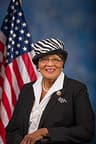 Alma Adams
Democrat · North Carolina
 Sean Casten
Democrat · Illinois
 Dwight Evans
Democrat · Pennsylvania
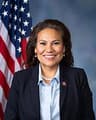 Veronica Escobar
Democrat · Texas
 Maxwell Frost
Democrat · Florida
 Shomari Figures
Democrat · Alabama
 Henry Johnson
Democrat · Georgia
 Julie Johnson
Democrat · Texas
 Summer Lee
Democrat · Pennsylvania
 James McGovern
Democrat · Massachusetts
 Lucy McBath
Democrat · Georgia
 Seth Magaziner
Democrat · Rhode Island
 Eleanor Norton
Democrat · District of Columbia
 Janice Schakowsky
Democrat · Illinois
 Darren Soto
Democrat · Florida
 Mary Gay Scanlon
Democrat · Pennsylvania
 Melanie Stansbury
Democrat · New Mexico
 Bennie Thompson
Democrat · Mississippi