Bill · H.R. 3835· House(119-HR-3835)
Veterans Appeals Efficiency Act of 2025
- Introduced
- 6/9/2025
- Last activity
- 6/24/2025 — Subcommittee Hearings Held
- Sponsored by
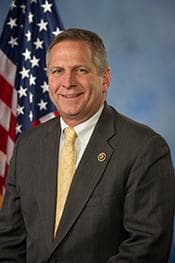
- Mike Bost
- Cosponsors
- - 9 - 5
- Introduced
- In Committee
What this bill would do
The Veterans Appeals Efficiency Act of 2025 aims to improve how the Secretary of Veterans Affairs handles benefit claims and appeals. It requires the Secretary to submit annual reports regarding the length of claim adjudications and the number of appeals dismissed. The bill establishes new guidelines for advancing cases and requires the use of technology to track various types of claims. Additionally, it grants the Board of Veterans' Appeals the authority to combine multiple appeals that share common legal or factual questions. The act also expands the jurisdiction of the Court of Appeals for Veterans Claims and mandates studies on issuing precedential decisions.
Yes· 3 of 6
Would veterans be better off under this, taking everything together?+5
The bill streamlines the appeals process and enhances judicial oversight to help veterans receive timely decisions on their benefit claims.
Does this increase the pay, pensions or support veterans receive?+5
The act aims to improve the efficiency of benefit claims and appeals through standardized guidelines, technology tracking, and the ability to aggregate similar cases.
Does this make what the government does easier for the public to see?+4
The bill mandates annual reports to Congress regarding the length of adjudications, case advancements, and dismissal statistics.
The opposite
No question was scored the opposite.
Who it would affect, and how
Potential Positive Impacts for People
-
Increased Accountability through Reporting: The Secretary must submit annual reports regarding the average time claims remain pending after a remand and the number of appeals dismissed (Section 2(a)). This provides transparency on how long veterans are waiting for decisions.
-
Standardized Case Advancement: The Secretary will prescribe specific guidelines for advancing cases on the docket, including what evidence can be used (Section 2(b)). This creates a clearer process for those seeking earlier consideration of their cases.
-
Improved Tracking of Claims: The bill requires the use of technology to track specific claim types, such as those pending a hearing or those remanded by the Board (Section 2(c)(1)). This ensures the agency maintains better information on the status and timeliness of various claims.
-
Efficiency through Aggregation: The Chairman of the Board can now aggregate multiple appeals that involve common questions of law or fact (Section 2(d)(1)). This could lead to faster resolutions for veterans facing similar issues.
-
Enhanced Court Oversight: The Court of Appeals for Veterans Claims is granted supplemental jurisdiction over certain class actions and the authority to issue limited remands (Section 2(e)). This allows the court to ensure the Board addresses specific questions of law or fact or provides adequate reasons for its decisions.
Potential Negative Impacts for People
-
Lack of Clarity on Aggregation: While aggregating claims is intended for efficiency, the bill requires a five-year report to assess if this practice actually contributes to improved efficiency at the Board (Section 2(d)(1)(A) and Section 2(d)(3)).
-
Potential for Waivers of Remands: The Secretary can ensure compliance with Board decisions, but an agency of original adjudication may waive the requirement to comply with a remand if they determine the evidence added is sufficient or the decision was unnecessary (Section 2(d)(2)(B)).
Groups and Interests Ranking
Every group the model scored this bill for, from -10 to +10. Hover a score for the reason it gave.
- Governance And Ideology
- Improves Due Process+4Improves Government Transparency+4
- Demographic And Interest Groups
- Good For Veterans+5
- National Security And Foreign Policy
- Improves Veterans Benefits+5
- Economy And Finance
- Improves Fiscal Responsibility+2
- Education And Technology
- Increases Scientific Research Funding+2
- 10/9/2026
- 1 Cosponsor added.
- 2/2/2026
- 1 Cosponsor added.
- 10/31/2025
- 1 Cosponsor added.
- 9/2/2025
- 1 Cosponsor added.
- 8/8/2025
- 1 Cosponsor added.
- 7/23/2025
- 1 Cosponsor added.
- 6/25/2025
- 1 Cosponsor added.
- 6/24/2025
- Subcommittee Hearings Held
- 6/23/2025
- Referred to the Subcommittee on Disability Assistance and Memorial Affairs.
- 6/12/2025
- 1 Cosponsor added.
- 6/9/2025
- Referred to the House Committee on Veterans' Affairs.
- 6 Cosponsors added.
- Introduced in House
One bill Congress.gov lists as related to this one — companions in the other chamber, earlier versions, and bills this one absorbed or was folded into.
 Gus Bilirakis
Republican · Florida
 Andy Barr
Republican · Kentucky
 Don Bacon
Republican · Nebraska
 Tom Barrett
Republican · Michigan
 Jason Crow
Democrat · Colorado
 Jared Golden
Democrat · Maine
 Laura Gillen
Democrat · New York
 John James
Republican · Michigan
 Thomas Kean
Republican · New Jersey
 Michael Lawler
Republican · New York
 Joe Neguse
Democrat · Colorado
 Elise Stefanik
Republican · New York
 Mark Takano
Democrat · California
 David Valadao
Republican · California