Bill · H.R. 3816· House(119-HR-3816)
Weather Act Reauthorization Act of 2025

- Introduced
- 6/6/2025
- Last activity
- 6/6/2025 — Referred to the Committee on Science, Space, and Technology, and in addition to the Committees on Natural Resources, Energy and Commerce, and Foreign Affairs, for a period to be subsequently determined by the Speaker, in each case for consideration of such provisions as fall within the jurisdiction of the committee concerned.
- Sponsored by
- Frank Lucas
- Cosponsors
- - 12 - 7
- Introduced
- In Committee
What this bill would do
The "Weather Research and Forecasting Innovation Reauthorization Act of 2025" aims to upgrade the National Oceanic and Atmospheric Administration's weather research and forecasting capabilities. It focuses on improving predictions for various weather events, including tornadoes, hurricanes, tsunamis, and landslides, to protect lives and property. The legislation seeks to expand commercial opportunities for weather data and modernize observational systems through new technologies like artificial intelligence. Additionally, it outlines plans for improving aviation weather services, agriculture, water management, and heat-related health protections. The act also includes provisions for Arctic weather monitoring and increased support for Native Hawaiian, Indian, and Tribal organizations.
Yes· 3 of 8
Would Native Americans be better off under this?+6
The bill provides significant support and consultation rights for Indian Tribes and Native Hawaiian organizations.
Does this put more money into scientific research?+6
The bill authorizes significant funding for meteorological, satellite observations, and environmental research programs.
Would farmers be better off under this?+5
Improved weather and water forecasting provides significant benefits to agricultural communities.
The opposite
No question was scored the opposite.
Who it would affect, and how
Potential Positive Impacts for People
-
Improved Life and Property Protection: The bill prioritizes public safety by focusing on accurate and timely weather forecasts to protect lives and property (Section 101).
-
Enhanced Tornado Warnings: A dedicated program aims to improve the effectiveness, timeliness, and lead time of tornado forecasts and warnings (Section 103).
-
Improved Hurricane Forecasting: Provisions are included to improve the understanding and prediction of hurricane intensity changes and projected paths to reduce loss of life (Section 104).
-
Improved Tsunami Safety: The act reauthorizes the Tsunami Warning and Education Act to improve the accuracy and timeliness of tsunami forecasts and warnings (Section 105).
-
Better Aviation Safety: The bill includes an airborne observation program to provide critical atmospheric sensor data and improved turbulence forecasting for the protection of lives and property (Section 206).
-
Support for Vulnerable Areas: It aims to ensure equitable weather observation coverage in regions that are under-observed or highly vulnerable to weather impacts (Section 203).
-
Improved Coastal Protection: A program is established to improve forecasts for coastal flooding and storm surges to reduce loss of life or property (Section 205).
-
Support for Minority-Serving Institutions: In awarding research grants for tornado research, the Under Secretary may prioritize minority-serving institutions (Section 103).
-
Enhanced Vessel Safety and Economic Stability: A project to improve coastal marine fog forecasts aims to increase safety for vessels and reduce economic losses caused by fog events (Section 213(b)).
-
Improved Agricultural and Water Management: New pilot projects are designed to improve subseasonal-to-seasonal forecasting, which helps in managing water during droughts and supports agriculture in the central United States (Section 501(a)(1)).
-
Greater Heat-Related Health Protections: The creation of a National Integrated Heat Health Information System is intended to reduce health risks and impacts from extreme heat (Section 704(a)).
-
Increased Drought Resilience: The bill enhances the National Integrated Drought Information System to include flash drought research and better tools for timely responses (Section 502(a)(1)).
-
Support for Local Communities and Research: The National Mesonet Program provides financial and technical assistance to State, Tribal, private, and academic entities to expand environmental monitoring (Section 503(c)(1)).
-
Improved Public Communication of Hazards: The legislation mandates a program to simplify and improve how the risks of hazardous weather and water events are communicated to the public (Section 402(a)).
-
Improved Landslide Risk Assessment: The bill requires the Secretary to assess risks from atmospheric river flooding and extreme precipitation events (Section 3(b)(1)(C)(B)), which helps protect life and property.
-
Increased Support for Native and Tribal Communities: By explicitly including Native Hawaiian organizations, Indian tribes, and Tribal organizations in preparedness and emergency response provisions, the bill ensures these groups are active decision-makers (Section s 3(b)(4) and 3(b)(6)).
-
Enhanced Regional Research: The creation of regional partnerships, such as in Alaska, allows the Secretary to leverage local expertise and coordinate long-term landslide research (Section 3(e)(1)).
-
Better Arctic Weather Monitoring: The establishment of a meteorological observation network in the Arctic region is intended to support weather and environmental monitoring (Section 901(a) and (d)).
-
Improved Data Access: The authorization for mobile applications and web-based tools aims to increase the utility of and access to NOAA's data, services, and products (Section 903(d)).
-
Technical Assistance for Pacific Islands: The bill allows for technical assistance and services to be provided to Pacific Island parties to support their unique needs (Section 903(a)).
Potential Negative Impacts for People
-
Restrictions on Information Access: The Under Secretary has the authority to withhold certain weather models or data if it is deemed necessary to protect national security interests (Section (i)(1)).
-
Potential for Data Gaps during Transitions: As the National Weather Service moves to a new commercial off-the-shelf instant messaging solution, there is a focus on ensuring it can handle increased users and growth to avoid service disruptions (Section 404(b)).
-
Economic and Social Risks from Environmental Changes: While not a direct burden of the bill, the text acknowledges that various environmental stressors and the costs of hypoxia can have significant negative economic and social impacts (Section 602(a)(1)(B)).
-
Increased Funding Requirements for Landslide Systems: The bill mandates that at least $10,000,000 be used for the purchase, deployment, and repair of landslide early warning systems in high-risk areas (Section 3(i)(1)).
-
Potential for Unfunded Agency Needs: The requirement for the NOAA Administrator to submit lists of unfunded priorities and capital investment plans highlights that there are mission-critical needs regarding infrastructure, aircraft, and vessels that have not yet been funded (Section 902(a)).
Groups and Interests Ranking
Every group the model scored this bill for, from -10 to +10. Hover a score for the reason it gave.
- Demographic And Interest Groups
- Good For Native Americans+6Good For Farmers+5Good For Rural Residents+5
- Environment Energy And Infrastructure
- Improves Disaster Relief And F E M A+5Improves Environmental Protections+5
- Education And Technology
- Increases Scientific Research Funding+6
- Healthcare
- Improves Healthcare Access+5
- Economy And Finance
- Improves Economic Growth+3
- 10/1/2026
- 1 Cosponsor added.
- 8/3/2026
- 1 Cosponsor added.
- 6/17/2025
- 2 Cosponsors added.
- 6/6/2025
- Referred to the Committee on Science, Space, and Technology, and in addition to the Committees on Natural Resources, Energy and Commerce, and Foreign Affairs, for a period to be subsequently determined by the Speaker, in each case for consideration of such provisions as fall within the jurisdiction of the committee concerned.
- 15 Cosponsors added.
- Introduced in House
6 bills Congress.gov lists as related to this one — companions in the other chamber, earlier versions, and bills this one absorbed or was folded into.
- 119-HR-2250: National Landslide Preparedness Act Reauthorization Act of 2025
- 119-HR-3704: Coordinated Federal Response to Extreme Heat Act of 2025
- 119-HR-4073: Tsunami Warning, Research, and Education Act of 2025
- 119-S-325: Coordinated Federal Response to Extreme Heat Act of 2025
- 119-S-1626: National Landslide Preparedness Act Reauthorization Act of 2025
- 119-S-3795: Radar Next Program Act of 2026
 Stephanie Bice
Republican · Oklahoma
 Suzanne Bonamici
Democrat · Oregon
 Eric Crawford
Republican · Arkansas
 Randy Feenstra
Republican · Iowa
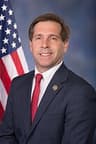 Charles Fleischmann
Republican · Tennessee
 Scott Franklin
Republican · Florida
 Mike Flood
Republican · Nebraska
 Maxwell Frost
Democrat · Florida
 Thomas Kean
Republican · New Jersey
 Zoe Lofgren
Democrat · California
 Summer Lee
Democrat · Pennsylvania
 James Moylan
Republican · Guam
 Max Miller
Republican · Ohio
 Tim Moore
Republican · North Carolina
 Deborah Ross
Democrat · North Carolina
 Haley Stevens
Democrat · Michigan
 Eric Sorensen
Democrat · Illinois
 Claudia Tenney
Republican · New York
 Randy Weber
Republican · Texas