
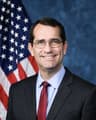
Mike Flood (R-NE)
Weather Workforce Improvement Act
A Republican bill with 5 Democratic cosponsors · See all 8 cosponsors
Last activity — Referred to the House Committee on Science, Space, and Technology.
In committee
Introduced and handed to a committee in the chamber it started in.
The committee holds it, and most bills are never heard from again. A hearing or a committee vote would be news; silence is the usual outcome, and it kills the bill without anyone voting against it.
Its path through Congress
- Introduced
- In Committee
What this bill would do
The Weather Workforce Improvement Act aims to allow the Director of the National Weather Service to hire staff more quickly for essential roles. It grants direct hire authority for specific positions like meteorologists, hydrologists, and technicians to address critical staffing needs. These positions are considered vital for public safety, specifically regarding tasks like launching weather balloons. The bill also requires assessments regarding hiring timelines and the health and morale of employees working rotating shifts. This new authority is temporary and will expire after two years or once vacancies are filled.
Yes· 3 of 6
- Scored +3
Is this likely to create jobs?
The bill facilitates more efficient hiring for critical federal positions within the National Weather Service.
- Scored +2
Does this improve help for people hit by a disaster?
Better weather forecasting improves disaster preparedness and response capabilities.
- Scored +1
Is this likely to grow the economy?
Enhanced weather forecasting supports economic stability and protects property.
The opposite
No question was scored the opposite.
Who it would affect, and how
Potential Positive Impacts for People
-
Expedited Hiring for Essential Roles: The bill allows the Director of the National Weather Service to use direct hire authority for various roles, such as meteorologists, hydrologists, and computer specialists, to fill critical vacancies more quickly (Section 3(a)).
-
Public Safety and Economic Stability: The bill emphasizes that accurate and timely weather forecasting is vital for protecting lives, property, and the national economy (Section 2; Section 3(d)(1)(A)).
-
Focus on Employee Well-being: The bill requires assessments of medical impacts, such as stress and long-term health, as well as employee morale resulting from rotating shift work (Section 3(d)(2)(b)(1)).
-
Mitigation of Work-Related Stress: The assessments may include recommendations for improving benefits and options for mitigating the negative impacts of required rotating shift work on employees (Section 3(d)(2)(b)(3)).
Potential Negative Impacts for People
- Temporary Nature of Authority: The direct hire authority granted to the Director is subject to a sunset provision, meaning it expires after two years or once the specific staffing needs are met (Section 3(b)).
Groups and Interests Ranking
Every group the model scored this bill for, from -10 to +10. Tap or hover a score for the reason it gave.
- Economy And Finance
- Is this likely to create jobs? — The bill facilitates more efficient hiring for critical federal positions within the National Weather Service. Is this likely to grow the economy? — Enhanced weather forecasting supports economic stability and protects property.
- Environment Energy And Infrastructure
- Does this improve help for people hit by a disaster? — Better weather forecasting improves disaster preparedness and response capabilities.
- Governance And Ideology
- Does this make what the government does easier for the public to see? — The bill mandates periodic assessments of hiring timelines and employee health/morale. Does this give the federal government more power? — The bill grants expanded direct hire authority to a federal agency director.
- Education And Technology
- Does this put more money into scientific research? — The bill enhances the workforce capacity for essential meteorological and hydrological scientific roles.
- 11/17/2025
- 1 Cosponsor added.
- 7/17/2025
- 1 Cosponsor added.
- 6/25/2025
- 1 Cosponsor added.
- 6/24/2025
- 1 Cosponsor added.
- 6/6/2025
- Referred to the House Committee on Science, Space, and Technology.
- 4 Cosponsors added.
- Introduced in House
 Chuck Edwards
Republican · North Carolina
 Frank Lucas
Republican · Oklahoma
 Jared Moskowitz
Democrat · Florida
 Joe Neguse
Democrat · Colorado
 Jimmy Panetta
Democrat · California
 Eric Sorensen
Democrat · Illinois
 Derek Schmidt
Republican · Kansas
 Eugene Vindman
Democrat · Virginia