Bill · H.R. 3703· House(119-HR-3703)
Excess Urban Heat Mitigation Act of 2025
- Introduced
- 6/4/2025
- Last activity
- 6/4/2025 — Referred to the House Committee on Financial Services.
- Sponsored by
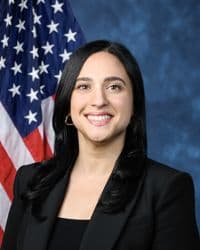
- Yassamin Ansari
- Cosponsors
- - 30 - 0
- Introduced
- In Committee
What this bill would do
The Excess Urban Heat Mitigation Act of 2025 directs the Secretary of Housing and Urban Development to create a grant program to combat extreme heat in urban areas. This program targets heat-related health and economic risks caused by manmade factors like low vegetation and high building density. A significant portion of the funds is set aside for projects in high-poverty census tracts to address disproportionate heat exposure. Eligible entities can apply for funds to implement projects such as tree planting, creating cooling centers, or installing cool roofs. The Act includes provisions for technical assistance and an oversight board to evaluate project success. It authorizes $30,000,000 in appropriations for each fiscal year from 2026 through 2033.
Yes· 3 of 13
Would people in cities be better off under this?+7
The bill provides direct funding for heat mitigation projects specifically in urban areas.
Would households on low incomes be better off under this?+6
The bill prioritizes high-poverty census tracts for heat mitigation projects.
Does this better protect air, water and wildlife?+5
The bill addresses environmental justice and heat-related environmental risks in urban areas.
The opposite
No question was scored the opposite.
Who it would affect, and how
Potential Positive Impacts for People
- Mitigating Heat-Related Health Risks: The bill addresses heat stress, which is a leading weather-related cause of death and a cause of respiratory problems (Section 2).
- Targeted Support for Underserved Communities: By requiring that at least 75 percent of grants go to "covered census tracts," the bill directs resources to areas with higher poverty rates and higher temperatures (Section 4(b)).
- Diverse Heat Mitigation Strategies: People can benefit from various projects including tree planting, the construction of cooling centers, and the implementation of cool roofs or pavements (Section 3(4)).
- Economic Relief: The program aims to mitigate rising costs associated with roadway maintenance, energy costs, and health care infrastructure (Section 2).
- Community Empowerment: The application process requires a plan to engage communities, fostering relationships with local organizations and empowering members to participate in decision making (Section 4(d)).
- Technical Support for Local Entities: Up to 3 percent of funds can be used to provide technical assistance to help entities apply for and implement grants (Section 4(c)).
Potential Negative Impacts for People
- Financial Burden on Local Entities: Under the matching requirement, the Federal share of a project's cost is generally capped at 80 percent, meaning entities may need to secure significant local funding (Section 4(e)).
- Administrative Complexity: Applicants must provide robust engagement plans and address intersections between health, the environment, and the built environment, which may increase the burden of the application process (Section 4(d)).
Groups and Interests Ranking
Every group the model scored this bill for, from -10 to +10. Hover a score for the reason it gave.
- Environment Energy And Infrastructure
- Improves Environmental Protections+5Improves Public Transit+3Reduces Carbon Emissions+3Improves Roads And Bridges+2Increases Renewable Energy Investment+2
- Demographic And Interest Groups
- Good For Urban Residents+7Good For Low Income Households+6
- Social Issues And Justice
- Improves Racial Equity+5Improves Poverty Reduction+3
- Governance And Ideology
- Increases Federal Power+2Improves Government Transparency+1
- Economy And Finance
- Improves Economic Growth+1
- Healthcare
- Reduces Hospital Costs+1
- 12/9/2025
- 1 Cosponsor added.
- 11/20/2025
- 1 Cosponsor added.
- 6/17/2025
- 1 Cosponsor added.
- 6/12/2025
- 2 Cosponsors added.
- 6/9/2025
- 1 Cosponsor added.
- 6/4/2025
- Referred to the House Committee on Financial Services.
- 24 Cosponsors added.
- Introduced in House
One bill Congress.gov lists as related to this one — companions in the other chamber, earlier versions, and bills this one absorbed or was folded into.
 Nanette Barragán
Democrat · California
 Wesley Bell
Democrat · Missouri
 Judy Chu
Democrat · California
 Salud Carbajal
Democrat · California
 Sean Casten
Democrat · Illinois
 Debbie Dingell
Democrat · Michigan
 Maxine Dexter
Democrat · Oregon
 Dwight Evans
Democrat · Pennsylvania
 Valerie Foushee
Democrat · North Carolina
 Robert Garcia
Democrat · California
 Adelita Grijalva
Democrat · Arizona
 Steven Horsford
Democrat · Nevada
 Jared Huffman
Democrat · California
 Pramila Jayapal
Democrat · Washington
 Greg Landsman
Democrat · Ohio
 Sam Liccardo
Democrat · California
 Seth Magaziner
Democrat · Rhode Island
 Kevin Mullin
Democrat · California
 LaMonica McIver
Democrat · New Jersey
 April McClain Delaney
Democrat · Maryland
 Eleanor Norton
Democrat · District of Columbia
 Ilhan Omar
Democrat · Minnesota
 Luz Rivas
Democrat · California
 Mary Gay Scanlon
Democrat · Pennsylvania
 Greg Stanton
Democrat · Arizona
 Dina Titus
Democrat · Nevada
 Nikema Williams
Democrat · Georgia
 Frederica Wilson
Democrat · Florida
 Bonnie Watson Coleman
Democrat · New Jersey
 George Whitesides
Democrat · California