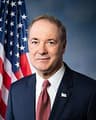
John Joyce (R-PA)
Preserving Choice in Vehicle Purchases Act
A Republican bill with 7 Republican cosponsors · See all 7 cosponsors
Last activity — Referred to the House Committee on Energy and Commerce.
In committee
Introduced and handed to a committee in the chamber it started in.
The committee holds it, and most bills are never heard from again. A hearing or a committee vote would be news; silence is the usual outcome, and it kills the bill without anyone voting against it.
Its path through Congress
- Introduced
- In Committee
What this bill would do
This bill is called the Preserving Choice in Vehicle Purchases Act. It changes the Clean Air Act to stop the elimination of the sale of internal combustion engines. The text stops the Administrator from granting waivers to states if their standards directly or indirectly limit the sale or use of new motor vehicles with internal combustion engines. It also prevents the Administrator from determining that any state standards amended after the enactment date are within the scope of a prior waiver. Finally, it requires the Administrator of the Environmental Protection Agency to revoke certain existing waivers granted between January 1, 2022, and the date of enactment if they do not comply with the new rule.
Yes· 3 of 12
- Scored +5
Does this give people more protection from unfair business practices?
Ensures consumers retain the freedom to purchase new internal combustion engine vehicles without state-level bans.
- Scored +4
Would households on low incomes be better off under this?
Prevents policies that could prematurely inflate vehicle prices by eliminating cheaper internal combustion engine options.
- Scored +4
Would middle-income households be better off under this?
Ensures middle-class consumers retain access to a full range of affordable vehicle choices.
The opposite
- Scored -5
Does this cut the pollution that drives climate change?
Prevents restrictions on internal combustion engine vehicles, potentially slowing the transition to zero-emission transportation.
- Scored -5
Does this leave more decisions to the states?
Takes away the authority of states like California to issue waivers under the Clean Air Act that limit internal combustion engine sales.
- Scored -4
Does this better protect air, water and wildlife?
Limits the ability of the EPA and states to enforce stricter vehicle emissions standards aimed at phasing out gas cars.
Who it would affect, and how
Potential Positive Impacts for People
- Section 2 prevents state standards from directly or indirectly limiting the sale or use of new motor vehicles with internal combustion engines, which could benefit individuals by protecting their ability to purchase these types of vehicles.
Potential Negative Impacts for People
- Based strictly on the provided text, no specific negative impacts or burdens on individuals or groups are mentioned.
Groups and Interests Ranking
Every group the model scored this bill for, from -10 to +10. Tap or hover a score for the reason it gave.
- Demographic And Interest Groups
- Would farmers be better off under this? — Protects access to heavy-duty internal combustion engine trucks and equipment essential for agricultural operations. Would households on low incomes be better off under this? — Prevents policies that could prematurely inflate vehicle prices by eliminating cheaper internal combustion engine options. Would middle-income households be better off under this? — Ensures middle-class consumers retain access to a full range of affordable vehicle choices. Would people in rural areas be better off under this? — Benefits rural residents who rely heavily on traditional vehicles and may lack robust electric vehicle charging infrastructure. Would business owners be better off under this? — Provides certainty for businesses relying on traditional commercial fleets powered by internal combustion engines. Would people in middle age be better off under this? — Preserves vehicle purchasing choices for middle-aged consumers. Would people over 65 be better off under this? — Maintains familiar vehicle options without forcing a rapid transition to new technologies. Would people in their twenties and thirties be better off under this? — Keeps lower-cost used and new internal combustion vehicles widely available for younger buyers.
- Environment Energy And Infrastructure
- Does this cut the pollution that drives climate change? — Prevents restrictions on internal combustion engine vehicles, potentially slowing the transition to zero-emission transportation. Does this better protect air, water and wildlife? — Limits the ability of the EPA and states to enforce stricter vehicle emissions standards aimed at phasing out gas cars.
- Economy And Finance
- Does this give people more protection from unfair business practices? — Ensures consumers retain the freedom to purchase new internal combustion engine vehicles without state-level bans. Does this make it easier to run a small business? — Protects traditional automotive markets and choice for businesses relying on internal combustion vehicles.
- Governance And Ideology
- Does this give the federal government more power? — Expands federal restriction on EPA waiver grants to prevent states from implementing stricter vehicle type limitations. Does this make it easier to do business across state lines? — Aims to create greater uniformity by restricting individual states from enacting bans or phase-outs on internal combustion vehicles. Does this leave more decisions to the states? — Takes away the authority of states like California to issue waivers under the Clean Air Act that limit internal combustion engine sales.
- 8/31/2026
- 1 Cosponsor added.
- 6/23/2025
- 2 Cosponsors added.
- 6/3/2025
- 1 Cosponsor added.
- 4/10/2025
- 1 Cosponsor added.
- 1/13/2025
- Sponsor introductory remarks on measure. (CR H96)
- Referred to the House Committee on Energy and Commerce.
- 2 Cosponsors added.
- Introduced in House
 Dan Crenshaw
Republican · Texas
 Russ Fulcher
Republican · Idaho
 Scott Franklin
Republican · Florida
 H. Griffith
Republican · Virginia
 Robert Latta
Republican · Ohio
 Doug LaMalfa
Republican · California
 Michael Turner
Republican · Ohio