Bill · H.R. 3420· House(119-HR-3420)
Words Matter Act of 2025
- Introduced
- 5/15/2025
- Last activity
- 3/26/2026 — Ordered to be Reported (Amended) by Voice Vote.
- Sponsored by
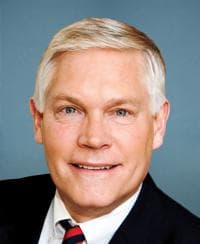
- Pete Sessions
- Cosponsors
- - 10 - 5
- Introduced
What this bill would do
The "Words Matter Act of 2025" is a bill designed to update federal language by removing outdated terms. It seeks to strike the terms "mentally retarded" and "mental retardation" from various sections of the United States Code and other federal laws. In their place, the bill inserts terms such as "intellectual disability" or "individuals with intellectual disabilities." These changes affect a wide range of areas including medical care, housing, criminal justice, and social security. The bill's primary goal is to update terminology without changing the actual coverage or rights of the people involved.
Yes· 3 of 10
Would people with disabilities be better off under this?+5
The bill replaces outdated and offensive terms with respectful, modern language across numerous federal statutes.
Does this expand the rights of people with disabilities?+5
The bill updates federal law to replace outdated and stigmatizing language with 'intellectual disability'.
Would children be better off under this?+2
The bill updates medical care terminology for children receiving support services.
The opposite
No question was scored the opposite.
Who it would affect, and how
Potential Positive Impacts for People
-
Updated Terminology in Medical and Care Settings: The bill replaces outdated language with "intellectual disability" or "individuals with intellectual disabilities" across many sectors, including medical care for spouses and children (Section 2(a)), nursing homes (Section 2(b)), and the Indian Health Care Improvement Act (Section 2(d) and 2(e)). This ensures that federal descriptions of people receiving care use current language.
-
Consistency in Criminal Justice Language: The bill updates the language used in the context of the death penalty (Section 2(c)), grant authority for crime control (Section 2(f)), and mental health courts (Section 2(g)). This replaces "mentally retarded" with "intellectual disability."
-
Improved Definitions in Social Programs: The bill updates language related to various social services, such as the Social Security Act (Section 2(j), 2(l), 2(m), 2(n), and 2(o)), the Child Nutrition Act (Section 2(q)), and the Developmental Disabilities Assistance and Bill of Rights Act of 2000 (Section 2(s)). This shifts the focus from "combatting mental retardation" to "meeting the needs of individuals with intellectual disabilities" (Section 2(l)).
-
Clarification for Federal Regulations: To ensure a smooth transition, the bill mandates that federal agencies treat references to the old terms as references to the new terms in their regulations (Section 3).
Potential Negative Impacts for People
-
No Change to Rights or Eligibility: According to the "Rule of Construction" in the bill, these changes are not intended to change the coverage, eligibility, rights, or responsibilities of the individuals covered (Section 4). Therefore, there are no direct negative impacts on the benefits people receive.
-
No Mandate for State Law Changes: The bill specifically states that it does not compel States to change the terminology used in their own State laws (Section 4). Consequently, people may still encounter the old terminology within their specific state-level legal or medical systems.
Groups and Interests Ranking
Every group the model scored this bill for, from -10 to +10. Hover a score for the reason it gave.
- Demographic And Interest Groups
- Good For People With Disabilities+5Good For Children+2Good For Low Income Households+2Good For Native Americans+2
- Social Issues And Justice
- Improves Disability Rights+5Improves Criminal Sentencing Reform+2Improves Poverty Reduction+1
- Healthcare
- Improves Healthcare Access+2Increases Medicaid Funding+2
- Governance And Ideology
- Improves Government Transparency+2
- 5/12/2026
- 1 Cosponsor added.
- 3/26/2026
- Committee Consideration and Mark-up Session Held
- Ordered to be Reported (Amended) by Voice Vote.
- 2/23/2026
- 1 Cosponsor added.
- 10/31/2025
- 1 Cosponsor added.
- 9/18/2025
- 2 Cosponsors added.
- 9/17/2025
- 1 Cosponsor added.
- 9/2/2025
- 1 Cosponsor added.
- 8/15/2025
- 1 Cosponsor added.
- 6/26/2025
- 1 Cosponsor added.
- 6/9/2025
- 1 Cosponsor added.
- 6/5/2025
- 1 Cosponsor added.
- 5/15/2025
- Referred to the House Committee on the Judiciary.
- 4 Cosponsors added.
- Introduced in House
 Brian Babin
Republican · Texas
 Brian Fitzpatrick
Republican · Pennsylvania
 Richard Hudson
Republican · North Carolina
 Erin Houchin
Republican · Indiana
 Julia Letlow
Republican · Louisiana
 Tracey Mann
Republican · Kansas
 Seth Moulton
Democrat · Massachusetts
 Eleanor Norton
Democrat · District of Columbia
 Mark Pocan
Democrat · Wisconsin
 Christopher Smith
Republican · New Jersey
 Eric Sorensen
Democrat · Illinois
 Beth Van Duyne
Republican · Texas
 Eugene Vindman
Democrat · Virginia
 Randy Weber
Republican · Texas
 Ryan Zinke
Republican · Montana