
A Democratic bill with 34 Democratic cosponsors · See all 34 cosponsors
Last activity — Referred to the House Committee on the Judiciary.
In committee
Introduced and handed to a committee in the chamber it started in.
The committee holds it, and most bills are never heard from again. A hearing or a committee vote would be news; silence is the usual outcome, and it kills the bill without anyone voting against it.
Its path through Congress
- Introduced
- In Committee
What this bill would do
The GHOST Act of 2025 establishes a Federal Interstate Firearm Parts Reporting System. The Attorney General will oversee this program to help law enforcement monitor the shipment of covered firearm components across state or foreign borders. Entities shipping these parts, such as barrels, slides, or bolt carriers, must register the shipment with the Attorney General. The bill requires specific delivery methods, including registered or certified mail and recipient signatures. It also allows for the seizure and potential destruction of unregistered components.
Yes
- Scored +5
Does this put more limits on buying or owning guns?
The bill implements stricter oversight and tracking of critical firearm components to improve regulation.
- Scored +4
Does this give the federal government more power?
The bill significantly expands the Attorney General's authority over interstate commerce of firearm components.
The opposite· 3 of 9
- Scored -6
Would gun owners be better off under this?
The bill creates significant new burdens and risks of seizure for people purchasing firearm parts.
- Scored -5
Does this protect the right to own guns?
The bill imposes significant new regulatory burdens and potential seizure risks on the movement of firearm parts.
- Scored -4
Would business owners be better off under this?
The bill imposes costly compliance, reporting, and shipping requirements on businesses.
Who it would affect, and how
Potential Positive Impacts for People
-
Law Enforcement Assistance: The program is designed to assist law enforcement officers in monitoring the movement of covered firearm components in interstate or foreign commerce. (Section 2(a))
-
Information Sharing: The Attorney General is authorized to share registration database information with Federal, State, local, Tribal, or foreign law enforcement agencies, as well as prosecutors and Federal agencies. (Section 2(c)(2))
-
Delivery Verification: For those using the mail, the bill requires the use of registered or certified mail with a return receipt requested to ensure tracking. (Section 2(b)(2)(A))
-
Recipient Protections: A recipient of a shipment can file a "putative registration" if they have the necessary information, which serves as a way to register the component after it has been received. (Section 2(b)(4)(B))
Potential Negative Impacts for People
-
Strict Registration Requirements: Entities must submit detailed information, including names, addresses, and identification numbers, within 5 business days before shipping a component. (Section 2(b)(1))
-
Increased Shipping Burdens: Entities using methods other than the mails must use a service that requires a signature from the recipient and notification of that signature back to the entity. (Section 2(b)(2)(B))
-
Mandatory Follow-up: Entities are required to submit confirmation of delivery, including documentation or a specific certification every 5 business days until delivery documentation is received. (Section 2(b)(3))
-
Risk of Seizure and Destruction: The Attorney General or a designated entity may seize covered firearm components shipped without registration, and these components may be destroyed through administrative proceedings. (Section 2(d)(1) and (3))
-
Criminal Penalties: Knowingly shipping or transporting these components without registration with the intent to evade requirements is unlawful and carries fines or imprisonment of up to 1 year, or up to 10 years if involving 50 or more components. (Section 2(e) and (b))
Groups and Interests Ranking
Every group the model scored this bill for, from -10 to +10. Tap or hover a score for the reason it gave.
- Demographic And Interest Groups
- Would gun owners be better off under this? — The bill creates significant new burdens and risks of seizure for people purchasing firearm parts. Would business owners be better off under this? — The bill imposes costly compliance, reporting, and shipping requirements on businesses.
- Governance And Ideology
- Does this give the federal government more power? — The bill significantly expands the Attorney General's authority over interstate commerce of firearm components. Does this protect people from being watched or searched? — The mandatory tracking of personal information for shipping reduces individual privacy. Does this leave more decisions to the states? — The federal mandate for tracking components overrides existing state-level commerce norms. Does this protect the right to fair treatment by the courts? — The bill allows for the administrative destruction of seized items without prior judicial oversight.
- Economy And Finance
- Does this make it easier to run a small business? — The bill imposes significant new administrative and shipping costs on businesses handling firearm components.
- Education And Technology
- Does this give people more control over their personal data? — The bill requires the collection and storage of sensitive identification and address information in a federal database.
- National Security And Foreign Policy
- Does this give the government more power to monitor people inside the country? — The required reporting system creates a new database of personal information linked to firearm component shipments.
- Social Issues And Justice
- Does this put more limits on buying or owning guns? — The bill implements stricter oversight and tracking of critical firearm components to improve regulation. Does this protect the right to own guns? — The bill imposes significant new regulatory burdens and potential seizure risks on the movement of firearm parts.
- 11/12/2025
- 1 Cosponsor added.
- 8/8/2025
- 1 Cosponsor added.
- 7/10/2025
- 1 Cosponsor added.
- 6/20/2025
- 1 Cosponsor added.
- 6/3/2025
- 1 Cosponsor added.
- 5/29/2025
- 1 Cosponsor added.
- 5/19/2025
- 3 Cosponsors added.
- 5/15/2025
- 4 Cosponsors added.
- 5/13/2025
- Referred to the House Committee on the Judiciary.
- 21 Cosponsors added.
- Introduced in House
 Yassamin Ansari
Democrat · Arizona
 Suzanne Bonamici
Democrat · Oregon
 Julia Brownley
Democrat · California
 Becca Balint
Democrat · Vermont
 Wesley Bell
Democrat · Missouri
 Salud Carbajal
Democrat · California
 Greg Casar
Democrat · Texas
 Danny Davis
Democrat · Illinois
 Lloyd Doggett
Democrat · Texas
 Madeleine Dean
Democrat · Pennsylvania
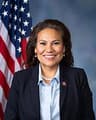 Veronica Escobar
Democrat · Texas
 Sarah Elfreth
Democrat · Maryland
 Valerie Foushee
Democrat · North Carolina
 Robert Garcia
Democrat · California
 Daniel Goldman
Democrat · New York
 Henry Johnson
Democrat · Georgia
 Robin Kelly
Democrat · Illinois
 Raja Krishnamoorthi
Democrat · Illinois
 Timothy Kennedy
Democrat · New York
 Mike Levin
Democrat · California
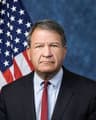 George Latimer
Democrat · New York
 Jennifer McClellan
Democrat · Virginia
 LaMonica McIver
Democrat · New Jersey
 Sarah McBride
Democrat · Delaware
 Dave Min
Democrat · California
 Eleanor Norton
Democrat · District of Columbia
 Alexandria Ocasio-Cortez
Democrat · New York
 Emily Randall
Democrat · Washington
 Eric Swalwell
Democrat · California
 Melanie Stansbury
Democrat · New Mexico
 Andrea Salinas
Democrat · Oregon
 Shri Thanedar
Democrat · Michigan
 Derek Tran
Democrat · California
 Nydia Velázquez
Democrat · New York