Bill · H.R. 3285· House(119-HR-3285)
Student Loan Marriage Penalty Elimination Act of 2025
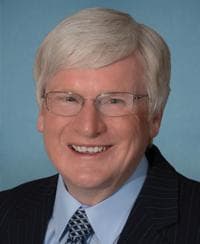
- Introduced
- 5/8/2025
- Last activity
- 5/8/2025 — Referred to the House Committee on Ways and Means.
- Sponsored by
- Glenn Grothman
- Cosponsors
- - 8 - 9
- Introduced
- In Committee
What this bill would do
This bill, titled the ``Student Loan Marriage Penalty Elimination Act of 2025'', aims to amend the Internal Revenue Code of 1986. It seeks to allow married couples to apply the student loan interest deduction limitation separately to each spouse. The legislation changes how the $2,500 interest limit is calculated for taxpayers. These amendments would apply to taxable years beginning after December 31, 2024.
Yes· 3 of 8
Would middle-income households be better off under this?+5
Married middle-class households will see an increase in their available post-tax income.
Does this cut taxes for middle-income families?+5
The bill reduces the tax burden for married couples by allowing them to each claim the student loan interest deduction up to $2,500.
Would people in their twenties and thirties be better off under this?+4
The bill benefits young adults who are likely to have student loans and may be in married households.
The opposite
Does this reduce what the federal government owes?-1
Increasing the student loan interest deduction may slightly reduce federal tax revenue.
Who it would affect, and how
Potential Positive Impacts for People
- Elimination of the student loan marriage penalty: By amending Section 221(b)(1) of the Internal Revenue Code, the bill allows married couples to potentially apply the $2,500 interest deduction limitation separately to each spouse rather than as a single unit (Section 2, subsection a).
Potential Negative Impacts for People
- No negative impacts are explicitly stated in the text: The provided text does not list any specific provisions that would result in negative consequences or burdens for individuals or groups.
Groups and Interests Ranking
Every group the model scored this bill for, from -10 to +10. Hover a score for the reason it gave.
- Demographic And Interest Groups
- Good For Middle Class Households+5Good For Students+4Good For Young Adults+4Good For Low Income Households+2Good For Middle Aged+2
- Education And Technology
- Improves College Affordability+4Improves Student Loan Relief+3
- Economy And Finance
- Reduces Middle Class Taxes+5Reduces National Debt-1
- 10/1/2026
- 1 Cosponsor added.
- 10/10/2025
- 1 Cosponsor added.
- 9/9/2025
- 1 Cosponsor added.
- 6/3/2025
- 1 Cosponsor added.
- 5/20/2025
- 1 Cosponsor added.
- 5/13/2025
- 2 Cosponsors added.
- 5/9/2025
- 1 Cosponsor added.
- 5/8/2025
- Referred to the House Committee on Ways and Means.
- 9 Cosponsors added.
- Introduced in House
2 bills Congress.gov lists as related to this one — companions in the other chamber, earlier versions, and bills this one absorbed or was folded into.
 Salud Carbajal
Democrat · California
 Andrew Clyde
Republican · Georgia
 Troy Carter
Democrat · Louisiana
 Danny Davis
Democrat · Illinois
 Suzan DelBene
Democrat · Washington
 Troy Downing
Republican · Montana
 Josh Harder
Democrat · California
 Harriet Hageman
Republican · Wyoming
 John Larson
Democrat · Connecticut
 Michael Lawler
Republican · New York
 Mary Miller
Republican · Illinois
 Richard McCormick
Republican · Georgia
 Kevin Mullin
Democrat · California
 Joe Neguse
Democrat · Colorado
 David Rouzer
Republican · North Carolina
 Michael Rulli
Republican · Ohio
 Eugene Vindman
Democrat · Virginia