
Hillary Scholten (D-MI)
Grand River Bands of Ottawa Indians Restoration Act of 2025
A Democratic bill with 6 Republican cosponsors · See all 10 cosponsors
Last activity — Referred to the House Committee on Natural Resources.
In committee
Introduced and handed to a committee in the chamber it started in.
The committee holds it, and most bills are never heard from again. A hearing or a committee vote would be news; silence is the usual outcome, and it kills the bill without anyone voting against it.
Its path through Congress
- Introduced
- In Committee
What this bill would do
This bill, known as the ``Grand River Bands of Ottawa Indians Restoration Act of 2025'', aims to reaffirm and clarify the Federal relationships of the Grand River Bands of Ottawa Indians of Michigan as a federally recognized Indian tribe. It establishes that the Tribe and its members are eligible for all services and benefits provided by the United States to Indian tribes. The Act provides for the acquisition of land into trust for the benefit of the Tribe in specific Michigan counties. It also requires the Tribe to submit a membership roll to the Secretary within 18 months. Furthermore, it ensures that all Federal laws, including the Indian Reorganization Act, apply to the Tribe.
Yes· 3 of 9
- Scored +10
Would Native Americans be better off under this?
The bill restores federal recognition and land rights specifically for the Grand River Bands of Ottawa Indians.
- Scored +8
Does this narrow racial gaps in how people are treated?
The bill restores federal recognition to a Native American tribe, enabling access to essential social services and rights.
- Scored +7
Would people over 65 be better off under this?
The bill explicitly mentions the ability to address needs for elder care through federal recognition.
The opposite
No question was scored the opposite.
Who it would affect, and how
Potential Positive Impacts for People
-
Access to Federal Services and Benefits: The Tribe and its members will be eligible for all services and benefits provided by the United States to Indian tribes, regardless of whether they live on a reservation (Section 5(a)). This addresses the finding that the Tribe has been unable to meet needs for social services, education, housing, and elder care due to a lack of recognition (Section 2(13)).
-
Land Acquisition and Trust Title: The Secretary is directed to acquire trust title to land within Muskegon, Newaygo, or Oceana Counties for the benefit of the Tribe (Section 8(a)(1)). Additionally, the Secretary may take into trust land held in fee by the Tribe located within Kent and Ottawa Counties (Section 8(b)(2)).
-
Protection of Existing Rights: The Act ensures that nothing within it diminishes any right or privilege of the Tribe or its members that existed before the Act was passed (Section 6(a)).
-
Legal Claim Protection: The Act protects the Tribe's ability to enforce legal or equitable claims that were wrongfully denied or taken from them prior to the enactment of this Act (Section 6(b)).
Potential Negative Impacts for People
- Land Title Restrictions: The Secretary's ability to accept land into trust is subject to the condition that there are no adverse legal claims on the property, such as outstanding liens, mortgages, or taxes (Section 8(a)(2)(B)).
Groups and Interests Ranking
Every group the model scored this bill for, from -10 to +10. Tap or hover a score for the reason it gave.
- Demographic And Interest Groups
- Would Native Americans be better off under this? — The bill restores federal recognition and land rights specifically for the Grand River Bands of Ottawa Indians. Would people over 65 be better off under this? — The bill explicitly mentions the ability to address needs for elder care through federal recognition. Would households on low incomes be better off under this? — The bill enables access to social services and benefits essential for low-income tribal members.
- Social Issues And Justice
- Does this narrow racial gaps in how people are treated? — The bill restores federal recognition to a Native American tribe, enabling access to essential social services and rights. Does this make housing cost less? — The bill provides for the acquisition of land into trust, which facilitates tribal housing and community development. Is this likely to lift people out of poverty? — Federal recognition provides access to various social services and benefits that help mitigate poverty within the tribe.
- Environment Energy And Infrastructure
- Does this better protect public land such as parks and forests? — The bill facilitates the acquisition of land into trust for tribal use. Does this invest in rural communities? — The land acquisition provisions support the development of tribal land within specified counties.
- Governance And Ideology
- Does this give the federal government more power? — The bill expands federal responsibility to provide services and manage land trust for the tribe.
- 6/30/2025
- 1 Cosponsor added.
- 6/9/2025
- 2 Cosponsors added.
- 6/4/2025
- 1 Cosponsor added.
- 6/2/2025
- 1 Cosponsor added.
- 5/21/2025
- 1 Cosponsor added.
- 5/14/2025
- 1 Cosponsor added.
- 5/7/2025
- Referred to the House Committee on Natural Resources.
- 3 Cosponsors added.
- Introduced in House
One bill Congress.gov lists as related to this one — companions in the other chamber, earlier versions, and bills this one absorbed or was folded into.
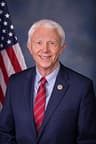 Jack Bergman
Republican · Michigan
 Tom Barrett
Republican · Michigan
 Debbie Dingell
Democrat · Michigan
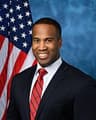 John James
Republican · Michigan
 Lisa McClain
Republican · Michigan
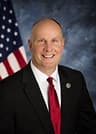 John Moolenaar
Republican · Michigan
 Kristen McDonald Rivet
Democrat · Michigan
 Haley Stevens
Democrat · Michigan
 Rashida Tlaib
Democrat · Michigan
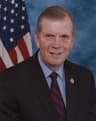 Tim Walberg
Republican · Michigan