
Bonnie Watson Coleman (D-NJ)
To amend section 287 of the Immigration and Nationality Act with respect to certain uniform requirements for United States immigration officers.
A Democratic bill with 25 Democratic cosponsors · See all 25 cosponsors
Last activity — Referred to the House Committee on the Judiciary.
In committee
Introduced and handed to a committee in the chamber it started in.
The committee holds it, and most bills are never heard from again. A hearing or a committee vote would be news; silence is the usual outcome, and it kills the bill without anyone voting against it.
Its path through Congress
- Introduced
- In Committee
What this bill would do
This bill seeks to amend section 287 of the Immigration and Nationality Act. It focuses on establishing uniform requirements for United States immigration officers. The Secretary of Homeland Security would be required to ensure covered immigration officers display bold and visible identification during a time of action. This includes specific size requirements for agency identification on the uniform. The bill defines covered officers as personnel from U.S. Customs and Border Protection, U.S. Immigration and Customs Enforcement, and other deputized officials.
Yes· 3 of 8
- Scored +4
Does this change how police departments operate?
Increases accountability by requiring immigration officers to be clearly identifiable during enforcement actions.
- Scored +3
Does this make what the government does easier for the public to see?
Increases transparency by requiring officers to clearly display their agency identification during actions.
- Scored +2
Would immigrants be better off under this?
Enhances situational awareness regarding which officials are conducting enforcement actions.
The opposite
No question was scored the opposite.
Who it would affect, and how
Potential Positive Impacts for People
-
Increased Visibility of Officers: The bill requires officers to display identification that is "no smaller than 12 inches by 6 inches" on their uniform (Section 1, h(1), A(i)). This ensures that people can clearly see which agency an officer represents during an action.
-
Clear Identification During Enforcement: By defining "time of action" to include patrols, raids, pickups, or serving warrants, the bill ensures officers are identifiable during these specific events (Section 1, h(2), C).
-
Prevention of Hidden Identification: The requirement that identification cannot be covered by external armor or accessories ensures that an officer's agency remains visible even when they are wearing protective gear (Section 1, h(2), A(ii)).
Potential Negative Impacts for People
- No specific negative impacts are mentioned in the provided text.
Groups and Interests Ranking
Every group the model scored this bill for, from -10 to +10. Tap or hover a score for the reason it gave.
- Demographic And Interest Groups
- Would immigrants be better off under this? — Enhances situational awareness regarding which officials are conducting enforcement actions. Would Black Americans be better off under this? — Potential benefit through increased officer accountability and visibility. Would Hispanic Americans be better off under this? — Provides clarity on officer identity during immigration-related enforcement actions. Would households on low incomes be better off under this? — Provides greater clarity and identification of enforcement officers during interactions.
- Governance And Ideology
- Does this make what the government does easier for the public to see? — Increases transparency by requiring officers to clearly display their agency identification during actions. Does this protect the right to fair treatment by the courts? — Enhances due process by ensuring the identity of enforcing officials is unambiguous.
- Social Issues And Justice
- Does this change how police departments operate? — Increases accountability by requiring immigration officers to be clearly identifiable during enforcement actions. Does this tighten control of the border? — Provides better visibility for enforcement personnel, though primarily focused on identification standards.
- 1/16/2026
- 1 Cosponsor added.
- 11/18/2025
- 4 Cosponsors added.
- 7/2/2025
- 1 Cosponsor added.
- 6/25/2025
- 1 Cosponsor added.
- 6/17/2025
- 1 Cosponsor added.
- 6/9/2025
- 1 Cosponsor added.
- 6/4/2025
- 1 Cosponsor added.
- 6/3/2025
- 2 Cosponsors added.
- 5/21/2025
- 1 Cosponsor added.
- 5/15/2025
- 2 Cosponsors added.
- 5/14/2025
- 4 Cosponsors added.
- 5/1/2025
- Referred to the House Committee on the Judiciary.
- 6 Cosponsors added.
- Introduced in House
 Donald Beyer
Democrat · Virginia
 Lloyd Doggett
Democrat · Texas
 Cleo Fields
Democrat · Louisiana
 Valerie Foushee
Democrat · North Carolina
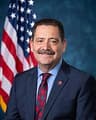 Jesús García
Democrat · Illinois
 Daniel Goldman
Democrat · New York
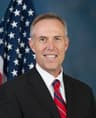 Jared Huffman
Democrat · California
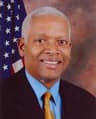 Henry Johnson
Democrat · Georgia
 Sara Jacobs
Democrat · California
 William Keating
Democrat · Massachusetts
 Summer Lee
Democrat · Pennsylvania
 James McGovern
Democrat · Massachusetts
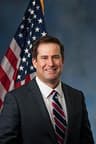 Seth Moulton
Democrat · Massachusetts
 Robert Menendez
Democrat · New Jersey
 Sarah McBride
Democrat · Delaware
 Eleanor Norton
Democrat · District of Columbia
 Ilhan Omar
Democrat · Minnesota
 Janice Schakowsky
Democrat · Illinois
 Darren Soto
Democrat · Florida
 Mary Gay Scanlon
Democrat · Pennsylvania
 Melanie Stansbury
Democrat · New Mexico
 Dina Titus
Democrat · Nevada
 Rashida Tlaib
Democrat · Michigan
 Derek Tran
Democrat · California
 Nikema Williams
Democrat · Georgia