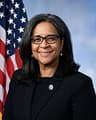
Marilyn Strickland (D-WA)
Women and Underrepresented Minorities in STEM Booster Act of 2025
A Democratic bill with 17 Democratic cosponsors · See all 17 cosponsors
Last activity — Referred to the House Committee on Science, Space, and Technology.
In committee
Introduced and handed to a committee in the chamber it started in.
The committee holds it, and most bills are never heard from again. A hearing or a committee vote would be news; silence is the usual outcome, and it kills the bill without anyone voting against it.
Its path through Congress
- Introduced
- In Committee
What this bill would do
The Women and Underrepresented Minorities in STEM Booster Act of 2025 aims to increase the participation of women, people with disabilities, and underrepresented minority groups in science, technology, engineering, and mathematics (STEM). It directs the Director of the National Science Foundation to award competitive grants to eligible entities. These grants will fund activities such as online workshops, mentoring, internships, outreach for students, and faculty recruitment and retention. The bill authorizes $15,000,000 in funding for each fiscal year from 2026 through 2030.
Yes· 3 of 27
- Scored +8
Would Black Americans be better off under this?
Specifically targets African Americans as an underrepresented group in STEM.
- Scored +8
Would Hispanic Americans be better off under this?
Specifically targets Hispanic Americans as an underrepresented group in STEM.
- Scored +8
Would Native Americans be better off under this?
Specifically targets American Indian and Alaska Native students.
The opposite
- Scored -2
Does this reduce what the federal government spends?
Authorizes new spending for NSF grants from 2026-2030.
- Scored -1
Does this reduce what the federal government owes?
Increases federal spending by $15 million annually.
Who it would affect, and how
Potential Positive Impacts for People
-
Increased Opportunities for Underrepresented Groups: The bill provides grants to increase the participation of women, persons with disabilities, and those underrepresented in science and engineering in STEM fields (Section 2(b)).
-
Educational Support and Exposure: The bill funds outreach programs for elementary and secondary school students to increase their exposure to STEM (Section 2(d)(4)).
-
Career Development: The bill authorizes funding for mentoring programs that pair students with STEM professionals and internships for undergraduate and graduate students (Section 2(d)(2), 2(d)(3)).
-
Professional Growth and Accessibility: The bill provides for online workshops and programs to improve the recruitment and retention of underrepresented faculty (Section 2(d)(1), 2(d)(5)).
Potential Negative Impacts for People
- Competitive Access: Because grants are awarded on a competitive basis, some eligible entities may not receive funding despite meeting the criteria (Section 2(b)).
Groups and Interests Ranking
Every group the model scored this bill for, from -10 to +10. Tap or hover a score for the reason it gave.
- Demographic And Interest Groups
- Would Black Americans be better off under this? — Specifically targets African Americans as an underrepresented group in STEM. Would Hispanic Americans be better off under this? — Specifically targets Hispanic Americans as an underrepresented group in STEM. Would Native Americans be better off under this? — Specifically targets American Indian and Alaska Native students. Would people with disabilities be better off under this? — Explicitly targets persons with disabilities for STEM grant activities. Would women be better off under this? — Primary focus of the bill is to increase the participation and retention of women in STEM. Would LGBTQ people be better off under this? — Explicitly identifies LGBTQ individuals as a priority for STEM participation support. Would students be better off under this? — Provides grants for mentoring, internships, and outreach at all educational levels. Would people in their twenties and thirties be better off under this? — Provides internships and mentoring for undergraduate and graduate students. Would Asian Americans be better off under this? — Specifically includes underrepresented Asian-American subgroups. Would children be better off under this? — Funds outreach programs for elementary and secondary school students. Would households on low incomes be better off under this? — Increases access to high-paying STEM careers for underrepresented groups. Would people in middle age be better off under this? — Supports faculty recruitment and retention for underrepresented professionals. Would middle-income households be better off under this? — Provides educational opportunities for students in STEM. Would business owners be better off under this? — Creates a more diverse and innovative STEM talent pool for employers.
- Social Issues And Justice
- Does this narrow the gap between how men and women are treated? — Focuses on increasing the participation and retention of women in STEM. Does this narrow racial gaps in how people are treated? — Targets underrepresented racial and ethnic groups for increased participation in STEM. Does this expand the rights of people with disabilities? — Directly targets persons with disabilities for increased STEM participation. Does this expand the rights of LGBTQ people? — Explicitly includes LGBTQ individuals in the definition of minorities to receive STEM support. Is this likely to lift people out of poverty? — Increased educational and professional opportunities in high-paying STEM fields can reduce poverty.
- Education And Technology
- Does this put more money into scientific research? — Directly funds initiatives to increase participation and faculty recruitment in STEM. Does this put more money into public schools? — Provides funding for outreach programs to elementary and secondary students. Does this get reliable internet to more people? — Includes the use of online workshops to increase STEM accessibility.
- Economy And Finance
- Is this likely to create jobs? — Increases internships and faculty recruitment/retention in STEM fields. Is this likely to grow the economy? — Diversifying the STEM workforce is noted to increase innovation rates. Does this reduce what the federal government spends? — Authorizes new spending for NSF grants from 2026-2030. Does this reduce what the federal government owes? — Increases federal spending by $15 million annually.
- Healthcare
- Does this put more money into medical research? — Increases funding for the broader STEM ecosystem which includes scientific research.
- Governance And Ideology
- Does this give the federal government more power? — Expands the grant-making authority and spending of the National Science Foundation.
- National Security And Foreign Policy
- Does this better protect the country from computer attacks? — A more robust STEM workforce indirectly supports national cybersecurity capabilities.
- 9/18/2025
- 1 Cosponsor added.
- 9/16/2025
- 1 Cosponsor added.
- 8/26/2025
- 1 Cosponsor added.
- 6/27/2025
- 1 Cosponsor added.
- 5/13/2025
- 2 Cosponsors added.
- 4/30/2025
- Referred to the House Committee on Science, Space, and Technology.
- 11 Cosponsors added.
- Introduced in House
One bill Congress.gov lists as related to this one — companions in the other chamber, earlier versions, and bills this one absorbed or was folded into.
 Joyce Beatty
Democrat · Ohio
 Shontel Brown
Democrat · Ohio
 Ed Case
Democrat · Hawaii
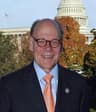 Steve Cohen
Democrat · Tennessee
 Judy Chu
Democrat · California
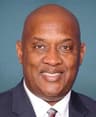 Dwight Evans
Democrat · Pennsylvania
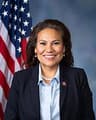 Veronica Escobar
Democrat · Texas
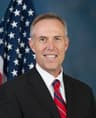 Jared Huffman
Democrat · California
 Jahana Hayes
Democrat · Connecticut
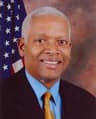 Henry Johnson
Democrat · Georgia
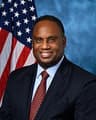 Jonathan Jackson
Democrat · Illinois
 LaMonica McIver
Democrat · New Jersey
 Eleanor Norton
Democrat · District of Columbia
 Melanie Stansbury
Democrat · New Mexico
 Emilia Sykes
Democrat · Ohio
 Jill Tokuda
Democrat · Hawaii
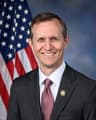 George Whitesides
Democrat · California