
A Democratic bill with 15 Democratic cosponsors · See all 15 cosponsors
Last activity — Referred to the Committee on Oversight and Government Reform, and in addition to the Committee on Transportation and Infrastructure, for a period to be subsequently determined by the Speaker, in each case for consideration of such provisions as fall within the jurisdiction of the committee concerned.
In committee
Introduced and handed to a committee in the chamber it started in.
The committee holds it, and most bills are never heard from again. A hearing or a committee vote would be news; silence is the usual outcome, and it kills the bill without anyone voting against it.
Its path through Congress
- Introduced
- In Committee
What this bill would do
This bill, titled the "Delete DOGE Act," seeks to prohibit the use of and rescind Federal funds for the United States DOGE Service. It defines various "covered entities" including the Department of Government Efficiency and its associated teams or successor entities. The legislation targets several specific executive orders related to the establishment and implementation of this service. It places limitations on the use of Federal funds for implementing or enforcing these executive orders. Additionally, it restricts funding for the United States Digital Service and any project initiated by a covered entity on or after January 20, 2025.
Yes· 3 of 4
- Scored +5
Does this reduce what the federal government spends?
The bill proactively reduces government spending by defunding the DOGE service and related entities.
- Scored +5
Does this get reliable internet to more people?
The bill ensures USDS funds are used only for maintaining existing digital service delivery, preventing disruption to internet-based government services.
- Scored +3
Does this make the government pay for what it commits to?
By stopping new spending on DOGE initiatives, it reinforces previous budget frameworks.
The opposite
- Scored -5
Does this give the federal government more power?
The bill limits the power of newly established executive departments and their individuals.
Who it would affect, and how
Potential Positive Impacts for People
- Protection of Digital Service Delivery: The bill mandates that Federal funds for the United States Digital Service be used only for improving existing digital service delivery across the Federal Government as it was provided on January 19, 2025 (Sec. 2(b)(2)(A)). This could ensure continuity in current digital services.
Potential Negative Impacts for People
-
Restriction of Funding for Specified Entities: The bill prohibits Federal funds from being used for any project or initiative initiated by a covered entity on or after January 20, 2025 (Sec. 2(b)(2)(B)).
-
Limitation on Executive Orders: No Federal funds may be used to implement, administer, or enforce the specific covered executive orders related to the Department of Government Efficiency (Sec. 2(b)(1)).
-
Restrictions on Affiliated Individuals: Federal funds may not be used by any "covered individual" for any purpose, including the use of equipment or devices purchased or maintained using Federal funds (Sec. 2(b)(4)(A)).
-
Prohibition of Directive Implementation: Federal funds cannot be used to implement, administer, or enforce any order, directive, or recommendation made by a covered individual under the color of government office or employment (Sec. 2(b)(4)(B)).
Groups and Interests Ranking
Every group the model scored this bill for, from -10 to +10. Tap or hover a score for the reason it gave.
- Economy And Finance
- Does this reduce what the federal government spends? — The bill proactively reduces government spending by defunding the DOGE service and related entities. Does this make the government pay for what it commits to? — By stopping new spending on DOGE initiatives, it reinforces previous budget frameworks.
- Education And Technology
- Does this get reliable internet to more people? — The bill ensures USDS funds are used only for maintaining existing digital service delivery, preventing disruption to internet-based government services.
- Governance And Ideology
- Does this make what the government does easier for the public to see? — By restricting the hidden implementation of executive orders, it maintains current levels of bureaucratic transparency. Does this give the federal government more power? — The bill limits the power of newly established executive departments and their individuals.
- 11/11/2026
- 1 Cosponsor added.
- 9/15/2025
- 1 Cosponsor added.
- 4/8/2025
- 1 Cosponsor added.
- 4/7/2025
- 4 Cosponsors added.
- 4/2/2025
- Referred to the Committee on Oversight and Government Reform, and in addition to the Committee on Transportation and Infrastructure, for a period to be subsequently determined by the Speaker, in each case for consideration of such provisions as fall within the jurisdiction of the committee concerned.
- 8 Cosponsors added.
- Introduced in House
 Suzanne Bonamici
Democrat · Oregon
 Nanette Barragán
Democrat · California
 Lois Frankel
Democrat · Florida
 Henry Johnson
Democrat · Georgia
 Pramila Jayapal
Democrat · Washington
 James McGovern
Democrat · Massachusetts
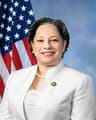 Jennifer McClellan
Democrat · Virginia
 Eleanor Norton
Democrat · District of Columbia
 Brad Sherman
Democrat · California
 Janice Schakowsky
Democrat · Illinois
 Rashida Tlaib
Democrat · Michigan
 Shri Thanedar
Democrat · Michigan
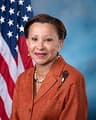 Nydia Velázquez
Democrat · New York
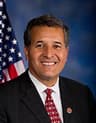 Juan Vargas
Democrat · California
 James Walkinshaw
Democrat · Virginia