
A Democratic bill with 2 Republican cosponsors · See all 18 cosponsors
Last activity — Referred to the House Committee on Energy and Commerce.
In committee
Introduced and handed to a committee in the chamber it started in.
The committee holds it, and most bills are never heard from again. A hearing or a committee vote would be news; silence is the usual outcome, and it kills the bill without anyone voting against it.
Its path through Congress
- Introduced
- In Committee
What this bill would do
This bill, known as the ``Youth Mental Health Research Act'', seeks to create a Youth Mental Health Research Initiative within the National Institutes of Health. The initiative would be led by the Director of the National Institute of Mental Health in collaboration with other national institutes. It aims to coordinate research regarding youth mental health through both fundamental and applied studies. The research focuses on building community resilience and improving the delivery of mental health interventions. To fund these efforts, the bill authorizes $100,000,000 for each fiscal year from 2025 through 2030.
Yes· 3 of 9
- Scored +8
Does this make mental health care easier to get?
Establishes a Youth Mental Health Research Initiative to improve mental health interventions and community care for youth.
- Scored +8
Does this put more money into medical research?
Authorizes significant appropriations for collaborative research on youth mental health at the NIH.
- Scored +8
Would children be better off under this?
Directly targets youth mental health research, resilience, and crisis intervention.
The opposite
- Scored -2
Does this reduce what the federal government spends?
The bill authorizes $100,000,000 in annual appropriations from fiscal years 2025 through 2030.
Who it would affect, and how
Potential Positive Impacts for People
-
Improved Community Support: The bill promotes research into social, behavioral, cognitive, and developmental areas to build resilience and help communities identify and care for youth who are at risk or in crisis (Section 2, subsection a, 1).
-
Better Mental Health Care Delivery: It encourages research aimed at improving how mental health interventions are targeted and delivered in the various settings where youth live, play, work, and learn (Section 2, subsection a, 2).
-
Collaborative Research Efforts: By coordinating work among various national research institutes and centers, the initiative seeks to improve youth mental health through collaborative research (Section 2, subsection a).
Potential Negative Impacts for People
- No negative impacts or burdens are explicitly identified within the provided text.
Groups and Interests Ranking
Every group the model scored this bill for, from -10 to +10. Tap or hover a score for the reason it gave.
- Healthcare
- Does this make mental health care easier to get? — Establishes a Youth Mental Health Research Initiative to improve mental health interventions and community care for youth. Does this put more money into medical research? — Authorizes significant appropriations for collaborative research on youth mental health at the NIH. Does this make health care easier to get in general? — Supports research to improve the delivery of health interventions where youth live, play, work, and learn.
- Demographic And Interest Groups
- Would children be better off under this? — Directly targets youth mental health research, resilience, and crisis intervention. Would people in their twenties and thirties be better off under this? — Benefits adolescents and young adults through improved mental health delivery systems. Would students be better off under this? — Improves mental health interventions in settings where youth learn and spend time.
- Education And Technology
- Does this put more money into scientific research? — Authorizes $100 million annually for specific mental health research initiatives through the NIH.
- Economy And Finance
- Does this reduce what the federal government spends? — The bill authorizes $100,000,000 in annual appropriations from fiscal years 2025 through 2030.
- Governance And Ideology
- Does this give the federal government more power? — Expands federal research coordination and funding through the National Institutes of Health.
- Social Issues And Justice
- Does this narrow racial gaps in how people are treated? — Includes collaboration with the National Institute on Minority Health and Health Disparities.
- 8/31/2026
- 1 Cosponsor added.
- 8/10/2026
- 1 Cosponsor added.
- 7/9/2026
- 1 Cosponsor added.
- 4/30/2026
- 1 Cosponsor added.
- 4/13/2026
- 11 Cosponsors added.
- 4/3/2025
- 1 Cosponsor added.
- 4/1/2025
- Referred to the House Committee on Energy and Commerce.
- 2 Cosponsors added.
- Introduced in House
One bill Congress.gov lists as related to this one — companions in the other chamber, earlier versions, and bills this one absorbed or was folded into.
 Joyce Beatty
Democrat · Ohio
 Yvette Clarke
Democrat · New York
 Salud Carbajal
Democrat · California
 Angie Craig
Democrat · Minnesota
 Troy Carter
Democrat · Louisiana
 Sharice Davids
Democrat · Kansas
 Adriano Espaillat
Democrat · New York
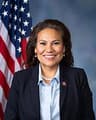 Veronica Escobar
Democrat · Texas
 Brian Fitzpatrick
Republican · Pennsylvania
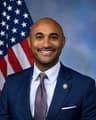 Shomari Figures
Democrat · Alabama
 Jesús García
Democrat · Illinois
 Henry Johnson
Democrat · Georgia
 Jonathan Jackson
Democrat · Illinois
 Thomas Kean
Republican · New Jersey
 Seth Magaziner
Democrat · Rhode Island
 Eleanor Norton
Democrat · District of Columbia
 Rashida Tlaib
Democrat · Michigan
 Shri Thanedar
Democrat · Michigan