
Rashida Tlaib (D-MI)
Youth Homelessness Guaranteed Income Pilot Program Act of 2025
A Democratic bill with 9 Democratic cosponsors · See all 9 cosponsors
Last activity — Referred to the Committee on Financial Services, and in addition to the Committee on Ways and Means, for a period to be subsequently determined by the Speaker, in each case for consideration of such provisions as fall within the jurisdiction of the committee concerned.
In committee
Introduced and handed to a committee in the chamber it started in.
The committee holds it, and most bills are never heard from again. A hearing or a committee vote would be news; silence is the usual outcome, and it kills the bill without anyone voting against it.
Its path through Congress
- Introduced
- In Committee
What this bill would do
This bill establishes the "Youth Homelessness Guaranteed Income Pilot Program" to provide housing assistance to certain homeless individuals. The program targets up to 105,000 individuals, specifically emancipated minors or those between the ages of 18 and 30. Participants will receive various services such as housing navigation, financial coaching, and workforce development. Additionally, half of the participants will receive monthly cash payments of at least $1,400 or the adjusted fair market rent. The Secretary of Health and Human Services will also oversee a study to analyze the program's effects on housing, economics, and health. Finally, the bill creates a National Youth Economic Advisory Council to provide recommendations and oversight.
Yes· 3 of 12
- Scored +10
Would people in their twenties and thirties be better off under this?
The bill provides direct financial and social support specifically for young adults aged 18-30.
- Scored +9
Would households on low incomes be better off under this?
The program provides direct cash transfers to low-income, homeless youth.
- Scored +9
Does this make housing cost less?
The bill provides direct financial assistance and navigation services to combat youth homelessness.
The opposite
- Scored -3
Does this give people more control over their personal data?
Participants must disclose sensitive tax and personal information to participate.
- Scored -2
Does this give the government more power to monitor people inside the country?
The bill requires the collection of personal and tax information to participate in the program.
- Scored -2
Does this protect people from being watched or searched?
Participation involves the disclosure of sensitive financial and personal data.
Who it would affect, and how
Potential Positive Impacts for People
-
Direct Financial Assistance: The program provides monthly cash payments to a designated group of participants, which will be at least $1,400 or the adjusted fair market rent (Section 4(c)(3)(B)(i)).
-
Comprehensive Support Services: Beyond cash, participants receive various assistance services including housing navigation, financial coaching, workforce development, educational attainment services, and education on landlord-tenant laws (Section 4(c)(2)).
-
Protection of Benefits: Participation in the pilot program and the receipt of payments cannot be used to determine eligibility for, or the amount of, any other Federal, State, or local program benefits (Section 4(e)(1)(A)).
-
Income Tax Advantages: For the purposes of the Internal Revenue Code, the program payments are not considered gross income (Section 4(e)(2)).
Potential Negative Impacts for People
-
Privacy Risks and Requirements: To participate, individuals must consent to the disclosure of their Federal and State income tax return information to the Secretary and an External Partner (Section 4(c)(3)(A)). Participants must also disclose other personal information determined necessary by the Secretary (Section 4(c)(3)(B)).
-
Potential Criminal Penalties for Data Mishandling: While intended to protect privacy, the law establishes that any person who knowingly discloses prohibited identifiable information or obtains records under false pretenses is guilty of a misdemeanor and can be fined up to $25,000 (Section 4(d)(4)).
Groups and Interests Ranking
Every group the model scored this bill for, from -10 to +10. Tap or hover a score for the reason it gave.
- Demographic And Interest Groups
- Would people in their twenties and thirties be better off under this? — The bill provides direct financial and social support specifically for young adults aged 18-30. Would households on low incomes be better off under this? — The program provides direct cash transfers to low-income, homeless youth. Would Black Americans be better off under this? — The bill addresses systemic racism that affects Black youth's economic and housing stability. Would children be better off under this? — The bill includes support for emancipated minors. Would LGBTQ people be better off under this? — The bill establishes a council with representation for LGBTQ+ populations. Would students be better off under this? — The program includes educational attainment services. Would immigrants be better off under this? — The bill prohibits using citizenship or immigration status as a factor in selection.
- Social Issues And Justice
- Does this make housing cost less? — The bill provides direct financial assistance and navigation services to combat youth homelessness. Is this likely to reduce homelessness? — The program specifically targets and aims to reduce homelessness among young adults. Is this likely to lift people out of poverty? — The guaranteed income component provides a direct mechanism to reduce poverty among eligible youth. Does this narrow racial gaps in how people are treated? — The bill explicitly addresses systemic racism and provides targeted assistance for youth of color.
- Education And Technology
- Does this give people more control over their personal data? — Participants must disclose sensitive tax and personal information to participate.
- National Security And Foreign Policy
- Does this give the government more power to monitor people inside the country? — The bill requires the collection of personal and tax information to participate in the program.
- Governance And Ideology
- Does this give the federal government more power? — The bill expands federal oversight of housing and income for targeted youth. Does this protect people from being watched or searched? — Participation involves the disclosure of sensitive financial and personal data.
- 6/27/2025
- 1 Cosponsor added.
- 3/27/2025
- Referred to the Committee on Financial Services, and in addition to the Committee on Ways and Means, for a period to be subsequently determined by the Speaker, in each case for consideration of such provisions as fall within the jurisdiction of the committee concerned.
- 8 Cosponsors added.
- Introduced in House
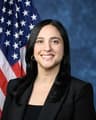 Yassamin Ansari
Democrat · Arizona
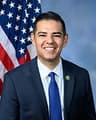 Robert Garcia
Democrat · California
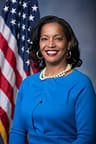 Jahana Hayes
Democrat · Connecticut
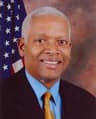 Henry Johnson
Democrat · Georgia
 James McGovern
Democrat · Massachusetts
 Eleanor Norton
Democrat · District of Columbia
 Delia Ramirez
Democrat · Illinois
 Janice Schakowsky
Democrat · Illinois
 Bonnie Watson Coleman
Democrat · New Jersey