
A Republican bill with 1 Republican cosponsor · See the cosponsor
Last activity — Referred to the Committee on Education and Workforce, and in addition to the Committee on the Judiciary, for a period to be subsequently determined by the Speaker, in each case for consideration of such provisions as fall within the jurisdiction of the committee concerned.
In committee
Introduced and handed to a committee in the chamber it started in.
The committee holds it, and most bills are never heard from again. A hearing or a committee vote would be news; silence is the usual outcome, and it kills the bill without anyone voting against it.
Its path through Congress
- Introduced
- In Committee
What this bill would do
The College Employment Accountability Act seeks to amend the Higher Education Act of 1965. It aims to prohibit institutions of higher education from receiving federal student assistance or federal institutional aid if they employ unauthorized aliens. To remain eligible for Title IV programs, institutions would be required to participate in the E-Verify Program. The Secretary of Homeland Security would monitor E-Verify participation every six months. Additionally, the Secretary of Homeland Security must notify the Secretary of Education regarding violations or a lack of participation in the E-Verify Program.
Yes
- Scored +5
Does this tighten control of the border?
The bill increases immigration enforcement through the E-Verify mandate for higher education institutions.
- Scored +4
Does this give the federal government more power?
The bill expands federal oversight of higher education institutions through mandatory E-Verify participation and monitoring.
The opposite· 3 of 7
- Scored -5
Would immigrants be better off under this?
The bill targets unauthorized employment, creating more stringent enforcement for immigrant workers.
- Scored -5
Does this make it easier for immigrants already here to become citizens?
The bill increases penalties and oversight regarding unauthorized employment, which may negatively impact immigrant communities.
- Scored -3
Would Hispanic Americans be better off under this?
The emphasis on immigration enforcement may disproportionately affect Hispanic communities.
Who it would affect, and how
Potential Positive Impacts for People
-
Enforcement of Immigration Laws: The bill seeks to prevent institutions of higher education from receiving federal funds if they are found to be in violation of section 274A of the Immigration and Nationality Act (Section 2).
-
Verification of Employment Status: By requiring participation in the E-Verify Program, the bill ensures institutions meet specific employment verification standards to remain eligible for programs authorized under title IV (Section 3).
Potential Negative Impacts for People
-
Loss of Federal Funding for Institutions: Institutions of higher education found employing unauthorized aliens would be ineligible to receive federal student assistance or federal institutional aid (Section 2).
-
Increased Oversight Burden: The Secretary of Homeland Security is required to monitor E-Verify participation every 6 months and must notify the Secretary of Education within 10 days of finding violations or a lack of participation (Section 4).
Groups and Interests Ranking
Every group the model scored this bill for, from -10 to +10. Tap or hover a score for the reason it gave.
- Demographic And Interest Groups
- Would immigrants be better off under this? — The bill targets unauthorized employment, creating more stringent enforcement for immigrant workers. Would Hispanic Americans be better off under this? — The emphasis on immigration enforcement may disproportionately affect Hispanic communities. Would households on low incomes be better off under this? — Loss of federal aid for institutions could potentially impact access to higher education for low-income students. Would students be better off under this? — Institutions face financial risks that could indirectly affect student services and aid availability.
- Governance And Ideology
- Does this give the federal government more power? — The bill expands federal oversight of higher education institutions through mandatory E-Verify participation and monitoring.
- Education And Technology
- Does this make college cost less? — The bill risks reducing available federal financial aid for institutions that fail to comply with E-Verify requirements.
- National Security And Foreign Policy
- Does this give the government more power to monitor people inside the country? — The bill mandates semi-annual monitoring of employment status by the Secretary of Homeland Security.
- Social Issues And Justice
- Does this tighten control of the border? — The bill increases immigration enforcement through the E-Verify mandate for higher education institutions. Does this make it easier for immigrants already here to become citizens? — The bill increases penalties and oversight regarding unauthorized employment, which may negatively impact immigrant communities.
- 11/19/2025
- 1 Cosponsor added.
- 3/26/2025
- Referred to the Committee on Education and Workforce, and in addition to the Committee on the Judiciary, for a period to be subsequently determined by the Speaker, in each case for consideration of such provisions as fall within the jurisdiction of the committee concerned.
- Introduced in House
One bill Congress.gov lists as related to this one — companions in the other chamber, earlier versions, and bills this one absorbed or was folded into.
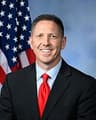 Josh Brecheen
Republican · Oklahoma