Bill · H.R. 2079· House(119-HR-2079)
Insurance Fraud Accountability Act
- Introduced
- 3/11/2025
- Last activity
- 3/11/2025 — Referred to the House Committee on Energy and Commerce.
- Sponsored by
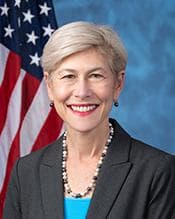
- Deborah Ross
- Cosponsors
- - 5 - 0
- Introduced
- In Committee
What this bill would do
The Insurance Fraud Accountability Act aims to amend the Patient Protection and Affordable Care Act to reduce fraudulent enrollments in qualified health plans. It establishes civil and criminal penalties for agents and brokers who provide incorrect, false, or fraudulent information. The bill mandates that the Secretary establish a new enrollment verification process to ensure individuals consent to coverage changes. It also sets stricter standards for marketing organizations and requires increased oversight through periodic audits. Ultimately, the legislation seeks to increase transparency and protect consumers from unauthorized enrollment activity.
Yes· 3 of 6
Does this give people more protection from unfair business practices?+7
The bill significantly enhances consumer protection by penalizing fraudulent insurance enrollments and requiring verification of consent.
Does this make what the government does easier for the public to see?+6
The bill mandates new transparency requirements for insurance enrollment and consumer notifications.
Does this strengthen the Affordable Care Act?+5
The bill strengthens the ACA by adding oversight mechanisms to prevent fraud within qualified health plans.
The opposite
Would business owners be better off under this?-4
Insurance agents and brokers may face more stringent regulations and potential delays in commission payments.
Who it would affect, and how
Potential Positive Impacts for People
-
Increased Penalties for Misconduct: Agents or brokers who fail to provide correct information due to negligence face civil penalties of between $10,000 and $50,000 per individual (Section 2(a)(1)(C)). Those who knowingly provide false or fraudulent information face civil penalties up to $200,000 (Section 2(a)(1)(B)(ii)(I)) or criminal penalties including up to 10 years in prison (Section 2(a)(1)(3)).
-
Enhanced Enrollment Verification: The Secretary must establish a process that requires agents or brokers to provide documentation or evidence, such as a standardized consent form, to prove an individual has consented to a new enrollment or coverage change (Section 2(b)(1)(A)(B)(i)).
-
Improved Consumer Information and Access: Individuals will receive timely notifications regarding changes to their enrollment, coverage, agent of record, or premium tax credits, including plain language instructions on how to cancel unauthorized activity (Section 2(b)(1)(A)(B)(iv)). Additionally, people can access their account information through a website or technology platform to monitor changes to their plan or agent (Section 2(b)(1)(A)(B)(v)).
-
Protection Against Disenrollment: The enrollment verification process must prioritize continuity of coverage and care by not disenrolling individuals from a qualified health plan without their consent, even if a broker or plan is in violation of requirements (Section 2(b)(1)(C)).
-
Higher Standards for Marketing: Agents and brokers must act according to a standard of conduct that includes a duty to act in the best interests of the enrollee (Section 2(c)(1)(B)(i)). Furthermore, marketing materials and organizations are subject to stricter requirements to ensure they are not confusing or misleading (Section 2(c)(1)(B)(iii)).
-
Stronger Oversight and Audits: The Secretary will implement a process for oversight and enforcement that includes periodic audits of agents and brokers based on consumer complaints or patterns suggesting fraud (Section 2(d)(2)(A)(i)).
Potential Negative Impacts for People
- Delayed Commission Payments: Under the new enrollment verification process, commissions due to a broker or agent may only be paid after an enrollee has resolved all inconsistencies in their information (Section 2(b)(1)(A)(B)(ii)).
Groups and Interests Ranking
Every group the model scored this bill for, from -10 to +10. Hover a score for the reason it gave.
- Governance And Ideology
- Improves Government Transparency+6Increases Federal Power+3
- Healthcare
- Increases Affordable Care Act Support+5Improves Healthcare Access+4
- Economy And Finance
- Improves Consumer Protection+7
- Demographic And Interest Groups
- Good For Low Income Households+5Good For Business Owners-4
- 1/14/2026
- 1 Cosponsor added.
- 3/24/2025
- 3 Cosponsors added.
- 3/11/2025
- Referred to the House Committee on Energy and Commerce.
- 1 Cosponsor added.
- Introduced in House
4 bills Congress.gov lists as related to this one — companions in the other chamber, earlier versions, and bills this one absorbed or was folded into.
 Kathy Castor
Democrat · Florida
 Steve Cohen
Democrat · Tennessee
 Debbie Dingell
Democrat · Michigan
 Valerie Foushee
Democrat · North Carolina
 Eleanor Norton
Democrat · District of Columbia