
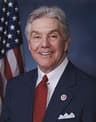
Robert Onder (R-MO)
Protecting Life and Integrity in Research Act of 2025
A Republican bill with 33 Republican cosponsors · See all 33 cosponsors
Last activity — Referred to the House Committee on Energy and Commerce.
In committee
Introduced and handed to a committee in the chamber it started in.
The committee holds it, and most bills are never heard from again. A hearing or a committee vote would be news; silence is the usual outcome, and it kills the bill without anyone voting against it.
Its path through Congress
- Introduced
- In Committee
What this bill would do
The "Protecting Life and Integrity in Research Act of 2025" prohibits the Federal Government from conducting, funding, or supporting research involving human fetal tissue obtained through an induced abortion. It also forbids the solicitation or knowing acquisition and acceptance of such tissue donations. The bill allows for the development of new, high-efficiency cell lines for things like vaccines as long as they are not derived from tissue obtained via induced abortion. Research is still permitted on human fetal tissue obtained after a miscarriage or stillbirth. Additionally, the bill amends the Public Health Service Act to redefine human fetal tissue and its origins.
Yes
No question was scored yes.
The opposite· 3 of 5
- Scored -5
Does this make abortion easier to get?
The bill restricts research capabilities that may be linked to reproductive health contexts by prohibiting federal support for tissue obtained via induced abortion.
- Scored -4
Does this put more money into medical research?
The bill prohibits federal funding for a specific category of human fetal tissue research.
- Scored -4
Would women be better off under this?
The bill restricts research activities that may impact reproductive health autonomy and scientific progress.
Who it would affect, and how
Potential Positive Impacts for People
-
Development of alternative cell lines: The bill ensures that the government can still support the development of new, high-efficiency cell lines for producing vaccines and genetic vectors, provided they are not derived from tissue obtained via induced abortion (Section 2(a)(2)).
-
Continued research on other tissue types: Research involving human fetal tissue obtained after a miscarriage or stillbirth remains permitted and can be conducted or supported by Federal departments and agencies (Section 2(a)(3)).
Potential Negative Impacts for People
-
Prohibition of specific research: Federal departments, agencies, or offices are prohibited from conducting, funding, approving, or supporting any research that involves human fetal tissue obtained pursuant to an induced abortion (Section 2(a)(1)).
-
Restrictions on tissue acquisition: The bill prohibits the solicitation or knowing acquisition, receipt, or acceptance of donations of human fetal tissue if it is known that the tissue was obtained pursuant to an induced abortion (Section 3(a)).
Groups and Interests Ranking
Every group the model scored this bill for, from -10 to +10. Tap or hover a score for the reason it gave.
- Healthcare
- Does this make abortion easier to get? — The bill restricts research capabilities that may be linked to reproductive health contexts by prohibiting federal support for tissue obtained via induced abortion. Does this put more money into medical research? — The bill prohibits federal funding for a specific category of human fetal tissue research. Does this make the country readier for the next outbreak? — By restricting certain human fetal tissue research, the bill may limit the scope of available biological materials used in some vaccine and genetic vector development processes.
- Demographic And Interest Groups
- Would women be better off under this? — The bill restricts research activities that may impact reproductive health autonomy and scientific progress.
- Education And Technology
- Does this put more money into scientific research? — The bill restricts the scope of federally fundable scientific research regarding fetal tissue origins.
- 3/16/2026
- 1 Cosponsor added.
- 10/3/2025
- 1 Cosponsor added.
- 9/30/2025
- 2 Cosponsors added.
- 9/26/2025
- 1 Cosponsor added.
- 7/21/2025
- 1 Cosponsor added.
- 7/17/2025
- 1 Cosponsor added.
- 6/26/2025
- 1 Cosponsor added.
- 4/1/2025
- 1 Cosponsor added.
- 3/31/2025
- 1 Cosponsor added.
- 3/11/2025
- Referred to the House Committee on Energy and Commerce.
- 23 Cosponsors added.
- Introduced in House
One bill Congress.gov lists as related to this one — companions in the other chamber, earlier versions, and bills this one absorbed or was folded into.
 Brian Babin
Republican · Texas
 Mike Bost
Republican · Illinois
 Andy Biggs
Republican · Arizona
 Tim Burchett
Republican · Tennessee
 Sheri Biggs
Republican · South Carolina
 Kat Cammack
Republican · Florida
 Michael Cloud
Republican · Texas
 Elijah Crane
Republican · Arizona
 Jake Ellzey
Republican · Texas
 Mike Ezell
Republican · Mississippi
 Pat Fallon
Republican · Texas
 Randy Feenstra
Republican · Iowa
 Charles Fleischmann
Republican · Tennessee
 Paul Gosar
Republican · Arizona
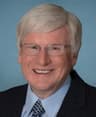 Glenn Grothman
Republican · Wisconsin
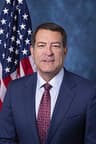 Mark Green
Republican · Tennessee
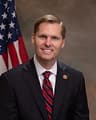 Michael Guest
Republican · Mississippi
 Marjorie Greene
Republican · Georgia
 Brandon Gill
Republican · Texas
 Andy Harris
Republican · Maryland
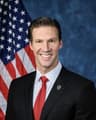 Pat Harrigan
Republican · North Carolina
 Trent Kelly
Republican · Mississippi
 Robert Latta
Republican · Ohio
 Doug LaMalfa
Republican · California
 Mary Miller
Republican · Illinois
 Richard McCormick
Republican · Georgia
 Gary Palmer
Republican · Alabama
 Christopher Smith
Republican · New Jersey
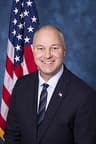 Pete Stauber
Republican · Minnesota
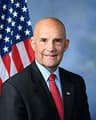 Keith Self
Republican · Texas
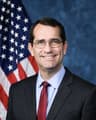 Derek Schmidt
Republican · Kansas
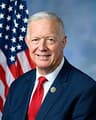 Randy Weber
Republican · Texas
 Roger Williams
Republican · Texas