Bill · H.R. 2066· House(119-HR-2066)
Investing in All of America Act of 2025
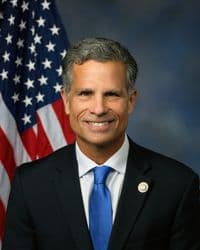
- Introduced
- 3/11/2025
- Last activity
- 5/19/2026 — Became Public Law No: 119-92.
- Sponsored by
- Daniel Meuser
- Cosponsors
- - 4 - 4
- Introduced
- Passed House
- Passed Senate
- To President
- Became Law
What this bill would do
This bill, known as the "Investing in All of America Act of 2025," seeks to amend the Small Business Investment Act of 1958. It focuses on changing how maximum leverage is calculated for certain companies. Specifically, the Act aims to exclude certain investments from leverage limits. These exclusions apply to small businesses located in rural or low-income areas, businesses in critical technology categories, and small manufacturers. The bill also updates definitions and financial thresholds within the existing law.
Yes· 3 of 11
Would business owners be better off under this?+6
The bill provides more flexible leverage terms for small business owners in specific sectors and locations.
Does this make it easier to run a small business?+6
The bill specifically expands support for small businesses in rural areas, low-income areas, critical technology, and manufacturing through leverage exclusions.
Would people in rural areas be better off under this?+5
The bill includes rural areas in the new leverage exclusion criteria to boost local business investment.
The opposite
No question was scored the opposite.
Who it would affect, and how
Potential Positive Impacts for People
-
Increased Investment in Specific Sectors: By excluding certain investments from the leverage limit calculation, the bill allows for more capital to flow into specific areas. This applies to small business concerns in low-sincome geographic areas, rural areas, covered technology categories, or small manufacturers (Section 2(b)(3)(A) and (B)(iii)).
-
Support for Rural and Low-Income Areas: The bill specifically adds "rural" to the geographic areas that can benefit from these leverage exclusions (Section 2(b)(3)(A)(i)).
-
Support for Critical Technology and Manufacturing: The bill expands the scope of investments that can be excluded to include "critical technology areas" and "small manufacturers" (Section 2(b)(3)(A)).
Potential Negative Impacts for People
-
Reduced Leverage Limits for Certain Companies: The bill decreases the amount of leverage allowed for some companies. Specifically, it changes the amount in clause (i) from "300" to "200" (Section 2(b)(1)(A)).
-
New Limits on Leverage Amounts: The bill adjusts the financial thresholds for companies making specific interest payments and for other licensed companies (Section 2(b)(1)(B) and (2)).
-
Caps on Exclusions: While the bill allows for leverage exclusions, there is a specific cap. The aggregate amount excluded cannot exceed the lesser of 50 percent of the private capital of the company or companies or $125,000,000 (Section 2(b)(3)(B)(ii)).
Groups and Interests Ranking
Every group the model scored this bill for, from -10 to +10. Hover a score for the reason it gave.
- Demographic And Interest Groups
- Good For Business Owners+6Good For Rural Residents+5Good For Low Income Households+3
- Economy And Finance
- Improves Small Business Support+6Improves Economic Growth+4Increases Job Creation+4
- Environment Energy And Infrastructure
- Improves Rural Development+5
- Social Issues And Justice
- Improves Racial Equity+3Improves Poverty Reduction+2
- National Security And Foreign Policy
- Improves Cybersecurity Defense+3
- Education And Technology
- Increases Scientific Research Funding+2
- Public Law(5/20/2026)
The text as it became law
- Enrolled Bill
The final version, on its way to the President
- 5/19/2026
- Signed by President.
- Became Public Law No: 119-92.
- 5/12/2026
- Presented to President.
- 4/16/2026
- Message on Senate action sent to the House.
- 4/15/2026
- Senate Committee on Small Business and Entrepreneurship discharged by Unanimous Consent.
- Passed/agreed to in Senate: Passed Senate without amendment by Unanimous Consent.
- Passed Senate without amendment by Unanimous Consent. (consideration: CR S1789-1790)
- 12/2/2025
- Received in the Senate and Read twice and referred to the Committee on Small Business and Entrepreneurship.
- 12/1/2025
- Motion to reconsider laid on the table Agreed to without objection.
- Passed/agreed to in House: On motion to suspend the rules and pass the bill, as amended Agreed to by voice vote. (text: CR H4918)
- On motion to suspend the rules and pass the bill, as amended Agreed to by voice vote. (text: CR H4918)
- DEBATE - The House proceeded with forty minutes of debate on H.R. 2066.
- Considered under suspension of the rules. (consideration: CR H4918-4919)
- Mr. Williams (TX) moved to suspend the rules and pass the bill, as amended.
- 8/15/2025
- Reported (Amended) by the Committee on Small Business. H. Rept. 119-227.
- Placed on the Union Calendar, Calendar No. 185.
- 7/25/2025
- 1 Cosponsor added.
- 7/22/2025
- Committee Consideration and Mark-up Session Held
- Ordered to be Reported (Amended) by the Yeas and Nays: 23 - 0.
- 4/7/2025
- 1 Cosponsor added.
- 3/31/2025
- 4 Cosponsors added.
- 3/25/2025
- 1 Cosponsor added.
- 3/11/2025
- Referred to the House Committee on Small Business.
- 1 Cosponsor added.
- Introduced in House
2 bills Congress.gov lists as related to this one — companions in the other chamber, earlier versions, and bills this one absorbed or was folded into.
 Donald Davis
Democrat · North Carolina
 Sharice Davids
Democrat · Kansas
 Brian Fitzpatrick
Republican · Pennsylvania
 Kimberlyn King-Hinds
Republican · Northern Mariana Islands
 Nick LaLota
Republican · New York
 Hillary Scholten
Democrat · Michigan
 Eugene Vindman
Democrat · Virginia
 Tony Wied
Republican · Wisconsin