Bill · H.R. 2038· House(119-HR-2038)
American Housing and Economic Mobility Act of 2025
- Introduced
- 3/11/2025
- Last activity
- 3/27/2025 — Referred to the Subcommittee on Economic Opportunity.
- Sponsored by
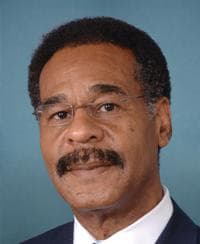
- Emanuel Cleaver
- Cosponsors
- - 26 - 0
- Introduced
- In Committee
What this bill would do
The American Housing and Economic Mobility Act of 2025 aims to increase housing affordability through several initiatives. It establishes local housing innovation grants to reform land use and reduce production costs. The bill also invests in affordable housing infrastructure, including various trust funds and rural housing programs. It expands Fair Housing Act protections to include gender identity, sexual orientation, marital status, source of income, and veteran status. Additionally, the act introduces significant changes to the estate and gift taxes while mandating new regional planning requirements for public housing agencies.
Yes· 3 of 31
Does this make housing cost less?+9
The bill significantly invests in affordable housing, down payment assistance, and land-use reforms.
Would households on low incomes be better off under this?+8
The bill provides substantial down payment assistance and housing support for low-income residents.
Does this raise taxes on the highest earners?+8
The bill significantly increases estate taxes through higher rates, a lower exclusion amount, and new surtaxes on high-income estates and trusts.
The opposite· 3 of 5
Would the very wealthiest people be better off under this?-9
The bill targets very large estates with increased rates and new surtaxes.
Would billionaires be better off under this?-9
The bill includes a specific surtax on estates exceeding $1 billion.
Would high-income households be better off under this?-8
The bill imposes significant new estate taxes and surcharges on high-income estates and trusts.
Who it would affect, and how
Potential Positive Impacts for People
-
Local Housing Innovation Grants: These grants allow eligible entities to reform land use restrictions and remove barriers to building affordable units, which can lower the cost of producing housing (Sec. 101).
-
Down Payment Assistance: First-time, first-generation homebuyers can receive grants of up to 3.5 percent of the appraised value of a property to help them purchase a principal residence (Sec. 201).
-
Neighborhood Appraisal Gap Support: Formula grants can provide funds to help borrowers pay down arrears on loans, pay off second mortgages, or fund necessary home repairs to keep their homes (Sec. 202).
-
Real Estate-Owned Property Sales: The bill requires that at least 75 percent of single-family residential properties conveyed after foreclosure be sold directly to owner-occupants or community partners who develop them for owner-occupants (Sec. 103).
-
Non-Performing Loan Protections: Borrowers facing financial distress are provided with specific loss mitigation options and written notices before loans are sold (Sec. 103).
-
Veteran Descendant Assistance: Certain direct descendants of deceased veterans who served between 1944 and 1968 can access housing loans if they are first-time, first-generation homebuyers (Sec. 206).
-
Expanded Fair Housing Protections: The bill expands the FairHOUSING Act to include protections against discrimination based on gender identity, sexual orientation, marital status, source of income, and veteran status (Section 301).
-
Improved Housing Outcomes: Public housing agencies will be required to conduct location analyses to reduce disparities and help families, including those with children or disabilities, move to higher-opportunity neighborhoods (Section 302).
-
Increased Accessibility: Housing constructed or assisted with funds from this Act will require twice the number of accessible dwelling units compared to previous requirements (Section 501).
-
Higher Valuation for Farm Property: The valuation limit for certain farm and certain real property is increased from $750,000 to $3,000,000 (Section 410).
-
Increased Exclusion for Conservation Easements: The exclusion limitation for land subject to conservation easements is increased from $500,000 to $2,000,000 (Section 411).
Potential Negative Impacts for People
-
Landlord-Tenant Restrictions: The bill includes provisions that could affect landlords, such as prohibiting evictions except for just cause and providing tenants with a cause of action to sue for illegal evictions (Sec. 101).
-
Mortgage Sale Requirements: While intended to protect borrowers, the strict requirements and mandatory loss mitigation options for purchasers of non-performing loans could place specific burdens on those buying such mortgages (Sec. 103).
-
Down Payment Repayment: Individuals receiving down payment assistance may be required to repay a proportional amount of the grant if they do not occupy the property as a principal residence for at least five years (Sec. 201).
-
Increased Estate Tax Burden: The bill increases estate tax rates, reduces the basic exclusion amount to $3,500,000, and adds a 10 percent surtax on estates exceeding $1,000,000,000 (Section 402).
-
New Surcharges on High Income: A new tax is imposed on estates and trusts based on modified adjusted gross income exceeding certain thresholds (Section 409).
-
Changes to Grantor Retained Annuity Trusts: To qualify for certain benefits, these trusts must now meet a minimum 10-year term and specific value requirements (Section 403).
-
Limitations on Valuation Discounts: The bill limits the ability to use valuation discounts for transfers of nonbusiness assets in entities controlled by a family (Section 408).
-
New Gift Tax Rules: The bill changes rules regarding annual gifts, including a specific $10,000 limit per donee for certain types of transfers (Section 406).
Groups and Interests Ranking
Every group the model scored this bill for, from -10 to +10. Hover a score for the reason it gave.
- Social Issues And Justice
- Improves Affordable Housing+9Improves Racial Equity+6Improves Disability Rights+5Improves L G B T Q Rights+5Improves Poverty Reduction+5Improves Gender Equality+3Reduces Homelessness+3
- Demographic And Interest Groups
- Good For Low Income Households+8Good For People With Disabilities+6Good For African Americans+5Good For Asian Americans+5Good For Hispanic Americans+5Good For L G B T Q Community+5Good For Middle Class Households+5Good For Native Americans+5Good For Veterans+5Good For Rural Residents+4Good For Urban Residents+4Good For Young Adults+4Good For Children+3Good For Farmers+3Good For Billionaires-9Good For Ultra High Net Worth Individuals-9Good For High Income Households-8Good For High Net Worth Individuals-8
- Economy And Finance
- Increases Wealthy Taxes+8Improves Consumer Protection+3Reduces National Debt+3Improves Fiscal Responsibility+2Improves Small Business Support+2Reduces Estate Tax-7
- Governance And Ideology
- Increases Federal Power+3Improves Government Transparency+2
- National Security And Foreign Policy
- Improves Veterans Benefits+5
- Environment Energy And Infrastructure
- Improves Rural Development+4
- Healthcare
- Improves Veterans Healthcare+4
- 6/12/2025
- 3 Cosponsors added.
- 3/27/2025
- Referred to the Subcommittee on Economic Opportunity.
- 3/11/2025
- Referred to the Committee on Financial Services, and in addition to the Committees on the Judiciary, Veterans' Affairs, and Ways and Means, for a period to be subsequently determined by the Speaker, in each case for consideration of such provisions as fall within the jurisdiction of the committee concerned.
- 23 Cosponsors added.
- Introduced in House
One bill Congress.gov lists as related to this one — companions in the other chamber, earlier versions, and bills this one absorbed or was folded into.
 Yassamin Ansari
Democrat · Arizona
 Suzanne Bonamici
Democrat · Oregon
 Cleo Fields
Democrat · Louisiana
 Maxwell Frost
Democrat · Florida
 Valerie Foushee
Democrat · North Carolina
 Shomari Figures
Democrat · Alabama
 Al Green
Democrat · Texas
 Jimmy Gomez
Democrat · California
 Jesús García
Democrat · Illinois
 Pramila Jayapal
Democrat · Washington
 Jonathan Jackson
Democrat · Illinois
 Ro Khanna
Democrat · California
 James McGovern
Democrat · Massachusetts
 Gwen Moore
Democrat · Wisconsin
 Morgan McGarvey
Democrat · Kentucky
 LaMonica McIver
Democrat · New Jersey
 Jerrold Nadler
Democrat · New York
 Eleanor Norton
Democrat · District of Columbia
 Alexandria Ocasio-Cortez
Democrat · New York
 Ilhan Omar
Democrat · Minnesota
 Ayanna Pressley
Democrat · Massachusetts
 Delia Ramirez
Democrat · Illinois
 Janice Schakowsky
Democrat · Illinois
 Bennie Thompson
Democrat · Mississippi
 Rashida Tlaib
Democrat · Michigan
 Shri Thanedar
Democrat · Michigan