Bill · S. 934· Senate(119-S-934)
American Housing and Economic Mobility Act of 2025
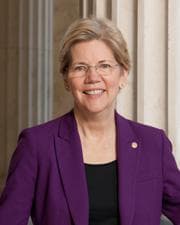
- Introduced
- 3/11/2025
- Last activity
- 3/11/2025 — Read twice and referred to the Committee on Finance.
- Sponsored by
- Elizabeth Warren
- Cosponsors
- - 8 - 0
- Introduced
- In Committee
What this bill would do
The American Housing and Economic Mobility Act of 2025 aims to increase housing affordability and economic mobility through various legislative changes. It establishes local housing innovation grants to reform land use and remove building barriers while providing down payment assistance for first-time, first-generation homebuyers. The bill expands Fair Housing Act protections to include gender identity, sexual orientation, marital status, source of income, and veteran status. Additionally, it mandates new regional planning for public housing agencies and implements significant changes to taxation, including increased estate tax rates and reduced exclusion amounts. The act also includes protections for foreclosed properties and provides temporary housing loan eligibility for certain descendants of veterans.
Who it would affect, and how
Potential Positive Impacts for People
-
Local Housing Innovation Grants: Provides funding to eligible entities to reform land use restrictions and remove barriers to building affordable units, which can help lower production costs (Sec. 101).
-
Down Payment Assistance: Establishes a fund to provide grants to eligible residents—specifically first-time, first-generation homebuyers with limited income—to help them purchase a principal residence (Sec. 201).
-
Appraisal Gap Support: Creates a formula grant program to help borrowers pay down debt, such as arrears or second mortgages, or to assist with home repairs in neighborhoods where costs exceed property values (Sec. 202).
-
Protection for Homebuyers: Requires that a high percentage of properties conveyed after foreclosure be sold directly to owner-occupants or community partners for rehabilitation (Sec. 103).
-
Improved Mortgage Protections: Imposes requirements on the sale of non-performing loans to ensure borrowers are notified and provided with loss mitigation options (Sec. 103).
-
Veteran Descendant Benefits: Offers temporary eligibility for housing loans to certain direct descendants of veterans who are first-time and first-generation homebuyers (Sec. 206).
-
Strengthened Community Reinvestment: Amends the Community Reinvestment Act to ensure financial institutions meet the credit and financial needs of all local communities, including low- and moderate-income areas (Sec. 203).
-
Expanded Fair Housing Protections: The bill expands the Fair Housing Act to include protections against discrimination based on gender identity, sexual orientation, marital status, source of income, and veteran status (Section (b)). This provides greater legal clarity and consistency for these groups.
-
Increased Protection Against Perceived Discrimination: By inserting "actual or perceived" before race and color, the bill expands protections to include people who are perceived to belong to those groups (Section (b), (c)).
-
Improved Housing Opportunities: The bill requires public housing agencies to perform location analyses to identify and reduce barriers to accessing higher-opportunity neighborhoods (Section 302(c)(A)).
-
Increased Funding for Families: It includes a supplemental administrative fee to assist families with children or members with disabilities in moving to higher-opportunity neighborhoods (Section 302(b)).
-
Higher Valuation for Farm Property: The exclusion amount for certain farm, etc., real property is increased from $750,000 to $3,000,000 (Section 410(a)).
-
Increased Exclusion for Conservation Easements: The modification of the exclusion limitation for land subject to conservation easements increases the amount from $500,000 to $2,000,000 (Section 411(a)).
-
Increased Housing Accessibility: For housing constructed or assisted under this act, the number of required accessible dwelling units is doubled (Section 501).
Potential Negative Impacts for People
-
Repayment Requirements for Grants: Individuals receiving down payment assistance may be required to repay a proportional amount of the grant if they do not occupy the home as a principal residence for at least five years (Sec. 201).
-
Restrictions on Mortgage Sales: The bill imposes specific conditions and restrictions on how the Secretary may sell or transfer covered mortgages, which could impact the management of the Fund (Sec. 103).
-
Increased Estate Tax Burdens: The bill increases the tentative tax rates for estates, including a 60 percent rate for amounts over $13,000,000 and a 65 percent rate for amounts over $93,000,000 (Section 402(a)).
-
Reduced Tax Exclusions: The basic exclusion amount for estates is reduced to $3,500,000 (Section 402(b)).
-
New Surtax on Large Estates: A new 10 percent surtax is imposed on taxable estates exceeding $1,000,000,000 (Section 402(c)).
-
New Surcharge on High Income Estates and Trusts: An additional tax is imposed on estates and trusts based on modified adjusted gross income (Section 409(a)).
-
Restrictions on Grantor Retained Annuity Trusts: New requirements are established for these trusts, including a minimum 10-year term and specific value requirements for the remainder interest (Section 403(a)).
-
Limitations on Valuation Discounts: The bill limits the ability to use discounts for transfers of interests in entities that are not actively traded, specifically regarding nonbusiness assets (Section 408(a)).
-
New Gift Tax Rules: The bill modifies the rules for annual gifts, setting a $10,000 limit per donee for certain types of transfers (Section 406(a)).
- 3/14/2025
- 1 Cosponsor added.
- 3/11/2025
- Read twice and referred to the Committee on Finance.
- 8 Cosponsors added.
- Introduced in Senate
One bill Congress.gov lists as related to this one — companions in the other chamber, earlier versions, and bills this one absorbed or was folded into.
 Richard Blumenthal
Democrat · Connecticut
 Mazie Hirono
Democrat · Hawaii
 Andy Kim
Democrat · New Jersey
 Ben Luján
Democrat · New Mexico
 Edward Markey
Democrat · Massachusetts
 Bernie Sanders
Independent · Vermont
 Chris Van Hollen
Democrat · Maryland
 Raphael Warnock
Democrat · Georgia
 Peter Welch
Democrat · Vermont