Bill · H.R. 1999· House(119-HR-1999)
Disclose GIFT Act
- Introduced
- 3/10/2025
- Last activity
- 3/10/2025 — Referred to the House Committee on Education and Workforce.
- Sponsored by
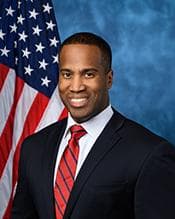
- John James
- Cosponsors
- - 1 - 0
- Introduced
- In Committee
What this bill would do
This bill, known as the "Disclose GIFT Act," seeks to amend the Higher Education Act of 1965. It requires certain higher education institutions to establish policies for staff and faculty to report foreign gifts and contracts. These institutions must maintain a searchable, public database of this information, excluding personally identifiable details. The act also mandates an effective plan to manage potential information gathering through espionage. Compliance is enforced through investigations, civil actions, and significant fines. Institutions that fail to comply may face ineligibility for certain federal programs.
Yes
Does this make what the government does easier for the public to see?+6
The bill mandates the creation of a public, searchable database for foreign financial connections in academia.
Does this give the federal government more power?+5
The bill significantly expands federal oversight and enforcement capabilities over higher education institutions.
The opposite· 3 of 4
Does this make college cost less?-3
The compliance costs and potential fines could negatively impact the financial stability of higher education institutions.
Does this protect the individual right to speak freely?-2
Increased reporting and monitoring could have a chilling effect on academic freedom and international collaboration.
Does this put more money into scientific research?-2
The heavy reporting requirements and risk of losing federal funding may deter foreign-sourced research investment.
Who it would affect, and how
Potential Positive Impacts for People
-
Increased Transparency: Institutions must maintain a publicly available and searchable database of information regarding gifts and contracts (Section 117A(a)(2)). This allows the public to see information about foreign financial connections at institutions.
-
Protection Against Espionage: The bill requires institutions to have an effective plan to identify and manage potential information gathering by foreign sources through espionage targeting staff and faculty (Section 117A(a)(3)).
-
Public Accountability: The Secretary of Education is required to provide status updates on investigations and civil actions to authorizing committees every 90 days (Section 117B(b)(2)).
Potential Negative Impacts for People
-
Financial Burdens on Institutions: Institutions that are compelled to comply with requirements following a civil action must pay the full costs of the investigation and enforcement to the U.S. Treasury (Section 117B(a)(3)(A)).
-
Heavy Fines for Non-compliance: Institutions face significant fines for violations, starting at the greater of $250,000 or the total value of the unreported gifts or contracts (Section 117B(a)(4)(A)). Subsequent violations can result in fines of $500,000 or twice the value of the unreported items (Section 117B(a)(4)(B)).
-
Risk to Federal Funding: Institutions that are subject to three separate civil actions may be made ineligible to participate in federal programs authorized under title IV for at least two institutional fiscal years (Section 487(a)(30)(B)).
Groups and Interests Ranking
Every group the model scored this bill for, from -10 to +10. Hover a score for the reason it gave.
- Governance And Ideology
- Improves Government Transparency+6Increases Federal Power+5Improves Freedom Of Speech-2Improves Privacy Rights-1
- Education And Technology
- Improves College Affordability-3Increases Scientific Research Funding-2
- 3/10/2025
- Referred to the House Committee on Education and Workforce.
- 1 Cosponsor added.
- Introduced in House
One bill Congress.gov lists as related to this one — companions in the other chamber, earlier versions, and bills this one absorbed or was folded into.
 Virginia Foxx
Republican · North Carolina