Bill · H.R. 1701· House(119-HR-1701)
Strategic Ports Reporting Act
- Introduced
- 2/27/2025
- Last activity
- 5/22/2025 — Received in the Senate and Read twice and referred to the Committee on Foreign Relations.
- Sponsored by
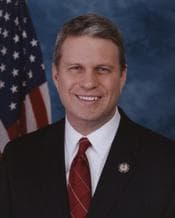
- Bill Huizenga
- Cosponsors
- - 13 - 3
- Introduced
- Passed House
- In Senate committee
What this bill would do
The Strategic Ports Reporting Act directs the Secretary of State and the Secretary of Defense to monitor the People's Republic of China's efforts to control strategic ports. It requires the creation of a global map of domestic and foreign ports important to U.S. military, diplomatic, or economic interests. The Act mandates a comprehensive study on how Chinese control of these ports could harm U.S. national security and economic interests. This study must examine the activities of various actors and the impact of Chinese maritime logistics products. Additionally, the government must develop strategies to ensure open access and security for these ports. A full report containing these findings and suggested strategies must be submitted to Congress within one year.
Yes· 3 of 6
Does this better protect the country from computer attacks?+5
The bill addresses potential cyber threats posed by PRC control of strategic ports.
Does this strengthen ties with allied countries?+4
Securing ports benefits the security interests of U.S. allies and partners.
Does this make trade with other countries easier?+4
Ensuring open access to strategic ports protects international maritime trade stability.
The opposite
No question was scored the opposite.
Who it would affect, and how
Potential Positive Impacts for People
-
Protection of National Security and Economic Interests: The bill aims to identify how control of strategic ports by the PRC could harm the national security or economic interests of the United States and its partners (Section 3(a)(6)).
-
Ensuring Open Access to Infrastructure: The study seeks to identify measures the U.S. Government can take to ensure open access and security for strategic ports (Section 3(a)(7)).
-
Providing Economic Alternatives: The Act directs the development of a strategy to offer alternatives to PRC investments or stakes in strategic ports (Section 3(a)(7)).
-
Securing Trusted Investment: The bill calls for a strategy to secure trusted investment and ownership of strategic ports and maritime infrastructure (Section 3(c)(2)(F)).
Potential Negative Impacts for People
-
Increased Costs for Infrastructure Changes: The required report must assess the costs to replace products owned by the Government of the PRC or entities headquartered in the PRC that are used in connection with strategic ports (Section 3(c)(2)(F)(iv)).
-
Potential National Security Threats: The bill notes that investments or activities by the PRC could pose national security threats to United States diplomatic and defense personnel and facilities via cyber threats or espionage (Section 3(c)(2)(H)).
Groups and Interests Ranking
Every group the model scored this bill for, from -10 to +10. Hover a score for the reason it gave.
- National Security And Foreign Policy
- Improves Cybersecurity Defense+5Improves International Alliances+4Improves International Trade+4
- Governance And Ideology
- Improves Government Transparency+3Increases Federal Power+2
- Economy And Finance
- Improves Economic Growth+3
- 5/22/2025
- Received in the Senate and Read twice and referred to the Committee on Foreign Relations.
- Motion to reconsider laid on the table Agreed to without objection.
- Passed/agreed to in House: On motion to suspend the rules and pass the bill Agreed to by voice vote.
- On motion to suspend the rules and pass the bill Agreed to by voice vote.
- Considered as unfinished business.
- 5/19/2025
- At the conclusion of debate, the chair put the question on the motion to suspend the rules. Mr. Huizenga objected to the vote on the grounds that a quorum was not present. Further proceedings on the motion were postponed. The point of no quorum was considered as withdrawn.
- DEBATE - The House proceeded with forty minutes of debate on H.R. 1701.
- Considered under suspension of the rules. (consideration: CR H2116-2119; text: CR H2116-2117)
- Mr. Huizenga moved to suspend the rules and pass the bill.
- 2 Cosponsors added.
- 4/30/2025
- 1 Cosponsor added.
- 4/28/2025
- 1 Cosponsor added.
- 4/9/2025
- 1 Cosponsor added.
- 3/25/2025
- 2 Cosponsors added.
- 3/11/2025
- 1 Cosponsor added.
- 3/10/2025
- 1 Cosponsor added.
- 3/6/2025
- 1 Cosponsor added.
- 3/5/2025
- 2 Cosponsors added.
- 3/3/2025
- 1 Cosponsor added.
- 2/27/2025
- Referred to the Committee on Foreign Affairs, and in addition to the Committee on Armed Services, for a period to be subsequently determined by the Speaker, in each case for consideration of such provisions as fall within the jurisdiction of the committee concerned.
- 3 Cosponsors added.
- Introduced in House
2 bills Congress.gov lists as related to this one — companions in the other chamber, earlier versions, and bills this one absorbed or was folded into.
 Jake Auchincloss
Democrat · Massachusetts
 Mike Bost
Republican · Illinois
 James Baird
Republican · Indiana
 Nicholas Begich
Republican · Alaska
 Ken Calvert
Republican · California
 Mark Green
Republican · Tennessee
 Michael Lawler
Republican · New York
 Michael McCaul
Republican · Texas
 Barry Moore
Republican · Alabama
 James Moylan
Republican · Guam
 Johnny Olszewski
Democrat · Maryland
 Aumua Amata Radewagen
Republican · American Samoa
 Maria Salazar
Republican · Florida
 Greg Stanton
Democrat · Arizona
 Jefferson Shreve
Republican · Indiana
 Robert Wittman
Republican · Virginia