Bill · H.R. 1651· House(119-HR-1651)
To nullify the final rule issued by the Environmental Protection Agency relating to "New Source Performance Standards for Greenhouse Gas Emissions From New, Modified, and Reconstructed Fossil Fuel-Fired Electric Generating Units; Emission Guidelines for Greenhouse Gas Emissions From Existing Fossil Fuel-Fired Electric Generating Units; and Repeal of the Affordable Clean Energy Rule".
- Introduced
- 2/27/2025
- Last activity
- 2/27/2025 — Referred to the House Committee on Energy and Commerce.
- Sponsored by
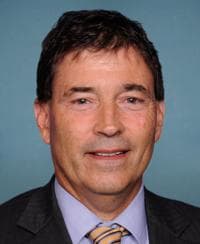
- Troy Balderson
- Cosponsors
- - 37 - 0
- Introduced
- In Committee
What this bill would do
This bill aims to nullify a specific final rule issued by the Environmental Protection Agency. The rule in question concerns standards for greenhouse gas emissions from new, modified, and reconstructed fossil fuel-fired electric generating units. It also addresses emission guidelines for existing fossil fuel-fired electric generating units and the repeal of the Affordable Clean Energy Rule. By passing this act, the specified EPA rule would have no force or effect.
Yes· 3 of 7
Would business owners be better off under this?+3
Energy and manufacturing business owners benefit from reduced regulatory compliance costs.
Is this likely to lower the price at the pump?+1
Decreasing regulatory costs for energy production can potentially lower electricity and fuel prices.
Would middle-income households be better off under this?+1
Reduced energy regulation may lead to lower utility bills for households.
The opposite· 3 of 10
Does this cut the pollution that drives climate change?-7
Nullifying EPA standards for greenhouse gas emissions will likely increase carbon dioxide output from power plants.
Does this better protect air, water and wildlife?-7
The bill removes air quality standards meant to regulate fossil fuel-fired electric generating units.
Does this reduce how much oil, gas and coal is produced?-5
The bill lessens the regulatory pressure that typically drives a shift away from fossil fuels.
Who it would affect, and how
Potential Positive Impacts for People
The provided text does not list specific positive impacts or benefits for individuals or groups of people.
Potential Negative Impacts for People
The provided text does not list specific negative impacts or burdens for individuals or groups of people.
Groups and Interests Ranking
Every group the model scored this bill for, from -10 to +10. Hover a score for the reason it gave.
- Environment Energy And Infrastructure
- Reduces Gas Prices+1Improves Environmental Protections-7Reduces Carbon Emissions-7Reduces Fossil Fuel Production-5Increases Renewable Energy Investment-2
- Governance And Ideology
- Increases Federal Power-5
- Demographic And Interest Groups
- Good For Business Owners+3Good For Middle Class Households+1Good For Rural Residents+1Good For Union Workers+1Good For Urban Residents-3Good For African Americans-2Good For Children-2Good For Low Income Households-2
- Economy And Finance
- Improves Economic Growth+1Increases Job Creation+1
- Social Issues And Justice
- Improves Racial Equity-2
- 9/17/2025
- 1 Cosponsor added.
- 4/29/2025
- 1 Cosponsor added.
- 4/1/2025
- 1 Cosponsor added.
- 3/21/2025
- 1 Cosponsor added.
- 3/10/2025
- 5 Cosponsors added.
- 3/4/2025
- 5 Cosponsors added.
- 3/3/2025
- 12 Cosponsors added.
- 2/27/2025
- Referred to the House Committee on Energy and Commerce.
- 11 Cosponsors added.
- Introduced in House
 Rick Allen
Republican · Georgia
 Cliff Bentz
Republican · Oregon
 Stephanie Bice
Republican · Oklahoma
 Gus Bilirakis
Republican · Florida
 James Baird
Republican · Indiana
 Aaron Bean
Republican · Florida
 Eric Crawford
Republican · Arkansas
 Earl Carter
Republican · Georgia
 Dan Crenshaw
Republican · Texas
 Neal Dunn
Republican · Florida
 Ron Estes
Republican · Kansas
 Gabe Evans
Republican · Colorado
 Michelle Fischbach
Republican · Minnesota
 Brad Finstad
Republican · Minnesota
 Sam Graves
Republican · Missouri
 Paul Gosar
Republican · Arizona
 H. Griffith
Republican · Virginia
 Richard Hudson
Republican · North Carolina
 John Joyce
Republican · Pennsylvania
 Robert Latta
Republican · Ohio
 Doug LaMalfa
Republican · California
 Laurel Lee
Republican · Florida
 Nicholas Langworthy
Republican · New York
 Tracey Mann
Republican · Kansas
 Daniel Meuser
Republican · Pennsylvania
 Carol Miller
Republican · West Virginia
 Riley Moore
Republican · West Virginia
 Addison McDowell
Republican · North Carolina
 August Pfluger
Republican · Texas
 Scott Perry
Republican · Pennsylvania
 Gary Palmer
Republican · Alabama
 Michael Rulli
Republican · Ohio
 Pete Sessions
Republican · Texas
 Glenn Thompson
Republican · Pennsylvania
 Claudia Tenney
Republican · New York
 Randy Weber
Republican · Texas
 Ryan Zinke
Republican · Montana