
Daniel Goldman (D-NY)
African Burial Ground International Memorial Museum and Educational Center Act
A Democratic bill with 7 Democratic cosponsors · See all 7 cosponsors
Last activity — Referred to the House Committee on Natural Resources.
In committee
Introduced and handed to a committee in the chamber it started in.
The committee holds it, and most bills are never heard from again. A hearing or a committee vote would be news; silence is the usual outcome, and it kills the bill without anyone voting against it.
Its path through Congress
- Introduced
- In Committee
What this bill would do
This bill proposes to establish the African Burial Ground International Memorial Museum and Educational Center in New York, New York. The museum would serve as a permanent living memorial to enslaved Africans and African Americans buried at the African Burial Ground National Historic Landmark. It aims to examine African cultural traditions and the institution of slavery. The Secretary of the Interior would oversee the development, which includes acquiring property and constructing the facility. An Advisory Council will be created to assist with the administration and preservation of the site. The act also authorizes various appropriations to fund the project and its operations.
Yes· 3 of 11
- Scored +9
Would Black Americans be better off under this?
The museum serves as a permanent living memorial to the history and culture of enslaved Africans and African Americans.
- Scored +8
Does this narrow racial gaps in how people are treated?
The bill honors the history of enslaved Africans and promotes understanding of African cultural traditions.
- Scored +3
Would students be better off under this?
The museum provides educational opportunities and historical research spaces.
The opposite
- Scored -1
Does this reduce what the federal government owes?
The bill authorizes significant new federal spending and appropriations for the museum and site acquisition.
- Scored -1
Does this reduce what the federal government spends?
The bill increases government spending through new museum construction and operation costs.
Who it would affect, and how
Potential Positive Impacts for People
-
Honoring History and Culture: The museum will serve as a permanent living memorial to the thousands of enslaved individuals buried at the site and examine the African cultural traditions they brought to the United States (Section 4(b)).
-
Educational Opportunities: The facility is intended to help people understand the past and honor the history of all people in the United States through permanent and temporary exhibits (Section 2(5); Section 4(b)(4)).
-
Economic Contribution: The creation of the memorial museum, in conjunction with nearby sites, is expected to attract millions of visitors, contributing to the development and revitalization of Lower Manhattan (Section 2(9)(B)).
-
Research and Preservation: The museum will provide a space for the collection and study of artifacts and documents, including the use of DNA samples to help researchers trace the ancestral roots of individuals buried at the site (Section 2(8)(B); Section 4(b)(4)).
-
Community and Institutional Collaboration: The act encourages collaboration between the museum and various entities, including historically Black colleges and universities and other educational institutions (Section 4(b)(5)).
Potential Negative Impacts for People
-
Federal Spending: The bill authorizes the Secretary to pay 2/3 of the total costs for acquiring property and for the planning, design, and construction of the museum (Section 5(b)).
-
Appropriations Requirement: The bill authorizes $15,000,000 for fiscal year 2025, plus necessary sums for each fiscal year thereafter, as well as sums necessary for site acquisition (Section 9(a)).
Groups and Interests Ranking
Every group the model scored this bill for, from -10 to +10. Tap or hover a score for the reason it gave.
- Demographic And Interest Groups
- Would Black Americans be better off under this? — The museum serves as a permanent living memorial to the history and culture of enslaved Africans and African Americans. Would students be better off under this? — The museum provides educational opportunities and historical research spaces. Would people in cities be better off under this? — The project aims to revitalize and develop Lower Manhattan. Would business owners be better off under this? — The museum may spur economic activity and tourism in Lower Manhattan.
- Social Issues And Justice
- Does this narrow racial gaps in how people are treated? — The bill honors the history of enslaved Africans and promotes understanding of African cultural traditions.
- Education And Technology
- Does this put more money into scientific research? — The museum will facilitate the collection and study of artifacts and historical records.
- Environment Energy And Infrastructure
- Does this better protect public land such as parks and forests? — The bill authorizes the development and management of a national monument site.
- Economy And Finance
- Is this likely to grow the economy? — The museum is expected to attract millions of visitors, contributing to the revitalization of Lower Manhattan. Is this likely to create jobs? — The establishment of the museum and its associated operations is expected to contribute to local development and economic activity. Does this reduce what the federal government spends? — The bill increases government spending through new museum construction and operation costs. Does this reduce what the federal government owes? — The bill authorizes significant new federal spending and appropriations for the museum and site acquisition.
- Governance And Ideology
- Does this give the federal government more power? — The bill expands federal responsibility for property acquisition and museum operations through the Secretary of the Interior.
- Healthcare
- Does this put more money into medical research? — The bill supports research into the ancestral roots of individuals through DNA and artifact studies.
- 2/25/2025
- Referred to the House Committee on Natural Resources.
- 7 Cosponsors added.
- Introduced in House
5 bills Congress.gov lists as related to this one — companions in the other chamber, earlier versions, and bills this one absorbed or was folded into.
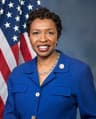 Yvette Clarke
Democrat · New York
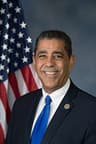 Adriano Espaillat
Democrat · New York
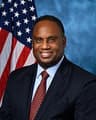 Jonathan Jackson
Democrat · Illinois
 Jerrold Nadler
Democrat · New York
 Eleanor Norton
Democrat · District of Columbia
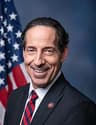 Jamie Raskin
Democrat · Maryland
 Nydia Velázquez
Democrat · New York