Bill · H.R. 1567· House(119-HR-1567)
African Burial Ground International Memorial Museum and Educational Center Study Act
- Introduced
- 2/25/2025
- Last activity
- 2/25/2025 — Referred to the House Committee on Natural Resources.
- Sponsored by
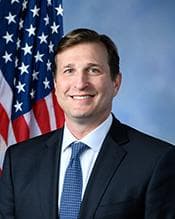
- Daniel Goldman
- Cosponsors
- - 7 - 0
- Introduced
- In Committee
What this bill would do
This bill, known as the ``African Burial Ground International Memorial Museum and Educational Center Study Act'', directs the Secretary of the Interior to conduct a study. The study aims to assess the suitability and feasibility of establishing a museum and educational center at the African Burial Ground National Monument in New York City. This proposed museum would serve as a permanent memorial to enslaved individuals buried at the site and those enslaved elsewhere. The study must examine themes such as African cultural traditions and the institution of slavery. Additionally, the Secretary is required to report the study's findings and recommendations to Congress within three years of receiving funds.
Yes· 3 of 4
Would Black Americans be better off under this?+8
The bill creates a permanent memorial and educational center dedicated to the history and culture of enslaved Africans.
Does this narrow racial gaps in how people are treated?+7
The bill facilitates the creation of a museum to honor the history of enslaved Africans and their cultural traditions.
Does this put more money into scientific research?+5
The study includes investigating the use of DNA samples to help researchers trace ancestral roots.
The opposite
No question was scored the opposite.
Who it would affect, and how
Potential Positive Impacts for People
-
Creation of a Permanent Living Memorial: The bill proposes establishing a site to serve as a special tribute to the enslaved people buried at the African Burial Ground and other Africans enslaved in the United States and elsewhere (Section 3(a)(1)(A)).
-
Educational and Cultural Preservation: The museum would provide space for exhibits and the study of artifacts, while examining African cultural traditions and the institution of slavery (Section 3(a)(1)(B-E)).
-
Collaborative Opportunities: The study encourages collaboration between the proposed museum and various entities, such as the National Museum of African American History and Culture, historical societies, and educational institutions (Section 3(a)(1)(F)).
-
Scientific and Ancestral Research: The study looks into whether collections could include DNA samples to help researchers trace the African roots of individuals buried at the site (Section 3(a)(2)(A)(iv)).
-
Public Understanding: The museum is intended to help people in the United States understand the past and honor the history of all people in the country (Section 3(a)(2)(B)(iii)).
Potential Negative Impacts for People
- Financial Uncertainty: The study must determine if there is a conceptual financial plan that outlines the roles of participants, including the Federal Government, regarding the costs of property, construction, and operation (Section 3(a)(2)(C) and Section 3(b)(1)(C)).
Groups and Interests Ranking
Every group the model scored this bill for, from -10 to +10. Hover a score for the reason it gave.
- Demographic And Interest Groups
- Good For African Americans+8Good For Urban Residents+3
- Social Issues And Justice
- Improves Racial Equity+7
- Education And Technology
- Increases Scientific Research Funding+5
- 2/25/2025
- Referred to the House Committee on Natural Resources.
- 7 Cosponsors added.
- Introduced in House
One bill Congress.gov lists as related to this one — companions in the other chamber, earlier versions, and bills this one absorbed or was folded into.
 Yvette Clarke
Democrat · New York
 Adriano Espaillat
Democrat · New York
 Jonathan Jackson
Democrat · Illinois
 Jerrold Nadler
Democrat · New York
 Eleanor Norton
Democrat · District of Columbia
 Jamie Raskin
Democrat · Maryland
 Nydia Velázquez
Democrat · New York