Bill · S. 730· Senate(119-S-730)
African Burial Ground International Memorial Museum and Educational Center Study Act
- Introduced
- 2/25/2025
- Last activity
- 12/9/2025 — Committee on Energy and Natural Resources Subcommittee on National Parks. Hearings held. With printed Hearing: S.Hrg. 119-238.
- Sponsored by
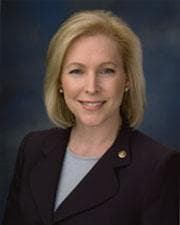
- Kirsten Gillibrand
- Cosponsors
- - 1 - 0
- Introduced
- In Committee
What this bill would do
This bill, known as the "African Burial Ground International Memorial Museum and Educational Center Study Act," directs the Secretary of the Interior to conduct a study. The study aims to assess the suitability and feasibility of establishing a museum and educational center at the African Burial Ground National Monument in New York City. The proposed museum would serve as a memorial to enslaved people and explore the institution of slavery and African cultural traditions. The study must evaluate potential collections, locations, and financial plans. Finally, the Secretary is required to submit a report on the study's findings to relevant Congressional committees within three years of receiving funds.
Yes· 3 of 4
Would Black Americans be better off under this?+8
The bill establishes a dedicated memorial and educational center to honor the history and cultural traditions of enslaved Africans.
Does this narrow racial gaps in how people are treated?+7
The bill seeks to memorialize enslaved Africans and explore the history of the international slave trade through a new museum and educational center.
Does this put more money into scientific research?+5
The study includes evaluating the acquisition of collections that include DNA samples to enable researchers to trace ancestral roots in Africa.
The opposite
No question was scored the opposite.
Who it would affect, and how
Potential Positive Impacts for People
-
Memorializing the Enslaved: The bill seeks to create a permanent living memorial and tribute to those buried at the African Burial Ground and other enslaved Africans (Section 3(a)(1)(A)). This provides a space to honor their history and significance.
-
Educational Opportunities: The proposed museum would offer spaces for permanent and temporary exhibits, as well as the collection and study of documents and artifacts (Section 3(a)(1)(E)). This could help people understand how the international slave trade contributed to the African diaspora and the history of slavery in various parts of the United States (Section 3(a)(2)(B)).
-
Research and Heritage Preservation: The study looks into acquiring collections that include DNA samples of human remains to help researchers trace ancestral roots in Africa (Section 3(a)(2)(A)(iv)). Additionally, the museum would encourage collaboration with institutions like the National Museum of African American History and Culture to train professionals in heritage preservation (Section 3(a)(1)(F)).
-
Community Involvement: The study requires evaluating whether local residents, business interests, and nonprofit organizations are involved in the planning of the museum (Section 3(a)(2)(C)).
Potential Negative Impacts for People
- Financial Uncertainty: The study must determine the costs of acquiring property, constructing, operating, and maintaining the museum (Section 3(b)(1)(C)). This implies that establishing the center would require significant financial planning and potential funding from the Federal Government (Section 3(a)(2)(C)(ii)).
Groups and Interests Ranking
Every group the model scored this bill for, from -10 to +10. Hover a score for the reason it gave.
- Demographic And Interest Groups
- Good For African Americans+8Good For Urban Residents+4
- Social Issues And Justice
- Improves Racial Equity+7
- Education And Technology
- Increases Scientific Research Funding+5
- 12/9/2025
- Committee on Energy and Natural Resources Subcommittee on National Parks. Hearings held. With printed Hearing: S.Hrg. 119-238.
- 4/8/2025
- 1 Cosponsor added.
- 2/25/2025
- Read twice and referred to the Committee on Energy and Natural Resources.
- Introduced in Senate
One bill Congress.gov lists as related to this one — companions in the other chamber, earlier versions, and bills this one absorbed or was folded into.
 Charles Schumer
Democrat · New York