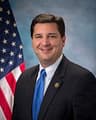
David Rouzer (R-NC)
Securing Strictly Needy Americans’ Pivotal (SNAP) Benefits Act of 2025
A Republican bill with 4 Republican cosponsors · See all 4 cosponsors
Last activity — Referred to the Subcommittee on Nutrition and Foreign Agriculture.
In committee
Introduced and handed to a committee in the chamber it started in.
The committee holds it, and most bills are never heard from again. A hearing or a committee vote would be news; silence is the usual outcome, and it kills the bill without anyone voting against it.
Its path through Congress
- Introduced
- In Committee
What this bill would do
This bill, known as the ``Securing Strictly Needy Americans' Pivotal (SNAP) Benefits Act of 2025'', aims to amend the Consolidated Appropriations Act, 2023. It seeks to limit the conditions for using electronic benefit transfer (EBT) cards to purchase food. The legislation mandates the suspension of accounts if EBT transactions are made exclusively out-of-state for more than 60 days. It also prohibits households containing owners of approved retail food stores or wholesale food concerns from redeeming benefits at those specific locations. These changes will take effect one year after the act is enacted.
Yes
- Scored +1
Does this reduce what the federal government spends?
The bill reduces administrative overhead by preventing potential fraudulent or out-of-state benefit use.
- Scored +1
Does this make what the government does easier for the public to see?
The bill introduces stricter verification requirements to ensure benefits remain within the state of residence.
The opposite
- Scored -4
Would households on low incomes be better off under this?
The account suspension mechanism creates a risk of losing food access for mobile low-income families.
- Scored -3
Is this likely to lift people out of poverty?
The mandatory suspension of accounts for out-of-state transactions may temporarily reduce food access for low-income households.
Who it would affect, and how
Potential Positive Impacts for People
-
Account Suspension for Out-of-State Transactions: Under Section 2, State agencies will suspend accounts if EBT transactions are made exclusively out-of-State for longer than 60 days. This requires the household to provide evidence of residency or undergo an investigation to prove they still live in the state where they receive benefits.
-
Redemption Limitations: Section 3 prohibits households that include an owner of an approved retail food store or wholesale food concern from redeeming benefits at those specific stores or concerns. This rule does not apply to stores or concerns owned by a government or a publicly owned corporation.
Potential Negative Impacts for People
-
Account Suspensions: According to Section 2, households may face account suspensions if their EBT transactions are exclusively made out-of-State for more than 60 days. To resolve this, members must affirmatively provide evidence of residency or undergo an investigation to determine if they still reside in the state from which they receive benefits.
-
Redemption Restrictions: Under Section 3, a household is prohibited from redeeming benefits at a retail food store or wholesale food concern if a member of that household is an owner of that store or concern.
Groups and Interests Ranking
Every group the model scored this bill for, from -10 to +10. Tap or hover a score for the reason it gave.
- Demographic And Interest Groups
- Would households on low incomes be better off under this? — The account suspension mechanism creates a risk of losing food access for mobile low-income families.
- Social Issues And Justice
- Is this likely to lift people out of poverty? — The mandatory suspension of accounts for out-of-state transactions may temporarily reduce food access for low-income households.
- Economy And Finance
- Does this reduce what the federal government spends? — The bill reduces administrative overhead by preventing potential fraudulent or out-of-state benefit use.
- Governance And Ideology
- Does this make what the government does easier for the public to see? — The bill introduces stricter verification requirements to ensure benefits remain within the state of residence.
- 12/16/2025
- 1 Cosponsor added.
- 3/20/2025
- Referred to the Subcommittee on Nutrition and Foreign Agriculture.
- 2/18/2025
- Referred to the House Committee on Agriculture.
- 3 Cosponsors added.
- Introduced in House
 Mark Alford
Republican · Missouri
 Don Bacon
Republican · Nebraska
 Young Kim
Republican · California
 Austin Scott
Republican · Georgia