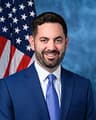
Michael Lawler (R-NY)
Health and Human Services Workforce Visa Act
A Republican bill with no cosponsors
Last activity — Referred to the Committee on the Judiciary, and in addition to the Committees on Agriculture, Energy and Commerce, Ways and Means, and Education and Workforce, for a period to be subsequently determined by the Speaker, in each case for consideration of such provisions as fall within the jurisdiction of the committee concerned.
In committee
Introduced and handed to a committee in the chamber it started in.
The committee holds it, and most bills are never heard from again. A hearing or a committee vote would be news; silence is the usual outcome, and it kills the bill without anyone voting against it.
Its path through Congress
- Introduced
- In Committee
What this bill would do
This bill creates a new temporary nonimmigrant visa classification specifically for health and human services workers. It sets a base numerical limit of 100,000 principal worker visas per fiscal year, which can be adjusted up by 20 percent based on documented workforce conditions. Qualifying employers must file petitions and attestations demonstrating labor shortages, prevailing wage compliance, and good faith recruitment of United States workers. The legislation includes protections against displacing United States workers and establishes fees to fund domestic workforce development and program administration. The program is set to expire for initial petitions filed after September 30, 2032.
Yes· 3 of 19
- Scored +7
Would people with disabilities be better off under this?
Priority visa allocations are explicitly awarded to employers serving individuals with intellectual or developmental disabilities and those needing long-term supports.
- Scored +7
Does this make health care easier to get in general?
The legislation directly targets critical healthcare and social service shortages by creating up to 100,000 visas annually for qualified professionals and support workers.
- Scored +6
Would people over 65 be better off under this?
Seniors relying on nursing facilities, home health agencies, and long-term care services benefit directly from provisions easing the severe workforce shortage.
The opposite
No question was scored the opposite.
Who it would affect, and how
Potential Positive Impacts for People
-
Priority Care for Vulnerable Populations: Section 214(s)(7)(C) gives priority in visa allocations to qualifying employers that primarily serve individuals with intellectual or developmental disabilities, residents of rural communities, medically underserved areas, individuals with mental health or substance use disorders, Federally-qualified health centers, Medicaid-eligible individuals, and individuals requiring long-term care. This could improve access to essential care for vulnerable groups.
-
Protection Against Wage Undercutting: Section 212(u)(1)(A) requires employers to offer wages that are at least the actual wage paid to others with similar experience or the prevailing wage level for the occupational classification, whichever is greater. This ensures that incoming workers are paid fairly and protects against driving down local wages.
-
Health Insurance and Benefits: Section 214(s)(10)(A) and Section 212(u)(1)(B) mandate that employers offer health insurance coverage and other benefits to these workers on the same terms and conditions as similarly situated United States workers. This ensures baseline healthcare access for the workers.
-
Domestic Workforce Funding: Section 5(b) establishes that remaining fees collected from employers will be used for grants to recruit, train, credential, and retain United States workers in health and human services occupations. This provides a dedicated revenue stream to support the domestic workforce.
-
Employment Authorization for Spouses: Section 214(s)(6) authorizes an alien spouse admitted under the new classification to engage in employment in the United States incident to status. This supports the economic stability of the workers' families.
Potential Negative Impacts for People
-
Exclusion from Public Benefits: Section 214(s)(9)(A) explicitly states that these nonimmigrant workers are not eligible for major federal means-tested public benefits, including Medicaid, the Supplemental Nutrition Assistance Program, Supplemental Security Income, or state TANF programs. This could place a financial burden on workers if they face unexpected economic or medical hardships.
-
Employer Fee and Cost Prohibitions: Section 214(s)(11)(E) and Section 212(u)(1)(H) prohibit employers from requiring alien workers to pay or reimburse filing fees and associated costs. However, if unscrupulous employers attempt to bypass this rule covertly, it could create financial exploitation risks for vulnerable foreign workers.
Groups and Interests Ranking
Every group the model scored this bill for, from -10 to +10. Tap or hover a score for the reason it gave.
- Demographic And Interest Groups
- Would people with disabilities be better off under this? — Priority visa allocations are explicitly awarded to employers serving individuals with intellectual or developmental disabilities and those needing long-term supports. Would immigrants be better off under this? — The bill establishes a dedicated nonimmigrant visa pathway for health and human services workers, includes spousal work authorization, and protects against fee exploitation. Would people in rural areas be better off under this? — Qualifying employers serving residents of rural communities receive explicit priority in the allocation of the new worker visas. Would people over 65 be better off under this? — Seniors relying on nursing facilities, home health agencies, and long-term care services benefit directly from provisions easing the severe workforce shortage. Would business owners be better off under this? — Qualifying health and human services employers gain legal mechanisms to address severe staffing shortages and vacancy rates. Would households on low incomes be better off under this? — Priority is given to employers serving Medicaid-eligible individuals, Federally-qualified health centers, and low-income medically underserved populations. Would retired people be better off under this? — Retirees relying on Medicare, nursing homes, and eldercare services benefit from expanded workforce capacity addressing care shortages. Would veterans be better off under this, taking everything together? — Veterans needing specialized medical, behavioral health, and long-term care services benefit from improved staffing levels at care providers. Would children be better off under this? — Children requiring long-term services, pediatric care, or developmental support benefit from increased staffing availability in health and human services.
- Economy And Finance
- Is this likely to create jobs? — The bill establishes a new nonimmigrant visa classification to bring in up to 100,000 health and human services workers annually to fill critical shortages. Does this make it easier to run a small business? — Qualifying small health and human services providers benefit from discounted visa fees and structured pathways to address crippling staffing shortages. Is this likely to grow the economy? — Addressing severe labor shortages in health and human services helps alleviate operational bottlenecks in care facilities and supports broader economic productivity.
- Healthcare
- Does this make health care easier to get in general? — The legislation directly targets critical healthcare and social service shortages by creating up to 100,000 visas annually for qualified professionals and support workers. Does this help veterans get medical care? — Expanding the pool of available healthcare and support workers improves access to medical and care services for vulnerable populations, including veterans.
- Social Issues And Justice
- Does this expand the rights of people with disabilities? — Priority visa allocations are explicitly granted to employers serving individuals with intellectual or developmental disabilities and those requiring long-term care. Does this make it easier for immigrants already here to become citizens? — The bill creates a new temporary nonimmigrant visa classification that allows workers to pursue standard employment-based permanent residence pathways.
- Governance And Ideology
- Does this make what the government does easier for the public to see? — The bill mandates annual joint reports to Congress detailing visa approvals, employer participation, wage comparisons, and enforcement outcomes. Does this give the federal government more power? — The legislation expands federal regulatory oversight through the Departments of Homeland Security, Labor, and Health and Human Services to manage the new visa program.
- Environment Energy And Infrastructure
- Does this invest in rural communities? — The bill mandates priority visa allocations for qualifying employers that primarily serve residents of rural communities and medically underserved areas.
- 11/12/2026
- Referred to the Committee on the Judiciary, and in addition to the Committees on Agriculture, Energy and Commerce, Ways and Means, and Education and Workforce, for a period to be subsequently determined by the Speaker, in each case for consideration of such provisions as fall within the jurisdiction of the committee concerned.
- Introduced in House