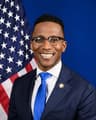
A Democratic bill with 9 Democratic cosponsors · See all 9 cosponsors
Last activity — Referred to the House Committee on Energy and Commerce.
In committee
Introduced and handed to a committee in the chamber it started in.
The committee holds it, and most bills are never heard from again. A hearing or a committee vote would be news; silence is the usual outcome, and it kills the bill without anyone voting against it.
Its path through Congress
- Introduced
- In Committee
What this bill would do
This bill is known as the Suicide Prevention for At-Risk K-12 Students Act or the SPARKS Act. It requires the Secretary of Health and Human Services to set up a competitive grant program for local educational agencies. These grants are meant to help implement evidence-based and culturally responsive youth suicide prevention programs. Local educational agencies can use the funds to run these programs, train school personnel, and evaluate the results. The bill also requires the Secretary to provide technical assistance and report back to Congress on how well the program works. Finally, it authorizes $15,000,000 for each fiscal year to carry out this section.
Yes· 3 of 14
- Scored +8
Would children be better off under this?
The bill directly supports K-12 students by funding youth suicide prevention programs and specialized mental health screening in schools.
- Scored +8
Would students be better off under this?
The legislation provides schools with direct resources, evidence-based programs, and staff training dedicated to student suicide prevention.
- Scored +7
Does this make mental health care easier to get?
The bill establishes a grant program for local educational agencies to implement evidence-based youth suicide prevention programs.
The opposite
No question was scored the opposite.
Who it would affect, and how
Potential Positive Impacts for People
-
Support for student mental health: Section 2, adding Section 520O(a) to the Public Health Service Act, allows the Secretary to award grants to local educational agencies for suicide prevention programs. This is a positive step because it provides funding to help schools address youth suicide and self-harm.
-
Staff training: Section 2, adding Section 520O(d)(2) to the Public Health Service Act, requires local educational agencies to use grant funds to provide training to school personnel on youth suicide prevention. This helps ensure that the adults interacting with students daily are better prepared to handle these critical situations.
-
Culturally tailored approaches: Section 2, adding Section 520O(c)(2)(B) and Section 520O(j)(2) to the Public Health Service Act, focuses on programs that are culturally responsive and consider the cultural context of the community, race, ethnicity, religion, and other factors. This can benefit diverse student populations by ensuring prevention efforts respect their specific backgrounds and needs.
Potential Negative Impacts for People
- Based strictly on the provided text, there are no explicit negative consequences, burdens, or provisions identified that would harm individuals or groups of people in the United States.
Groups and Interests Ranking
Every group the model scored this bill for, from -10 to +10. Tap or hover a score for the reason it gave.
- Demographic And Interest Groups
- Would children be better off under this? — The bill directly supports K-12 students by funding youth suicide prevention programs and specialized mental health screening in schools. Would students be better off under this? — The legislation provides schools with direct resources, evidence-based programs, and staff training dedicated to student suicide prevention. Would Black Americans be better off under this? — The bill emphasizes culturally responsive programming that explicitly considers race, ethnicity, and cultural context to serve diverse student populations effectively. Would Asian Americans be better off under this? — The focus on culturally responsive and competent suicide prevention ensures tailored support for Asian American student populations. Would Hispanic Americans be better off under this? — The legislation requires culturally competent approaches that integrate the linguistic and cultural needs of Hispanic and other minority students. Would households on low incomes be better off under this? — Providing federally funded suicide prevention and mental health resources in public schools disproportionately benefits low-income families who may lack private care access. Would Native Americans be better off under this? — Culturally responsive grant requirements help address the unique behavioral health and suicide prevention needs of Native American youth. Would people in their twenties and thirties be better off under this? — The legislation targets youth between ages 10 and 20, providing critical suicide prevention support for adolescents and young adults. Would people with disabilities be better off under this? — The bill requires consideration of physical and mental health factors and diverse abilities when identifying at-risk student populations.
- Healthcare
- Does this make mental health care easier to get? — The bill establishes a grant program for local educational agencies to implement evidence-based youth suicide prevention programs. Does this make health care easier to get in general? — The legislation expands access to suicide prevention resources and mental health support within K-12 educational settings.
- Education And Technology
- Does this put more money into public schools? — The bill authorizes $15 million annually in competitive grants for local educational agencies to fund youth suicide prevention initiatives and staff training.
- Governance And Ideology
- Does this make what the government does easier for the public to see? — The legislation requires local educational agencies to submit annual reports and the Secretary to report to Congress on program evaluation outcomes.
- Social Issues And Justice
- Does this narrow racial gaps in how people are treated? — The bill mandates culturally responsive and competent suicide prevention programming that considers the racial and ethnic context of diverse student populations.
- 11/11/2026
- Referred to the House Committee on Energy and Commerce.
- 9 Cosponsors added.
- Introduced in House
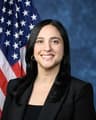 Yassamin Ansari
Democrat · Arizona
 Janelle Bynum
Democrat · Oregon
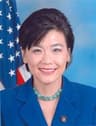 Judy Chu
Democrat · California
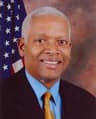 Henry Johnson
Democrat · Georgia
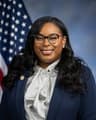 LaMonica McIver
Democrat · New Jersey
 Eleanor Norton
Democrat · District of Columbia
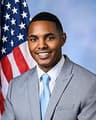 Ritchie Torres
Democrat · New York
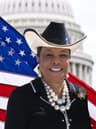 Frederica Wilson
Democrat · Florida
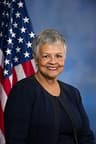 Bonnie Watson Coleman
Democrat · New Jersey