Bill · H.R. 10745· House(119-HR-10745)
Yaeli Martinez Child Protection Act
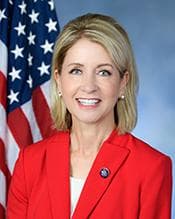
- Introduced
- 10/5/2026
- Last activity
- 10/5/2026 — Referred to the Committee on Education and Workforce, and in addition to the Committees on the Judiciary, and Ways and Means, for a period to be subsequently determined by the Speaker, in each case for consideration of such provisions as fall within the jurisdiction of the committee concerned.
- Sponsored by
- Mary Miller
- Cosponsors
- - 16 - 0
- Introduced
- In Committee
What this bill would do
This bill, titled the Yaeli Martinez Child Protection Act, prevents the state from removing children from their parents or denying foster and adoptive placements based solely on parents affirming a child's biological sex or declining to consent to medical, surgical, or social gender transitions. It prohibits federal child welfare funds from being used to support or promote gender-transition procedures or trainings that classify parental affirmation as child abuse or neglect. The legislation establishes strict federal oversight, requiring states to update child welfare plans, training programs, and facility housing rules to align with biological sex. Additionally, it creates a private right of action allowing parents, caregivers, and children to sue state entities in federal court for violating these rights. Finally, it amends the Full Faith and Credit for Child Custody Determinations Act to prevent courts from seizing child custody jurisdiction based on a desire to obtain gender-transition interventions.
Yes· 3 of 4
Does this give the federal government more power?+7
The bill establishes strict federal oversight, standardizes child welfare plan requirements, and overrides state custody laws regarding gender interventions.
Does this protect the individual right to speak freely?+6
The bill protects parents' rights to express beliefs and use pronouns consistent with a child's biological sex without state punishment.
Does this protect the right to fair treatment by the courts?+6
The legislation protects parents from unwarranted child removal and establishes a private right of action with fee-shifting against state actors.
The opposite· 3 of 9
Does this expand the rights of LGBTQ people?-8
The legislation explicitly restricts access to gender-transition interventions for minors and mandates housing rules based strictly on immutable biological sex.
Would LGBTQ people be better off under this?-8
The legislation bans the funding or provision of gender-transition interventions for minors in state custody and requires sex-segregated facility housing.
Does this leave more decisions to the states?-7
The legislation preempts state laws and court jurisdictions that permit state intervention or custody transfer based on gender-transition disputes.
Who it would affect, and how
Potential Positive Impacts for People
-
Protection of Parental Rights: Section 2 and Section 115 protect the fundamental rights of parents and legal guardians to direct the care, upbringing, and medical decisions of their children in a manner consistent with the child's biological sex without state interference.
-
Prevention of Unwarranted Child Removal: Section 106 and Section 201 explicitly bar state child welfare agencies from treating parental affirmation of a child's biological sex as child abuse, neglect, or parental unfitness, thereby stopping the unwarranted removal of children from fit and loving homes.
-
Preservation of Foster and Adoptive Opportunities: Section 201 and Section 202 ensure that prospective foster and adoptive parents cannot be denied or delayed placement opportunities simply because they intend to affirm a child's biological sex, helping to preserve and expand available homes for children in need.
-
Access to Judicial Remedies: Section 106 and Section 201 establish a private right of action, allowing parents, caregivers, and children to seek financial damages, injunctive relief, and attorney's fees in federal court if their rights are violated by state actors.
-
Privacy and Safety in State Facilities: Section 101 and Section 201 require child-care institutions and foster facilities housing children aged four and older to provide single-occupancy or sex-separated spaces based on immutable biological sex, protecting children's privacy and safety in areas of undress.
Potential Negative Impacts for People
-
Restrictions on Minor Access to Care: Section 102 and Section 202 prohibit federal funds from being used to provide, facilitate, fund, or refer children for social, medical, or surgical gender-transition interventions, restricting access to these specific procedures for minors in state custody.
-
Loss of Federal Funding for Non-Compliant States: Section 102 and Section 201 mandate strict financial penalties, withholding, and recovery of federal child welfare grants for states, tribes, or agencies that fail to enforce the bill's requirements or that continue to promote gender-transition protocols, which could reduce overall resources available for state child welfare programs.
-
Litigation and Financial Burden on Public Agencies: Section 106 and Section 201 abrogate sovereign and qualified immunity for state entities and employees, exposing state child welfare systems and workers to extensive federal lawsuits, mandated attorney's fee awards, and financial liability.
Groups and Interests Ranking
Every group the model scored this bill for, from -10 to +10. Hover a score for the reason it gave.
- Governance And Ideology
- Increases Federal Power+7Improves Due Process+6Improves Freedom Of Speech+6Improves Government Transparency+3Increase States Rights-7
- Social Issues And Justice
- Improves L G B T Q Rights-8Improves Affordable Housing-3Reduces Homelessness-3
- Demographic And Interest Groups
- Good For L G B T Q Community-8Good For Children-4
- Economy And Finance
- Reduces Government Spending-3Improves Fiscal Responsibility-2
- Healthcare
- Improves Healthcare Access-5
- 10/9/2026
- 1 Cosponsor added.
- 10/6/2026
- 2 Cosponsors added.
- 10/5/2026
- Referred to the Committee on Education and Workforce, and in addition to the Committees on the Judiciary, and Ways and Means, for a period to be subsequently determined by the Speaker, in each case for consideration of such provisions as fall within the jurisdiction of the committee concerned.
- 13 Cosponsors added.
- Introduced in House
 Robert Aderholt
Republican · Alabama
 Mark Alford
Republican · Missouri
 James Baird
Republican · Indiana
 Josh Brecheen
Republican · Oklahoma
 Sheri Biggs
Republican · South Carolina
 Randy Fine
Republican · Florida
 Diana Harshbarger
Republican · Tennessee
 Erin Houchin
Republican · Indiana
 Mark Harris
Republican · North Carolina
 Mike Kennedy
Republican · Utah
 Barry Moore
Republican · Alabama
 Richard McCormick
Republican · Georgia
 Addison McDowell
Republican · North Carolina
 Andrew Ogles
Republican · Tennessee
 John Rose
Republican · Tennessee
 Marlin Stutzman
Republican · Indiana