Bill · H.R. 10372· House(119-HR-10372)
FABRIC Act
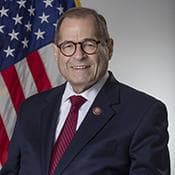
- Introduced
- 9/14/2026
- Last activity
- 9/14/2026 — Referred to the House Committee on Education and Workforce.
- Sponsored by
- Jerrold Nadler
- Cosponsors
- - 8 - 0
- Introduced
- In Committee
What this bill would do
This bill amends the Fair Labor Standards Act of 1938 to ban paying garment industry employees by piece rate, requiring hourly rates instead while still permitting incentive-based bonuses. It holds brand guarantors jointly and severally liable with employers for violations unless they show no knowledge of the violation. The legislation establishes a registration requirement with the Department of Labor for all garment manufacturers and contractors. It creates an Office of the Garment Industry headed by an Undersecretary to oversee these registrations and enforcement. Finally, it establishes a national domestic garment manufacturing support program to award competitive grants for training, equipment, and facility improvements.
Yes· 3 of 13
Would households on low incomes be better off under this?+4
Prohibiting piece rate pay and requiring predictable hourly wages directly improves income stability for low-income garment workers.
Would union members be better off under this?+4
The bill prioritizes grants for entities with workforces covered by collective bargaining agreements and promotes labor organization partnerships.
Does this make it easier to run a small business?+4
Domestic garment manufacturing support grants provide up to $5,000,000 per eligible entity for investments in training, equipment, and facility improvements.
The opposite
Does this reduce what the federal government spends?-2
The bill authorizes appropriations of $100,000,000 for grant programs and millions more to establish the Office of the Garment Industry.
Who it would affect, and how
Potential Positive Impacts for People
-
Section 2: Prohibiting employers from paying garment industry workers by the piece rate and requiring hourly pay ensures workers receive a predictable and steady minimum hourly wage.
-
Section 3: Requiring garment manufacturers and contractors to register with the Department of Labor, provide photographic verification of owners, and show proof of workers' compensation insurance helps protect workers and hold businesses accountable.
-
Section 5: Establishing the national domestic garment manufacturing support program provides grant funding of up to $5,000,000 per entity for investments in training, workforce development, tools, equipment, and health and safety improvements in facilities.
Potential Negative Impacts for People
-
Section 3: The Secretary may impose a civil money penalty of up to $50,000,000 against any person who violates the registration requirements under this section, which is a massive financial burden for noncompliant businesses.
-
Section 5: Eligible entities that receive grant funds must return unused amounts if the Secretary determines they violated any provision of the Act, which could create financial instability for organizations facing compliance disputes.
Groups and Interests Ranking
Every group the model scored this bill for, from -10 to +10. Hover a score for the reason it gave.
- Demographic And Interest Groups
- Good For Low Income Households+4Good For Union Workers+4Good For Hispanic Americans+3Good For Immigrants+3Good For Women+3Good For Young Adults+3
- Economy And Finance
- Improves Small Business Support+4Improves Consumer Protection+3Increases Job Creation+3Improves Economic Growth+2Reduces Government Spending-2
- Governance And Ideology
- Increases Federal Power+4Improves Government Transparency+3
- Social Issues And Justice
- Improves Poverty Reduction+3
- 9/14/2026
- Referred to the House Committee on Education and Workforce.
- 8 Cosponsors added.
- Introduced in House
3 bills Congress.gov lists as related to this one — companions in the other chamber, earlier versions, and bills this one absorbed or was folded into.
 Donald Beyer
Democrat · Virginia
 Maxwell Frost
Democrat · Florida
 Robert Garcia
Democrat · California
 Daniel Goldman
Democrat · New York
 Stephen Lynch
Democrat · Massachusetts
 Eleanor Norton
Democrat · District of Columbia
 Deborah Ross
Democrat · North Carolina
 Rashida Tlaib
Democrat · Michigan