
A Democratic bill with 1 Republican cosponsor · See all 2 cosponsors
Last activity — Referred to the Committee on Science, Space, and Technology, and in addition to the Committee on Oversight and Government Reform, for a period to be subsequently determined by the Speaker, in each case for consideration of such provisions as fall within the jurisdiction of the committee concerned.
In committee
Introduced and handed to a committee in the chamber it started in.
The committee holds it, and most bills are never heard from again. A hearing or a committee vote would be news; silence is the usual outcome, and it kills the bill without anyone voting against it.
Its path through Congress
- Introduced
- In Committee
What this bill would do
This bill, known as the Stop Rogue AI Act, requires the government to create safety standards and security rules for artificial intelligence agents. It directs officials to establish guidelines so that organizations can discover, verify, and maintain control over AI agents operating on their networks. The legislation also sets up new rules for federal contracts, ensuring that companies doing business with the government follow these AI security standards. Federal agencies must maintain continuous inventories of AI agents and keep tamper-evident logs of their actions. Additionally, the bill outlines specific definitions for terms like artificial intelligence, AI agent, and defense-in-depth to keep everyone on the same page.
Yes· 3 of 6
- Scored +8
Does this better protect the country from computer attacks?
The bill significantly strengthens cybersecurity by establishing mandatory standards for AI agent discovery, identity verification, and runtime monitoring.
- Scored +7
Does this give people more control over their personal data?
By mandating controls over AI agent access to data and preventing exfiltration, the bill provides enhanced data privacy protections.
- Scored +6
Does this put more rules on large technology companies?
The bill implements significant new regulatory requirements for organizations deploying AI agents to ensure security and accountability.
The opposite
- Scored -4
Would business owners be better off under this?
Business owners face new compliance burdens and increased operational costs due to mandated AI security and inventory requirements.
- Scored -2
Does this give the government more power to monitor people inside the country?
The requirement for continuous monitoring and logging of AI agent interactions could be viewed as increasing domestic digital surveillance capabilities.
Who it would affect, and how
Potential Positive Impacts for People
-
Section 2(a)(1)(E) requires the evaluation of the security, safety, correctness, and reliability of AI agents before deployment and continuously afterward, which helps protect the public from faulty or dangerous artificial intelligence tools.
-
Section 2(a)(1)(F) enables continuous runtime monitoring and the detection of prompt injection, data exfiltration, and behavioral drift, which can prevent AI systems from leaking private information or acting outside of their approved rules.
-
Section 2(a)(4)(A) mandates that organizations maintain a continuous, machine-readable inventory of all AI agents using standardized naming conventions, making it much easier to keep track of active artificial intelligence technologies.
-
Section 2(b)(2)(D) ensures that federal agencies maintain organizational control over AI agent activity, including the ability to allow, deny, or constrain interactions, which holds contractors accountable for how their AI behaves.
Potential Negative Impacts for People
- Section 2(b)(1) and Section 2(b)(3) place new regulatory and compliance burdens on contractors and federal agencies by requiring them to update their systems, inventories, and contracts to meet the new federal AI standards, which could increase operational costs.
Groups and Interests Ranking
Every group the model scored this bill for, from -10 to +10. Tap or hover a score for the reason it gave.
- Education And Technology
- Does this give people more control over their personal data? — By mandating controls over AI agent access to data and preventing exfiltration, the bill provides enhanced data privacy protections. Does this put more rules on large technology companies? — The bill implements significant new regulatory requirements for organizations deploying AI agents to ensure security and accountability.
- Governance And Ideology
- Does this make what the government does easier for the public to see? — The bill improves transparency by requiring standardized, tamper-evident logs of AI agent actions. Does this give the federal government more power? — The bill expands federal oversight by mandating new security and procurement standards through NIST and the Federal Acquisition Regulation.
- National Security And Foreign Policy
- Does this better protect the country from computer attacks? — The bill significantly strengthens cybersecurity by establishing mandatory standards for AI agent discovery, identity verification, and runtime monitoring. Does this give the government more power to monitor people inside the country? — The requirement for continuous monitoring and logging of AI agent interactions could be viewed as increasing domestic digital surveillance capabilities.
- Economy And Finance
- Does this give people more protection from unfair business practices? — The bill enhances consumer protection by mandating security standards to prevent malicious AI activity and data exfiltration.
- Demographic And Interest Groups
- Would business owners be better off under this? — Business owners face new compliance burdens and increased operational costs due to mandated AI security and inventory requirements.
- 10/15/2026
- 1 Cosponsor added.
- 9/14/2026
- Referred to the Committee on Science, Space, and Technology, and in addition to the Committee on Oversight and Government Reform, for a period to be subsequently determined by the Speaker, in each case for consideration of such provisions as fall within the jurisdiction of the committee concerned.
- 1 Cosponsor added.
- Introduced in House
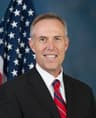 Jared Huffman
Democrat · California
 Michael Lawler
Republican · New York