Bill · H.J.Res. 35· House(119-HJRES-35)
Providing for congressional disapproval under chapter 8 of title 5, United States Code, of the rule submitted by the Environmental Protection Agency relating to "Waste Emissions Charge for Petroleum and Natural Gas Systems: Procedures for Facilitating Compliance, Including Netting and Exemptions".
- Introduced
- 2/4/2025
- Last activity
- 3/14/2025 — Became Public Law No: 119-2.
- Sponsored by
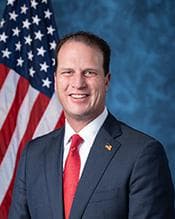
- August Pfluger
- Cosponsors
- - 19 - 0
- Introduced
- Passed House
- Passed Senate
- To President
- Became Law
What this bill would do
This is a joint resolution from the 119th Congress. It seeks to express congressional disapproval of a specific rule submitted by the Environmental Protection Agency. The rule in question concerns the "Waste Emissions Charge for Petroleum and Natural Gas Systems: Procedures for Facilitating Compliance, Including Netting and Exemptions." By passing this resolution, Congress intends for that rule to have no force or effect.
Yes· 3 of 5
Would business owners be better off under this?+5
The resolution benefits energy industry owners by eliminating a specific compliance charge and its associated procedures.
Does this make it easier to run a small business?+3
Preventing the emissions charge reduces the regulatory and financial compliance burden on energy-related businesses.
Does this reduce how much oil, gas and coal is produced?+2
By eliminating the emissions charge, the economic pressure to reduce fossil fuel emissions is lowered.
The opposite· 3 of 4
Does this cut the pollution that drives climate change?-6
The resolution removes the regulatory mechanisms designed to penalize and reduce methane and other waste emissions from petroleum and natural gas systems.
Does this better protect air, water and wildlife?-5
The disapproval of this rule weakens the oversight of emissions within the energy sector.
Does this raise the taxes companies pay?-5
The resolution prevents the implementation of a waste emissions charge on petroleum and natural gas systems, which would have functioned as a tax on those industries.
What Congress actually voted on
2 recorded votes have been taken on this bill.
- The House: the vote on whether to pass the billPassed 220–206
This is the real decision in this chamber. Passing here sends the bill to the other chamber, which must pass it too before it can go to the President.
02/26/2025 · Roll call 52 · recorded as “On Passage”
- The Senate: the vote on whether to pass the joint resolutionJoint Resolution Passed 52–47
A joint resolution is a bill by another name: it goes to the other chamber and then to the President. Most of them are used to overturn a rule an agency has made.
02/27/2025 · Roll call 97 · recorded as “On the Joint Resolution H.J.Res. 35”
Who it would affect, and how
Potential Positive Impacts for People
- Removal of EPA Rule: The resolution aims to ensure the rule relating to "Waste Emissions Charge for Petroleum and Natural Gas Systems" has no force or effect. This would prevent the implementation of the procedures for facilitating compliance, netting, and exemptions described in the rule.
Potential Negative Impacts for People
- Disapproval of EPA Rule: By rendering the rule submitted by the Environmental Protection Agency as having no force or effect, the specific procedures for facilitating compliance, including netting and exemptions, will not be implemented.
Groups and Interests Ranking
Every group the model scored this bill for, from -10 to +10. Hover a score for the reason it gave.
- Environment Energy And Infrastructure
- Reduces Fossil Fuel Production+2Reduces Carbon Emissions-6Improves Environmental Protections-5
- Demographic And Interest Groups
- Good For Business Owners+5Good For Farmers+2
- Economy And Finance
- Improves Small Business Support+3Increases Corporate Taxes-5Reduces Government Spending-2
- Governance And Ideology
- Increase States Rights+2
- Public Law(3/15/2025)
The text as it became law
- Enrolled Bill
The final version, on its way to the President
Arrived from the other chamber; nothing has been done to it there yet
- 3/14/2025
- Signed by President.
- Became Public Law No: 119-2.
- 3/4/2025
- Presented to President.
- 2/27/2025
- Passed/agreed to in Senate: Received in the Senate, read twice, considered, read the third time, and passed without amendment by Yea-Nay Vote. 52 - 47. Record Vote Number: 97.
- Received in the Senate, read twice, considered, read the third time, and passed without amendment by Yea-Nay Vote. 52 - 47. Record Vote Number: 97. (consideration: CR S1419)
- Message on Senate action sent to the House.
- 2/26/2025
- Motion to reconsider laid on the table Agreed to without objection.
- Passed/agreed to in House: On passage Passed by the Yeas and Nays: 220 - 206, 1 Present (Roll no. 52). (text: CR H846)
- On passage Passed by the Yeas and Nays: 220 - 206, 1 Present (Roll no. 52). (text: CR H846)
- Considered as unfinished business. (consideration: CR H859-860)
- POSTPONED PROCEEDINGS - At the conclusion of debate on H.J. Res. 35, the Chair put the question on passage of the joint resolution, and by voice vote, announced that the ayes had prevailed. Mr. Pallone demanded the yeas and nays and the Chair postponed further proceedings until a time to be announced.
- The previous question was ordered pursuant to the rule.
- DEBATE - The House resumed debate on H.J. Res. 35.
- DEBATE - The House proceeded with one hour of debate on H.J. Res. 35.
- Rule provides for consideration of H.J. Res. 20, H.J. Res. 35 and H. Con. Res. 14. The resolution provides for consideration of two joint resolutions, H.J.Res.20, under a closed rule and H.J.Res. 35, under a closed rule. Also, the resolution provides for consideration of H. Con. Res. 14, under a closed rule. The joint resolutions are debated for one hour each and the concurrent resolution is debated for 3 hours.
- Considered under the provisions of rule H. Res. 161. (consideration: CR H846-853)
- 2/25/2025
- Rules Committee Resolution H. Res. 161 Reported to House. Rule provides for consideration of H.J. Res. 20, H.J. Res. 35 and H. Con. Res. 14. The resolution provides for consideration of two joint resolutions, H.J.Res.20, under a closed rule and H.J.Res. 35, under a closed rule. Also, the resolution provides for consideration of H. Con. Res. 14, under a closed rule. The joint resolutions are debatable for one hour each and the concurrent resolution is debatable for 3 hours.
- 1 Cosponsor added.
- 2/24/2025
- 2 Cosponsors added.
- 2/14/2025
- 2 Cosponsors added.
- 2/13/2025
- 1 Cosponsor added.
- 2/4/2025
- Referred to the House Committee on Energy and Commerce.
- 13 Cosponsors added.
- Introduced in House
2 bills Congress.gov lists as related to this one — companions in the other chamber, earlier versions, and bills this one absorbed or was folded into.
- 119-SJRES-12: A joint resolution providing for congressional disapproval under chapter 8 of title 5, United States Code, of the rule submitted by the Environmental Protection Agency relating to "Waste Emissions Charge for Petroleum and Natural Gas Systems: Procedures for Facilitating Compliance, Including Netting and Exemptions".
- 119-HRES-161: Providing for consideration of the joint resolution (H.J. Res. 20) providing for congressional disapproval under chapter 8 of title 5, United States Code, of the rule submitted by the Department of Energy relating to ‘‘Energy Conservation Program: Energy Conservation Standards for Consumer Gas-fired Instantaneous Water Heaters’’; providing for consideration of the joint resolution (H.J. Res. 35) providing for congressional disapproval under chapter 8 of title 5, United States Code, of the rule submitted by the Environmental Protection Agency relating to ‘‘Waste Emissions Charge for Petroleum and Natural Gas Systems: Procedures for Facilitating Compliance, Including Netting and Exemptions’’; and providing for consideration of the concurrent resolution (H. Con. Res. 14) establishing the congressional budget for the United States Government for fiscal year 2025 and setting forth the appropriate budgetary levels for fiscal years 2026 through 2034.
 Rick Allen
Republican · Georgia
 Jodey Arrington
Republican · Texas
 Troy Balderson
Republican · Ohio
 Earl Carter
Republican · Georgia
 Dan Crenshaw
Republican · Texas
 Mike Carey
Republican · Ohio
 Gabe Evans
Republican · Colorado
 Julie Fedorchak
Republican · North Dakota
 H. Griffith
Republican · Virginia
 Glenn Grothman
Republican · Wisconsin
 Craig Goldman
Republican · Texas
 John Joyce
Republican · Pennsylvania
 Robert Latta
Republican · Ohio
 Nicholas Langworthy
Republican · New York
 Mariannette Miller-Meeks
Republican · Iowa
 Gary Palmer
Republican · Alabama
 Michael Rulli
Republican · Ohio
 Derek Schmidt
Republican · Kansas
 Randy Weber
Republican · Texas