Bill · H.J.Res. 11· House(119-HJRES-11)
.Proposing a balanced budget amendment to the Constitution requiring that each agency and department's funding is justified.
- Introduced
- 1/3/2025
- Last activity
- 1/3/2025 — Referred to the House Committee on the Judiciary.
- Sponsored by
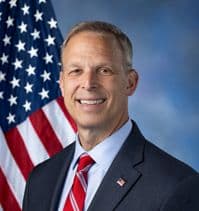
- Scott Perry
- Cosponsors
- - 4 - 0
- Introduced
- In Committee
What this bill would do
This joint resolution proposes a balanced budget amendment to the Constitution. It requires that total outlays for any fiscal year do not exceed total receipts, unless a three-fifths majority of each House provides an exception by rollcall vote. The amendment also limits the debt held by the public and requires the President to submit a budget where outlays do not exceed receipts. Furthermore, it mandates that any bill to increase revenue must be approved by a three-fifths majority of both Houses. Each agency must also provide a justification for its requested funding, including its effect on the mission and the gross domestic product.
Yes· 3 of 5
Does this make the government pay for what it commits to?+9
It establishes a balanced budget requirement and mandates agency justifications for all requested funding.
Does this reduce what the federal government spends?+8
The amendment mandates that total outlays for any fiscal year do not exceed total receipts.
Does this reduce what the federal government owes?+7
The bill imposes strict limits on the debt held by the public and requires debt increases to be approved by a three-fifths majority.
The opposite· 3 of 6
Would households on low incomes be better off under this?-5
Strict budgetary constraints may reduce the government's ability to fund programs that support low-income households.
Is this likely to lift people out of poverty?-4
Strict spending caps may limit the funding available for social safety net programs that reduce poverty.
Does this raise taxes on the highest earners?-3
The requirement for a three-fifths majority to increase revenue could make it harder to implement progressive tax adjustments.
Who it would affect, and how
Potential Positive Impacts for People
-
Requirement for Agency Justification: According to Section 5, every department or agency must justify its requested funding. This includes explaining how each line item affects its mission and the gross domestic product, as well as providing a lower funding level that would still allow the agency to complete its critical mission functions.
-
Budgetary Constraints: Under Section 1, outlays are generally capped to ensure they do not exceed receipts, creating a structural limit on spending relative to the gross domestic product.
Potential Negative Impacts for People
-
Increased Difficulty in Increasing Revenue: Section 4 states that no bill to increase revenue can become law unless it is approved by a three-fifths majority of the whole number of each House by a rollcall vote.
-
Strict Limits on Debt and Spending: Section 1 and Section 2 create strict limits on total outlays and the debt held by the public, which can only be increased through a three-fifths majority vote by rollcall.
-
Potential Restrictions on Funding During Emergencies: While there are waivers for war, military conflict, or natural disasters, Section 8 notes that these waivers require a specific joint resolution adopted by a two-thirds vote of each House.
Groups and Interests Ranking
Every group the model scored this bill for, from -10 to +10. Hover a score for the reason it gave.
- Economy And Finance
- Improves Fiscal Responsibility+9Reduces Government Spending+8Reduces National Debt+7Increases Wealthy Taxes-3
- Demographic And Interest Groups
- Good For High Income Households+2Good For Low Income Households-5Good For Urban Residents-3
- Governance And Ideology
- Improves Government Transparency+6Increases Federal Power-2
- Social Issues And Justice
- Improves Poverty Reduction-4
- National Security And Foreign Policy
- Reduces Military Spending-3
- 3/26/2025
- 1 Cosponsor added.
- 1/3/2025
- Referred to the House Committee on the Judiciary.
- 3 Cosponsors added.
- Introduced in House
3 bills Congress.gov lists as related to this one — companions in the other chamber, earlier versions, and bills this one absorbed or was folded into.
 Michael Cloud
Republican · Texas
 Andrew Clyde
Republican · Georgia
 Andrew Ogles
Republican · Tennessee
 Ryan Zinke
Republican · Montana