Bill · H.Con.Res. 112· House(119-HCONRES-112)
Recognizing the need to improve physical access to many federally funded facilities for all persons of the United States, particularly persons with disabilities.
- Introduced
- 7/15/2026
- Last activity
- 7/15/2026 — Referred to the Committee on Education and Workforce, and in addition to the Committees on the Judiciary, Transportation and Infrastructure, Energy and Commerce, and Oversight and Government Reform, for a period to be subsequently determined by the Speaker, in each case for consideration of such provisions as fall within the jurisdiction of the committee concerned.
- Sponsored by
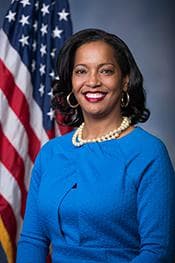
- Jahana Hayes
- Cosponsors
- - 13 - 0
- Introduced
- In Committee
A concurrent resolution is how the House and the Senate settle something they do together, such as a budget plan or a joint session. It is adopted once both chambers agree to it, and that puts it into effect; it is not a law, so it does not go to the President.
What this bill would do
H. Con. Res. 112 is a concurrent resolution that recognizes the need to improve physical access to federally funded facilities. It focuses on the challenges faced by persons with disabilities and reaffirms support for the Architectural Barriers Act of 1968 and the Americans with Disabilities Act of 1990. The resolution encourages full compliance with these laws. Additionally, it pledges to use universal and inclusive design as a guiding principle for future infrastructure projects. The goal is to remove barriers that prevent equal access to Federal Government services.
Yes· 3 of 23
Would people with disabilities be better off under this?+10
The entire purpose of the resolution is to improve physical access for persons with disabilities.
Does this expand the rights of people with disabilities?+10
The resolution specifically recognizes and seeks to remove barriers to physical access for persons with disabilities.
Would veterans be better off under this, taking everything together?+8
The bill explicitly mentions that 34 percent of veterans have a service-connected disability.
The opposite
No question was scored the opposite.
Who it would affect, and how
Potential Positive Impacts for People
-
Support for Existing Accessibility Laws: By reaffirming support for the Architectural Barriers Act of 1968 and the Americans with Disabilities Act of 1990 and encouraging full compliance, the resolution seeks to ensure that federally funded facilities remain accessible to persons with disabilities. (Section 2)
-
Commitment to Inclusive Design: The pledge to make universal and inclusive design a guiding principle for all infrastructure bills and projects could lead to better accessibility in future construction. (Section 3)
-
Removal of Access Barriers: The pledge to identify and remove barriers to Federal Government services aims to provide all people of the United States with equal access. (Section 3)
Potential Negative Impacts for People
- No negative impacts for individuals or groups of people are explicitly mentioned in the provided text.
Groups and Interests Ranking
Every group the model scored this bill for, from -10 to +10. Hover a score for the reason it gave.
- Demographic And Interest Groups
- Good For People With Disabilities+10Good For Veterans+8Good For Retirees+7Good For Seniors+7Good For Urban Residents+5Good For African Americans+4Good For Asian Americans+4Good For Hispanic Americans+4Good For Native Americans+4Good For Children+3Good For Low Income Households+3Good For Middle Aged+3Good For Rural Residents+3Good For White Americans+3Good For Young Adults+3Good For High Income Households+2Good For Middle Class Households+2
- Social Issues And Justice
- Improves Disability Rights+10Improves Racial Equity+2
- Environment Energy And Infrastructure
- Improves Public Transit+5Improves Roads And Bridges+5
- Healthcare
- Improves Healthcare Access+5
- Governance And Ideology
- Increases Federal Power+2
- 7/20/2026
- 1 Cosponsor added.
- 7/15/2026
- Submitted in House
- Referred to the Committee on Education and Workforce, and in addition to the Committees on the Judiciary, Transportation and Infrastructure, Energy and Commerce, and Oversight and Government Reform, for a period to be subsequently determined by the Speaker, in each case for consideration of such provisions as fall within the jurisdiction of the committee concerned.
- 12 Cosponsors added.
2 bills Congress.gov lists as related to this one — companions in the other chamber, earlier versions, and bills this one absorbed or was folded into.
- 119-HCONRES-45: Recognizing the need to improve physical access to many federally funded facilities for all people of the United States, particularly people with disabilities.
- 119-SCONRES-19: A concurrent resolution recognizing the need to improve physical access to many federally funded facilities for all people of the United States, particularly people with disabilities.
 Wesley Bell
Democrat · Missouri
 Steve Cohen
Democrat · Tennessee
 Debbie Dingell
Democrat · Michigan
 Adelita Grijalva
Democrat · Arizona
 Jonathan Jackson
Democrat · Illinois
 Kevin Mullin
Democrat · California
 John Mannion
Democrat · New York
 Eleanor Norton
Democrat · District of Columbia
 Janice Schakowsky
Democrat · Illinois
 Lateefah Simon
Democrat · California
 Dina Titus
Democrat · Nevada
 Rashida Tlaib
Democrat · Michigan
 Frederica Wilson
Democrat · Florida