Bill · S.Res. 98· Senate(119-SRES-98)
A resolution condemning Beijing's destruction of Hong Kong's democracy and rule of law.
- Introduced
- 2/26/2025
- Last activity
- 4/28/2025 — Placed on Senate Legislative Calendar under General Orders. Calendar No. 57.
- Sponsored by
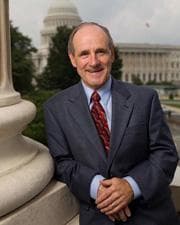
- James Risch
- Cosponsors
- - 5 - 7
- Introduced
- On Calendar
A Senate resolution is the Senate speaking for itself: stating a position, honouring someone, or setting its own rules. Adopting it is the whole process. Once the Senate agrees to it, it is officially the Senate's word; it is not a law, so the House and the President have no part in it.
What this bill would do
This resolution condemns the Government of the People's Republic of China and the Hong Kong government for destroying Hong Kong's democracy, autonomy, and rule of law. It addresses the impact of the "Hong Kong national security law" and the "Safeguarding National Security Ordinance" on fundamental freedoms. The text highlights the targeting of pro-democracy activists, journalists, and media such as Apple Daily. It calls for the immediate release of all defendants, including Jimmy Lai, and the dropping of related charges. Additionally, the resolution expresses concern regarding Hong Kong's role in sanctions evasion and its impact on the international order. Finally, it urges the United States and other governments to hold the Chinese Communist Party accountable.
Yes· 3 of 6
Does this protect the individual right to speak freely?+6
The resolution advocates for the protection of freedom of expression and the release of those prosecuted for exercising it.
Does this protect the right to vote?+5
The resolution encourages adjusting multilateral voting procedures to accurately reflect the loss of Hong Kong's autonomy.
Does this protect people from being watched or searched?+4
The resolution defends individuals against politically motivated charges used to suppress political expression.
The opposite· 3 of 4
Would immigrants be better off under this?-3
The resolution mentions new immigration laws in Hong Kong that subject residents and nationals to exit bans.
Does this change how police departments operate?-3
The text notes that the Hong Kong Police Force has used excessive force against protestors.
Would business owners be better off under this?-2
The resolution states that the erosion of legal environments undermines Hong Kong's status as an attractive business center.
Who it would affect, and how
Potential Positive Impacts for People
-
Support for fundamental rights: The resolution supports the people of Hong Kong in their fight to exercise freedoms guaranteed by the Joint Declaration of the Government of the United Kingdom of Great Britain and Northern Ireland and the Government of the People's Republic of China, the International Covenant on Civil and Political Rights, and the Universal Declaration of Human Rights. (Section 3)
-
Call for the release of detainees: The resolution calls upon the Hong Kong government to immediately drop all sedition, national security law, and Article 23-related charges and free all defendants, specifically mentioning Jimmy Lai. (Section 5)
-
Accountability through sanctions: The resolution urges the United States Government to use all available tools, including those authorized by the Hong Kong Human Rights and Democracy Act, to respond to the actions of the Government of the People's Republic of China. (Section 8)
-
Recognition of voting power issues: The resolution encourages the United States and other governments to ensure that voting procedures at multilateral institutions recognize that there is no longer a meaningful distinction between Hong Kong and mainland China. (Section 7)
Potential Negative Impacts for People
-
Risks to Hong Kong residents: The "Safeguarding National Security Ordinance" (Article 23 Ordinance) creates risks for Hong Kong residents who interact with foreigners. (Whereas, sixth paragraph)
-
Impact on citizens and foreign nationals: New immigration laws in Hong Kong subject Hong Kong citizens, residents, PRC nationals, and foreign nationals to exit bans. (Whereas, fifth paragraph)
-
Targeting of non-citizens: The Government of the People's Republic of China uses the national security law and Article 23 Ordinance to harass, target, and threaten non-Hong Kong citizens and those outside of Hong Kong. (Whereas, seventh paragraph)
-
Punitive measures against overseas persons: The Article 23 Ordinance authorized new punitive measures targeting Hong Kong citizens and non-citizens overseas. (Whereas, sixth paragraph)
Groups and Interests Ranking
Every group the model scored this bill for, from -10 to +10. Hover a score for the reason it gave.
- Governance And Ideology
- Improves Freedom Of Speech+6Improves Privacy Rights+4Improves Government Transparency+3
- Demographic And Interest Groups
- Good For Young Adults+3Good For Immigrants-3Good For Business Owners-2
- National Security And Foreign Policy
- Improves International Alliances+2
- Social Issues And Justice
- Improves Voting Rights+5Improves Policing Reform-3
- Economy And Finance
- Improves Consumer Protection-1
- 4/29/2025
- 3 Cosponsors added.
- 4/28/2025
- Committee on Foreign Relations. Reported by Senator Risch without amendment and with a preamble. Without written report.
- Placed on Senate Legislative Calendar under General Orders. Calendar No. 57.
- 4/3/2025
- 7 Cosponsors added.
- 3/27/2025
- Committee on Foreign Relations. Ordered to be reported without amendment favorably.
- 3/26/2025
- 1 Cosponsor added.
- 2/26/2025
- Referred to the Committee on Foreign Relations. (text: CR S1400-1401)
- 1 Cosponsor added.
- Introduced in Senate
 Marsha Blackburn
Republican · Tennessee
 Mike Crapo
Republican · Idaho
 Bill Cassidy
Republican · Louisiana
 Christopher Coons
Democrat · Delaware
 Maggie Hassan
Democrat · New Hampshire
 Timothy Kaine
Democrat · Virginia
 Mitch McConnell
Republican · Kentucky
 Jeff Merkley
Democrat · Oregon
 Jeanne Shaheen
Democrat · New Hampshire
 Chris Van Hollen
Democrat · Maryland
 Raphael Warnock
Democrat · Georgia
 Todd Young
Republican · Indiana