Bill · S.Res. 654· Senate(119-SRES-654)
A resolution expressing the sense of the Senate that the United States should reduce and maintain the Federal unified budget deficit at or below 3 percent of gross domestic product.
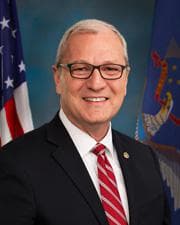
- Introduced
- 3/20/2026
- Last activity
- 3/20/2026 — Referred to the Committee on the Budget. (text: CR S1444)
- Sponsored by
- Kevin Cramer
- Cosponsors
- - 1 - 1
- Introduced
- In Committee
A Senate resolution is the Senate speaking for itself: stating a position, honouring someone, or setting its own rules. Adopting it is the whole process. Once the Senate agrees to it, it is officially the Senate's word; it is not a law, so the House and the President have no part in it.
What this bill would do
This resolution expresses the sense of the Senate that the United States should reduce the Federal unified budget deficit to 3 percent of gross domestic product or less. It suggests this target be met as soon as possible and no later than the end of fiscal year 2030. After reaching this target, the resolution suggests pursuing a balanced Federal budget. It calls on the President to submit budgets that create a path toward this target. Additionally, it asks various Senate committees to recommend enforcement options and rule changes to ensure the target is met.
Yes· 3 of 14
Does this make the government pay for what it commits to?+9
The bill seeks to establish specific fiscal targets and enforcement mechanisms to ensure the government meets its budget goals.
Does this reduce what the federal government owes?+8
The resolution aims to reduce the deficit to 3 percent of GDP to stabilize the national debt.
Does this reduce what the federal government spends?+5
The bill calls for a path toward a balanced budget, which necessitates controlling or reducing discretionary and direct spending.
The opposite
Would veterans be better off under this, taking everything together?-2
The emphasis on reducing the deficit may impact the funding of discretionary spending categories, which includes veteran support.
Does this increase the pay, pensions or support veterans receive?-2
The focus on reducing deficits and controlling spending could potentially lead to future cuts in discretionary programs like veteran support.
Who it would affect, and how
Potential Positive Impacts for People
-
Stabilizing the national debt: Reducing the deficit to a 3 percent target is intended to help stabilize the national debt (Preamble).
-
Protecting national security and economic growth: Lowering rising deficits is viewed as a way to protect national security and economic growth (Preamble).
-
Safeguarding future generations: Deficit reduction is presented as a way to safeguard future generations (Preamble).
-
Maintaining government flexibility: Reducing deficits may prevent threats to the government's flexibility to respond to fiscal emergencies (Preamble).
-
Controlling the cost of living and interest rates: Addressing rising deficits could help prevent increases in interest rates and the cost of living (Preamble).
Potential Negative Impacts for People
- No specific negative impacts or burdens are explicitly mentioned in the text provided.
Groups and Interests Ranking
Every group the model scored this bill for, from -10 to +10. Hover a score for the reason it gave.
- Economy And Finance
- Improves Fiscal Responsibility+9Reduces National Debt+8Reduces Government Spending+5Improves Economic Growth+4Reduces Inflation+3
- Demographic And Interest Groups
- Good For Children+4Good For Young Adults+4Good For Business Owners+3Good For Low Income Households+2Good For Middle Aged+2Good For Middle Class Households+2Good For Retirees+2Good For Seniors+2Good For Veterans-2
- Governance And Ideology
- Improves Government Transparency+3
- National Security And Foreign Policy
- Improves Veterans Benefits-2
- 3/20/2026
- Submitted in Senate
- Referred to the Committee on the Budget. (text: CR S1444)
- 3 Cosponsors added.
One bill Congress.gov lists as related to this one — companions in the other chamber, earlier versions, and bills this one absorbed or was folded into.
 Angus King
Independent · Maine
 David McCormick
Republican · Pennsylvania
 Gary Peters
Democrat · Michigan