Bill · S.Res. 169· Senate(119-SRES-169)
A resolution expressing support for the staff of public, school, academic, and special libraries in the United States and the essential services those libraries provide to communities, recognizing the need for funding commensurate with the broad scope of social service and community supports provided by libraries, preserving the right of all citizens of the United States to freely access information and resources in their communities, supporting a strong union voice for library workers, and defending the civil rights of library staff.
- Introduced
- 4/10/2025
- Last activity
- 4/10/2025 — Referred to the Committee on Health, Education, Labor, and Pensions. (text: CR S2568-2569)
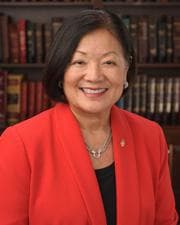
- Sponsored by
- Mazie Hirono
- Cosponsors
- - 6 - 0
- Introduced
- In Committee
A Senate resolution is the Senate speaking for itself: stating a position, honouring someone, or setting its own rules. Adopting it is the whole process. Once the Senate agrees to it, it is officially the Senate's word; it is not a law, so the House and the President have no part in it.
What this bill would do
This resolution expresses support for the staff of various types of libraries across the United States. It recognizes libraries as essential providers of social services, community support, and economic resources. The text advocates for funding that matches the broad scope of services libraries offer to their communities. It also seeks to protect the rights of citizens to access information and the rights of library workers to organize. Additionally, the resolution aims to defend the civil rights of library staff against intimidation.
Yes· 3 of 21
Would union members be better off under this?+8
The resolution explicitly supports unionization and collective bargaining for library workers.
Does this protect what people are allowed to say in public life?+7
The resolution defends the right of library staff to speak out and the public's right to access information without censorship.
Does this strengthen the rights of workers to organise?+7
The resolution explicitly supports the right of library workers to organize and collectively bargain.
The opposite
No question was scored the opposite.
Who it would affect, and how
Potential Positive Impacts for People
-
Access to Information and Resources: The resolution reaffirms the fundamental right of people to access information and resources within their communities (Section 5A). This includes access to books, media, and the internet, which is especially vital for underserved communities (Whereas clauses).
-
Economic and Social Support: Libraries are recognized as economic powerhouses that provide resources for small business owners, job seekers, and those learning new skills (Whereas clauses). They also serve as a safe haven and resource provider for unhoused individuals and families (Whereas clauses).
-
Public Health and Safety: Library staff provide lifesaving care during crises, such as administering medication for opioid overdoses (Whereas clauses). They also provided essential services during the COVID-19 pandemic, including distributing personal protective equipment and providing testing (Whereas clauses).
-
Worker Protections and Rights: The resolution supports the right of library workers to organize, collectively bargain, and have a protected voice in their workplaces (Section 5B). It also aims to protect the civil rights of staff so they can perform their duties without fear of threats, intimidation, or reprisals (Section 5C and Whereas clauses).
-
Funding for Essential Services: The resolution supports prioritizing full funding for library services at Federal, State, and local levels (Section 4). This is intended to ensure the continuation and improvement of services that are considered critical infrastructure (Section 3 and Whereas clauses).
Potential Negative Impacts for People
- Impact of Eliminating the Institute of Museum and Library Services: The text notes that President Trump signed Executive Order 14238 to eliminate the Institute of Museum and Library Services (Whereas clauses). The resolution states that eliminating this Institute would harm the ability of libraries to provide critical resources, particularly to those in rural, Tribal, and other underserved communities (Whereas clauses).
Groups and Interests Ranking
Every group the model scored this bill for, from -10 to +10. Hover a score for the reason it gave.
- Demographic And Interest Groups
- Good For Union Workers+8Good For Low Income Households+6Good For Students+6Good For Business Owners+5Good For Children+5Good For Native Americans+5Good For Rural Residents+5Good For Young Adults+5
- Social Issues And Justice
- Improves Freedom Of Speech+7Improves Affordable Housing+5Improves Racial Equity+5Reduces Homelessness+3
- Healthcare
- Improves Opioid Crisis Response+5Improves Pandemic Preparedness+5Improves Healthcare Access+4
- Economy And Finance
- Improves Union Protections+7Improves Small Business Support+5
- Education And Technology
- Improves Internet Access+6Increases Public School Funding+5
- Governance And Ideology
- Improves Freedom Of Speech+7
- Environment Energy And Infrastructure
- Improves Rural Development+5
- 4/29/2025
- 1 Cosponsor added.
- 4/10/2025
- Referred to the Committee on Health, Education, Labor, and Pensions. (text: CR S2568-2569)
- 5 Cosponsors added.
- Introduced in Senate
3 bills Congress.gov lists as related to this one — companions in the other chamber, earlier versions, and bills this one absorbed or was folded into.
- 119-HRES-328: Expressing support for the staff of public, school, academic, and special libraries in the United States and the essential services those libraries provide to communities, recognizing the need for funding commensurate with the broad scope of social service and community supports provided by libraries, preserving the right of all citizens of the United States to freely access information and resources in their communities, supporting a strong union voice for library workers, and defending the civil rights of library staff.
- 119-HRES-1212: Expressing support for the staff of public, school, academic, and special libraries in the United States and the essential services those libraries provide to communities, recognizing the need for funding commensurate with the broad scope of social service and community supports provided by libraries, preserving the right of all citizens of the United States to freely access information and resources in their communities, supporting a strong union voice for library workers, and defending the civil rights of library staff.
- 119-SRES-688: A resolution expressing support for the staff of public, school, academic, and special libraries in the United States and the essential services those libraries provide to communities, recognizing the need for funding commensurate with the broad scope of social service and community supports provided by libraries, preserving the right of all citizens of the United States to freely access information and resources in their communities, supporting a strong union voice for library workers, and defending the civil rights of library staff.
 Lisa Blunt Rochester
Democrat · Delaware
 Richard Durbin
Democrat · Illinois
 Alex Padilla
Democrat · California
 John Reed
Democrat · Rhode Island
 Chris Van Hollen
Democrat · Maryland
 Ron Wyden
Democrat · Oregon