Bill · S.Res. 147· Senate(119-SRES-147)
A resolution expressing the sense of the Senate that Congress should take all appropriate measures to ensure that the United States Postal Service remains an independent establishment of the Federal Government and is not subject to privatization.
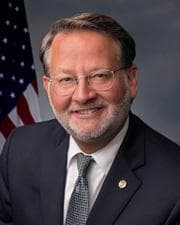
- Introduced
- 3/27/2025
- Last activity
- 3/27/2025 — Read twice and referred to the Committee on Homeland Security and Governmental Affairs.
- Sponsored by
- Gary Peters
- Cosponsors
- - 3 - 4
- Introduced
- In Committee
A Senate resolution is the Senate speaking for itself: stating a position, honouring someone, or setting its own rules. Adopting it is the whole process. Once the Senate agrees to it, it is officially the Senate's word; it is not a law, so the House and the President have no part in it.
What this bill would do
This resolution expresses the sense of the Senate regarding the future of the United States Postal Service. It calls on Congress to take all appropriate measures to ensure the agency remains an independent establishment of the Federal Government. The resolution specifically argues against the privatization of the postal service. It highlights the role of the USPS as a self-sustaining entity that serves millions of addresses. Furthermore, the text aims to protect the mail industry and critical infrastructure from the potential impacts of privatization.
Yes· 3 of 9
Would business owners be better off under this?+5
The bill protects the e-commerce sector and the massive mailing industry.
Would veterans be better off under this, taking everything together?+5
The bill protects a major employer of nearly 73,000 military veterans.
Would union members be better off under this?+5
Protecting the USPS as a public entity supports its large workforce of over 630,000 employees.
The opposite
No question was scored the opposite.
Who it would affect, and how
Potential Positive Impacts for People
-
Maintaining Affordable and Universal Service: The bill notes that the USPS maintains an affordable and universal network that connects rural, suburban, and urban communities. Keeping it an independent establishment helps ensure these connections remain intact.
-
Protecting Rural Communities: The text states that privatization would result in higher prices and reduced services, especially for those living in rural communities. Preventing privatization would avoid these negative outcomes.
-
Protecting Employment: The USPS is a major employer, including nearly 73,000 military veterans. Maintaining its current status helps protect these jobs and the stability of the $1,900,000,000,000 mailing industry.
-
Community Safety and Service: Postal employees serve as the eyes and ears of their communities and often respond first in situations involving health, safety, and crime. Keeping the service public ensures these dedicated public servants continue their community roles.
Potential Negative Impacts for People
-
Higher Prices and Reduced Services: The resolution asserts that if the United States Postal Service were subject to privatization, it would result in higher prices and reduced services for customers.
-
Damage to Economic Sectors: The text suggests that privatization would jeopardize the e-commerce sector and cripple a major part of the critical infrastructure of the United States.
Groups and Interests Ranking
Every group the model scored this bill for, from -10 to +10. Hover a score for the reason it gave.
- Demographic And Interest Groups
- Good For Business Owners+5Good For Rural Residents+5Good For Union Workers+5Good For Urban Residents+5Good For Veterans+5
- Economy And Finance
- Improves Consumer Protection+5Improves Economic Growth+5
- Environment Energy And Infrastructure
- Improves Rural Development+5
- Governance And Ideology
- Increases Federal Power+5
- 4/7/2025
- 1 Cosponsor added.
- 4/1/2025
- 1 Cosponsor added.
- 3/27/2025
- Read twice and referred to the Committee on Homeland Security and Governmental Affairs.
- 5 Cosponsors added.
- Introduced in Senate
One bill Congress.gov lists as related to this one — companions in the other chamber, earlier versions, and bills this one absorbed or was folded into.
 Susan Collins
Republican · Maine
 Maggie Hassan
Democrat · New Hampshire
 Lisa Murkowski
Republican · Alaska
 John Reed
Democrat · Rhode Island
 Dan Sullivan
Republican · Alaska
 Thomas Tillis
Republican · North Carolina
 Mark Warner
Democrat · Virginia