Bill · S. 927· Senate(119-S-927)
Protecting Pharmacies in Medicaid Act
- Introduced
- 3/11/2025
- Last activity
- 3/11/2025 — Read twice and referred to the Committee on Finance.
- Sponsored by
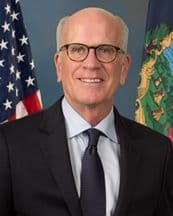
- Peter Welch
- Cosponsors
- - 1 - 2
- Introduced
- In Committee
What this bill would do
The Protecting Pharmacies in Medicaid Act aims to amend the Social Security Act to improve pharmacy payments and prevent abusive spread pricing practices within Medicaid. It requires the Secretary to conduct monthly surveys of retail and non-retail pharmacy drug prices to establish national average acquisition cost benchmarks. The bill establishes civil money penalties for pharmacies that fail to comply with survey requirements or provide false information. Additionally, it mandates a transparent prescription drug pass-through pricing model for contracts involving pharmacy benefit managers or managed care entities. This model limits payments to ingredient costs and professional dispensing fees while requiring administrative fees to reflect fair market value. Finally, the act prohibits certain forms of spread pricing to ensure more accurate financial reporting and oversight.
Yes· 3 of 8
Does this make what the government does easier for the public to see?+7
The bill significantly enhances transparency by requiring public disclosure of pharmacy drug pricing and survey data.
Does this lower the price of prescription medicines?+6
By targeting spread pricing and increasing transparency, the bill aims to control and more accurately reflect drug costs.
Does this give people more protection from unfair business practices?+5
The bill increases consumer protection by increasing drug pricing transparency and preventing abusive spread pricing practices.
The opposite
Would business owners be better off under this?-5
Pharmacies face increased compliance costs, monthly survey requirements, and significant potential fines.
Would billionaires be better off under this?-5
Entities such as Pharmacy Benefit Managers (PBMs) face restrictions on their previous pricing models and administrative fees.
Does this leave more decisions to the states?-2
The bill imposes more federal mandates and oversight on state-managed Medicaid pharmacy processes.
Who it would affect, and how
Potential Positive Impacts for People
-
Improved Pricing Accuracy: The Secretary will conduct monthly surveys of retail and non-retail pharmacy drug prices to determine national average drug acquisition cost benchmarks, which helps ensure pharmacies are paid accurately (Section 2(a)(1)).
-
Increased Transparency: The bill requires that information on national drug acquisition prices, including monthly response rates and sampling methodology, be made publicly available (Section 2(a)(1)(G)).
-
Prevention of Abusive Pricing: The act mandates a transparent prescription drug pass-through pricing model, which limits payments to the ingredient cost and a professional dispensing fee, thereby preventing "spread pricing" where entities charge more than they pay to pharmacies (Section 3(a)(1)(A)).
-
Enhanced Oversight: The Inspector General of the Department of Health and Human Services is tasked with conducting periodic studies of survey data to identify substantial variations in costs and how internal transfer prices influence reported costs (Section 2(a)(4)(A)).
-
Fairer Administrative Costs: Payments for administrative services performed by a pharmacy benefit manager or managed care entity must be limited to an administrative fee that reflects fair market value (Section 3(a)(1)(A)(ii)).
Potential Negative Impacts for People
-
Financial Penalties for Pharmacies: Retail and non-retail pharmacies may face civil money penalties of up to $100,000 for each violation if they fail to respond to survey requests, provide false information, or otherwise fail to comply with the new requirements (Section 2(a)(1)(H)).
-
Increased Compliance Burdens: Pharmacies are required to respond to monthly surveys regarding drug prices, including information on discounts, rebates, and other price concessions (Section 2(a)(1)(F)).
-
Restrictions on Pricing Models: Entities and pharmacy benefit managers will have their payment structures strictly limited to ingredient costs and specific dispensing fees, which changes how they handle drug coverage and related administrative services (Section 3(a)(1)(A)).
Groups and Interests Ranking
Every group the model scored this bill for, from -10 to +10. Hover a score for the reason it gave.
- Governance And Ideology
- Improves Government Transparency+7Increases Federal Power+4Increase States Rights-2
- Healthcare
- Reduces Prescription Drug Costs+6Increases Medicaid Funding+3
- Economy And Finance
- Improves Consumer Protection+5
- Demographic And Interest Groups
- Good For Low Income Households+4Good For Retirees+3Good For Seniors+3Good For Billionaires-5Good For Business Owners-5
- 3/11/2025
- Read twice and referred to the Committee on Finance.
- 3 Cosponsors added.
- Introduced in Senate
2 bills Congress.gov lists as related to this one — companions in the other chamber, earlier versions, and bills this one absorbed or was folded into.
 Bill Cassidy
Republican · Louisiana
 Roger Marshall
Republican · Kansas
 Mark Warner
Democrat · Virginia