
Josh Hawley (R-MO)
Preventing Child Labor Exploitation in Federal Contracting Act
A Republican bill with 1 Democratic cosponsor · See the cosponsor
Last activity — Read twice and referred to the Committee on Health, Education, Labor, and Pensions.
In committee
Introduced and handed to a committee in the chamber it started in.
The committee holds it, and most bills are never heard from again. A hearing or a committee vote would be news; silence is the usual outcome, and it kills the bill without anyone voting against it.
Its path through Congress
- Introduced
- In Committee
What this bill would do
The "Preventing Child Labor Exploitation in Federal Contracting Act" aims to ensure Federal contractors follow child labor laws. It requires entities entering contracts with executive agencies to annually represent whether they have had child labor violations within the last three years. The bill also requires offerors to certify this information regarding themselves and their subcontractors. Agencies would be prohibited from awarding contracts to entities that fail to implement negotiated corrective measures for violations. Additionally, the bill establishes a list of ineligible entities and increases civil penalties for violations of the Fair Labor Standards Act. Finally, it mandates training for relevant personnel and a GAO study on the prevalence of these violations.
Yes· 3 of 7
- Scored +8
Would children be better off under this?
The bill provides significant protections against child labor exploitation.
- Scored +7
Does this give the federal government more power?
The bill expands federal authority by mandating new compliance and debarment procedures for federal contractors.
- Scored +5
Would households on low incomes be better off under this?
Protecting children from exploitation can help prevent the exploitation of low-income families.
The opposite
- Scored -4
Would business owners be better off under this?
Contractors face increased regulatory burdens and much higher civil penalties for violations.
Who it would affect, and how
Potential Positive Impacts for People
-
Increased Accountability for Contractors: The bill requires entities to represent, on an annual basis, whether they have been subject to administrative decisions or civil judgments regarding child labor violations within a 3-year period (Section 3(a)(1)).
-
Supply Chain Oversight: Offerors must certify the status of their subcontractors or service providers, ensuring that those performing the work are also held to these standards (Section 3(a)(2)(B)).
-
Corrective Opportunities: Entities that have violations can negotiate corrective measures with the Secretary to avoid being placed on a list for suspension and debarment (Section 3(b)(2)).
-
Stronger Deterrents: The bill increases civil penalties for child labor violations, raising the amount from $11,000 to $100,000 and $50,000 to $500,000 (Section 4(a)(1)).
-
Improved Agency Knowledge: The Secretary is tasked with establishing training programs for personnel at the Department of Labor and other executive agencies to help identify and prevent child labor violations (Section 5).
Potential Negative Impacts for People
-
Restrictions on Contract Awards: Executive agencies are prohibited from awarding contracts to entities that have failed to implement negotiated corrective measures regarding child labor violations (Section 3(a)(3)).
-
Long-term Ineligibility: Entities identified as violating child labor laws and failing to take corrective action may be placed on a list that prevents them from receiving contracts for a period of not less than 4 years (Section 3(c)(2)(B)).
-
Legal Risks for Non-Reporting: It is considered unlawful for a person to knowingly fail to provide the required representations or certifications, which can lead to suspension and debarment proceedings (Section 3(d)(1)).
-
Financial Penalties for Misrepresentation: Failure to make required representations can subject an entity to penalties under the False Claims Act (Section 3(d)(2)(B)).
Groups and Interests Ranking
Every group the model scored this bill for, from -10 to +10. Tap or hover a score for the reason it gave.
- Demographic And Interest Groups
- Would children be better off under this? — The bill provides significant protections against child labor exploitation. Would households on low incomes be better off under this? — Protecting children from exploitation can help prevent the exploitation of low-income families. Would union members be better off under this? — Stronger labor law enforcement generally benefits the workforce and union advocacy. Would business owners be better off under this? — Contractors face increased regulatory burdens and much higher civil penalties for violations.
- Governance And Ideology
- Does this give the federal government more power? — The bill expands federal authority by mandating new compliance and debarment procedures for federal contractors. Does this make what the government does easier for the public to see? — The bill requires public reporting of violations and debarment lists.
- Economy And Finance
- Does this give people more protection from unfair business practices? — The bill strengthens protections by ensuring government contractors adhere to labor laws.
- Social Issues And Justice
- Is this likely to lift people out of poverty? — By curbing child labor, the bill aims to protect vulnerable children from exploitation often linked to poverty.
- 3/10/2025
- Read twice and referred to the Committee on Health, Education, Labor, and Pensions.
- 1 Cosponsor added.
- Introduced in Senate
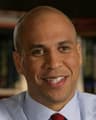 Cory Booker
Democrat · New Jersey