Bill · S. 904· Senate(119-S-904)
Livestock Disaster Assistance Improvement Act of 2025
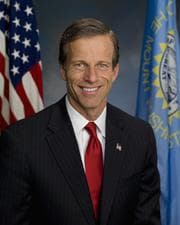
- Introduced
- 3/6/2025
- Last activity
- 3/6/2025 — Read twice and referred to the Committee on Agriculture, Nutrition, and Forestry. (text: CR S1607-1609)
- Sponsored by
- John Thune
- Cosponsors
- - 0 - 1
- Introduced
- In Committee
What this bill would do
The Livestock Disaster Assistance Improvement Act of 2025 aims to improve disaster assistance programs within the Department of Agriculture. It expands eligibility for emergency conservation and forest restoration programs to include producers on Federal, State, and local lands. The bill streamlines application processes during droughts by waiving public comment periods and allowing for the acceptance of specific reviews. It also modifies livestock forage disaster assistance and expands emergency assistance for livestock, honey bees, and farm-raised fish to include drought and transportation costs. Additionally, the act establishes an interagency working group to improve the accuracy of the United States Drought Monitor. Finally, it requires better alignment between the Farm Service Agency and the Forest Service regarding drought response.
Yes· 3 of 10
Would farmers be better off under this?+6
The bill expands eligibility for producers on federal and state lands and streamlines assistance for forage, livestock, and honey bees.
Would business owners be better off under this?+5
Agricultural producers and honey bee operators receive expanded eligibility and more comprehensive assistance coverage.
Does this make it easier to run a small business?+5
The bill provides expanded eligibility and streamlined application processes for agricultural producers and honey bee operators.
The opposite
No question was scored the opposite.
Who it would affect, and how
Potential Positive Impacts for People
-
Expanded Assistance Eligibility: Agricultural producers who hold permits on Federal land or lease land from State or local governments can now be eligible for payments under emergency conservation programs (Section 2, subsection a).
-
Long-term Infrastructure Improvements: Emergency measures can now include new permanent measures, such as permanent water wells and pipelines, or the replacement of existing ones (Section 2, subsection a and subsection b).
-
Faster Emergency Response: During drought emergencies, the 30-day public comment period required by the National Environmental Policy Act can be waived for applications on land administered by the Secretary of the Interior (Section 2, subsection a and subsection b).
-
Streamlined Reviews: The Secretary of the Interior can accept reviews for archeological, environmental, and Endangered Species Act purposes conducted by the Chief of the Natural Resources Conservation Service (Section 2, subsection a and subsection b).
-
Improved Forage Assistance: For livestock forage disaster assistance, producers may become eligible for assistance based on a shorter period of 4 consecutive weeks rather than 8 (Section 3).
-
Enhanced Honey Bee Support: The bill incorporates per-hive and per-colony rates of loss for honey bees and allows the Secretary to adjust mortality rates to exclude losses from colony collapse disorder (Section 4, subsection a).
-
More Comprehensive Disaster Coverage: Emergency assistance for livestock and honey bees can now specifically include costs related to water and feed shortages, including transportation costs, as well as drought and disease (Section 4, subsection a).
-
Improved Data Accuracy: The creation of an interagency working group aims to improve the availability of consistent, accurate, and reliable data for the United States Drought Monitor (Section 5, subsection a).
Potential Negative Impacts for People
- No Direct Payments to Governments: While producers on government land gain eligibility, the bill explicitly states that the Secretary is not authorized to make payments directly to a State or unit of local government (Section 2, subsection a and subsection b).
Groups and Interests Ranking
Every group the model scored this bill for, from -10 to +10. Hover a score for the reason it gave.
- Demographic And Interest Groups
- Good For Farmers+6Good For Business Owners+5Good For Rural Residents+3Good For Low Income Households+1
- Economy And Finance
- Improves Small Business Support+5Increases Job Creation+2
- Environment Energy And Infrastructure
- Improves Rural Development+4Improves Environmental Protections+2
- Governance And Ideology
- Improves Government Transparency+2
- Social Issues And Justice
- Improves Poverty Reduction+2
- 3/6/2025
- Read twice and referred to the Committee on Agriculture, Nutrition, and Forestry. (text: CR S1607-1609)
- 1 Cosponsor added.
- Introduced in Senate
 Ben Luján
Democrat · New Mexico