
A Democratic bill with 2 Republican cosponsors · See all 3 cosponsors
Last activity — Placed on Senate Legislative Calendar under General Orders. Calendar No. 55.
Cleared committee, waiting for its first floor vote
A committee approved it and it is on the calendar of the chamber it started in.
This is further than most bills get, and still no promise of a vote: the calendar is a queue, and the majority leadership decides what is called. A bill can sit here until the Congress ends.
Its path through Congress
- Introduced
- On Calendar
What this bill would do
This bill, known as the MEGOBARI Act, aims to support democracy, the rule of law, and Euro-Atlantic aspirations in Georgia. It seeks to address democratic backsliding and the increasing hostility of the current Georgian government toward civil society and Western partners. The legislation authorizes the President to impose sanctions on individuals involved in blocking Euro-Atlantic integration or undermining Georgia's sovereignty. It also mandates reports on Russian and Chinese influence within the country. Additionally, the bill outlines a strategy for bilateral relations and provides for potential increased military and academic cooperation. The Act includes a sunset provision that expires five years after enactment.
Yes· 3 of 5
- Scored +6
Does this strengthen ties with allied countries?
The bill seeks to strengthen Georgia's Euro-Atlantic integration and ties with the United States and Europe.
- Scored +5
Does this make what the government does easier for the public to see?
The bill emphasizes public-sector transparency and accountability as part of its democratic support goals.
- Scored +5
Does this protect the right to vote?
The bill calls for investigating election irregularities and upholding the democratic wishes of the Georgian people.
The opposite
- Scored -2
Does this make it easier to run a small business?
The bill's sanctions could potentially disrupt commercial activities and property interests in Georgia.
Who it would affect, and how
Potential Positive Impacts for People
-
Protection of Democratic Values: The policy supports the development of free and fair elections, freedom of association, an independent media, and an accountable judiciary (Section 4, paragraph 6).
-
Support for Civil Society: The bill aims to continue supporting the Georgian people and civil society organizations that reflect democratic aspirations (Section 4, paragraph 7).
-
Protection of Rights: It supports the right of the Georgian people to engage in peaceful protest and make independent choices regarding foreign policy without coercion (Section 4, paragraph 8).
-
Release of Political Prisoners: The policy calls on the Government of Georgia to release all persons detained or imprisoned on politically motivated grounds (Section 4, paragraph 10).
-
Security and Defense: The bill provides for the potential expansion of military co-operation, including security and defense equipment suited for territorial defense (Section 7, paragraph a, 2).
-
Educational and Cultural Exchange: The Secretary of State is encouraged to enhance people-to-people contacts and academic exchanges between the United States and Georgia (Section 7, paragraph a, 1).
-
Humanitarian Protections: Sanctions include exceptions to ensure that the provision of food, medicine, medical devices, or humanitarian assistance is not hindered (Section 6, paragraph i, 2, C).
Potential Negative Impacts for People
-
Sanctions on Officials and Families: The President is directed to determine if specific government officials, or even their immediate family members, should face sanctions like property blocking or visa ineligibility (Section 6, paragraph b, 1, C).
-
Impact on Sovereignty and Stability: The bill calls for a reevaluation of foreign and security assistance to the Government of Georgia (Section 4, paragraph 4).
-
Potential Financial Hardship via Sanctions: The President may block and prohibit all transactions in the property and interests of certain foreign persons (Section 6, paragraph d, 1).
-
Visa and Entry Restrictions: Sanctions can result in individuals being inadmissible to the United States or having their current visas revoked (Section 6, paragraph d, 2).
Groups and Interests Ranking
Every group the model scored this bill for, from -10 to +10. Tap or hover a score for the reason it gave.
- National Security And Foreign Policy
- Does this strengthen ties with allied countries? — The bill seeks to strengthen Georgia's Euro-Atlantic integration and ties with the United States and Europe.
- Governance And Ideology
- Does this make what the government does easier for the public to see? — The bill emphasizes public-sector transparency and accountability as part of its democratic support goals.
- Social Issues And Justice
- Does this protect the right to vote? — The bill calls for investigating election irregularities and upholding the democratic wishes of the Georgian people.
- Demographic And Interest Groups
- Would students be better off under this? — The bill promotes academic exchanges between the United States and Georgia.
- Education And Technology
- Does this make college cost less? — The bill encourages enhanced academic exchanges between the United States and Georgia.
- Economy And Finance
- Does this make it easier to run a small business? — The bill's sanctions could potentially disrupt commercial activities and property interests in Georgia.
- 4/28/2025
- Committee on Foreign Relations. Reported by Senator Risch without amendment. Without written report.
- Placed on Senate Legislative Calendar under General Orders. Calendar No. 55.
- 3/27/2025
- Committee on Foreign Relations. Ordered to be reported without amendment favorably.
- 3/24/2025
- 2 Cosponsors added.
- 3/5/2025
- Read twice and referred to the Committee on Foreign Relations.
- 1 Cosponsor added.
- Introduced in Senate
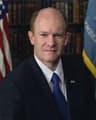 Christopher Coons
Democrat · Delaware
 James Risch
Republican · Idaho
 Pete Ricketts
Republican · Nebraska