Bill · S. 846· Senate(119-S-846)
Child Care Workforce Act
- Introduced
- 3/4/2025
- Last activity
- 3/19/2026 — Committee on Health, Education, Labor, and Pensions. Hearings held.
- Sponsored by
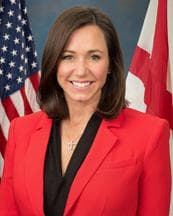
- Katie Britt
- Cosponsors
- - 0 - 4
- Introduced
- In Committee
What this bill would do
The Child Care Workforce Act aims to increase the supply of quality child care services by improving worker wages. It establishes a pilot program where the Secretary of Health and Human Services awards competitive grants to States, Indian Tribes, and Tribal organizations. These funds are intended to supplement the wages of eligible child care workers to help attract and retain staff. The program also focuses on improving worker well-being and the overall availability of affordable child care. Grantees must provide plans for how these supplements will be distributed and how they will measure the program's impact. A report of the evaluation results must be submitted to Congress two years after implementation.
Yes· 3 of 14
Does this make child care cost less?+6
The act explicitly aims to increase the availability of affordable child care services.
Would children be better off under this?+5
The bill aims to improve the quality and availability of child care services.
Would households on low incomes be better off under this?+5
Increased availability of affordable child care benefits low-income families.
The opposite
No question was scored the opposite.
Who it would affect, and how
Potential Positive Impacts for People
-
Improved Worker Compensation: The bill provides funding to supplement the wages of eligible child care workers, which is intended to help attract and retain them (Section 2; Section 4(a)).
-
Enhanced Worker Well-being: By increasing wages, the program aims to improve the well-being of eligible child care workers (Section 2; Section 4(c)(5)).
-
Increased Child Care Availability and Quality: The program seeks to improve the quality of child care services and increase the availability of affordable child care (Section 2; Section 6).
-
Targeted Support for High-Need Areas: Grant funds are intended to be prioritized for areas facing staffing challenges, underserved geographic areas, or shortages in services for specific groups like infants, toddlers, or children with disabilities (Section 4(c)(3)(B)).
Potential Negative Impacts for People
-
Financial Destabilization Risks: There is a potential for destabilization to occur once the grant funds are expended, requiring states or tribes to have a plan to address and minimize this effect (Section 4(c)(7)).
-
Tax and Benefit Implications: Wage supplements may have effects on an individual's taxes or their eligibility for public benefits (Section 5(b)(3)).
Groups and Interests Ranking
Every group the model scored this bill for, from -10 to +10. Hover a score for the reason it gave.
- Demographic And Interest Groups
- Good For Children+5Good For Low Income Households+5Good For Native Americans+4Good For People With Disabilities+4Good For Middle Class Households+3Good For Women+3Good For Young Adults+3Good For Business Owners+2
- Social Issues And Justice
- Improves Childcare Affordability+6Improves Disability Rights+3Improves Poverty Reduction+3
- Economy And Finance
- Increases Job Creation+3Improves Economic Growth+2
- Governance And Ideology
- Improves Government Transparency+2
- 3/19/2026
- Committee on Health, Education, Labor, and Pensions. Hearings held.
- 3/6/2025
- 1 Cosponsor added.
- 3/4/2025
- Read twice and referred to the Committee on Health, Education, Labor, and Pensions. (Sponsor introductory remarks on measure: CR S1499-1500)
- 4 Cosponsors added.
- Introduced in Senate
One bill Congress.gov lists as related to this one — companions in the other chamber, earlier versions, and bills this one absorbed or was folded into.
 Kirsten Gillibrand
Democrat · New York
 Amy Klobuchar
Democrat · Minnesota
 Angus King
Independent · Maine
 Timothy Kaine
Democrat · Virginia
 Jeanne Shaheen
Democrat · New Hampshire