Bill · S. 838· Senate(119-S-838)
ACRE Act of 2025
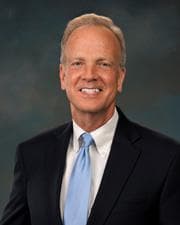
- Introduced
- 3/4/2025
- Last activity
- 3/4/2025 — Read twice and referred to the Committee on Finance.
- Sponsored by
- Jerry Moran
- Cosponsors
- - 6 - 2
- Introduced
- In Committee
What this bill would do
The ACRE Act of 2025 seeks to amend the Internal Revenue Code of 1986. It proposes to exclude interest received by qualified lenders from gross income on specific qualified real estate loans. These loans must be secured by rural or agricultural real estate, forestland, or certain single family residences. The bill defines qualified lenders, which include various banks, insurance companies, and certain federally chartered instrumentalities. It also excludes loans made to foreign adversary entities. Finally, the Act requires a report to Congress regarding the impact of these changes after five years.
Yes· 3 of 9
Would farmers be better off under this?+5
The bill provides tax-advantaged lending opportunities specifically for agricultural real estate.
Would people in rural areas be better off under this?+5
The bill is designed to increase credit access specifically for those in rural areas through agricultural and residential loan provisions.
Does this invest in rural communities?+5
The bill specifically incentivizes lending for rural and agricultural real estate and aquaculture.
The opposite
No question was scored the opposite.
Who it would affect, and how
Potential Positive Impacts for People
-
Tax Exclusion for Lenders: Gross income will not include interest received by a qualified lender on qualified real estate loans (Section 2(a)). This could impact the financial treatment of interest for institutions such as banks, savings associations, and insurance companies (Section 2(b)).
-
Support for Agricultural and Rural Property: The bill applies to loans secured by rural or agricultural real estate, forestland, or leasehold mortgages on such property (Section 2(c)(1)(A)). This includes property substantially used for the production of agricultural products (Section 2(c)(3)(A)).
-
Benefits for Rural Homeowners: The exclusion applies to certain single family residences that serve as a principal residence and are located in a rural area (Section 2(c)(3)(B)). This applies to loans used to purchase or improve these residences, provided the principal does not exceed $750,000 (Section 2(c)(1)(C)).
-
Support for Fishing and Aquaculture: The bill includes provisions for real property used in the trade or business of fishing or seafood processing, as well as aquaculture facilities (Section 2(c)(3)(C-D)).
Potential Negative Impacts for People
-
Restrictions on Refinancing: Loans used to refinance a loan that was made on or before the date of the Act's enactment are not treated as new qualified loans (Section 2(c)(2)).
-
Exclusions Based on Entity Type: Loans made to a "foreign adversary entity" are not considered qualified real estate loans (Section 2(c)(1)(B)). This includes entities from the People's Republic of China, Cuba, Iran, North Korea, Russia, and Venezuela (Section 2(c)(5)).
-
Loan Principal Limits: For single family residences, the tax exclusion is subject to a principal limit of $750,000 when added to other such loans for the same residence (Section 2(c)(1)(C)(ii)).
Groups and Interests Ranking
Every group the model scored this bill for, from -10 to +10. Hover a score for the reason it gave.
- Demographic And Interest Groups
- Good For Farmers+5Good For Rural Residents+5Good For Middle Class Households+3Good For Low Income Households+2
- Economy And Finance
- Improves Small Business Support+4Improves Economic Growth+3
- Environment Energy And Infrastructure
- Improves Rural Development+5Improves Environmental Protections+2
- Social Issues And Justice
- Improves Affordable Housing+3
- 8/1/2025
- 1 Cosponsor added.
- 6/26/2025
- 1 Cosponsor added.
- 5/6/2025
- 1 Cosponsor added.
- 3/24/2025
- 1 Cosponsor added.
- 3/5/2025
- 1 Cosponsor added.
- 3/4/2025
- Read twice and referred to the Committee on Finance.
- 4 Cosponsors added.
- Introduced in Senate
One bill Congress.gov lists as related to this one — companions in the other chamber, earlier versions, and bills this one absorbed or was folded into.
 Christopher Coons
Democrat · Delaware
 Kevin Cramer
Republican · North Dakota
 Ruben Gallego
Democrat · Arizona
 Angus King
Independent · Maine
 Roger Marshall
Republican · Kansas
 David McCormick
Republican · Pennsylvania
 Mike Rounds
Republican · South Dakota
 Pete Ricketts
Republican · Nebraska
 Tommy Tuberville
Republican · Alabama