
Rick Scott (R-FL)
Frank Connor and Trooper Werner Foerster Justice Act
A Republican bill with 1 Republican cosponsor · See the cosponsor
Last activity — Read twice and referred to the Committee on Foreign Relations.
In committee
Introduced and handed to a committee in the chamber it started in.
The committee holds it, and most bills are never heard from again. A hearing or a committee vote would be news; silence is the usual outcome, and it kills the bill without anyone voting against it.
Its path through Congress
- Introduced
- In Committee
What this bill would do
This bill, known as the "Frank Connor and Trooper Werner Foerster Justice Act," calls for the immediate extradition or return of specific fugitives to the United States. It specifically targets convicted felons Joanne Chesimard and William ``Guillermo'' Morales, along with others receiving safe haven in Cuba to avoid prosecution or confinement. The legislation directs the Secretary of State and the Attorney General to use diplomatic and policy tools to secure these returns. It also requires the Secretary of State to provide annual reports regarding the status of these fugitives and the Cuban regime's compliance with extradition treaties. Finally, it places a prohibition on certain funding for programs in Cuba until specific compliance conditions are met.
Yes
- Scored +5
Does this make what the government does easier for the public to see?
The bill requires the Secretary of State to submit annual reports to Congress regarding fugitives in Cuba.
- Scored +3
Does this change how police departments operate?
The bill seeks to bring fugitives to justice for crimes committed against law enforcement officers.
The opposite
- Scored -2
Does this strengthen ties with allied countries?
The bill uses diplomatic pressure and funding prohibitions to demand compliance from the Cuban regime.
Who it would affect, and how
Potential Positive Impacts for People
- Justice for Criminal Offenses: The bill seeks the return of individuals such as Joanne Chesimard, who was convicted of first-degree murder, and William ``Guillermo'' Morales, a suspected bomb-maker, to face justice in the United States (Section 2).
- Accountability for Fugitives: It aims to bring back various fugitives accused of crimes including hijacking, kidnapping, drug trafficking, and murder (Section 2).
- Diplomatic Pressure for Extradition: The bill directs the Secretary of State and the Attorney General to leverage all appropriate tools to ensure fugitives are returned to face justice (Section 3).
- Transparency and Oversight: The Secretary of State is required to submit annual reports to Congress identifying steps taken to secure returns and estimating the number of fugitives residing in Cuba (Section 4).
Potential Negative Impacts for People
- Restrictions on Funding: Amounts deposited into the International Narcotics Control and Law Enforcement account may not be used for programs or initiatives in Cuba until specific conditions regarding extradition and economic activity are met (Section 5).
Groups and Interests Ranking
Every group the model scored this bill for, from -10 to +10. Tap or hover a score for the reason it gave.
- Governance And Ideology
- Does this make what the government does easier for the public to see? — The bill requires the Secretary of State to submit annual reports to Congress regarding fugitives in Cuba.
- Social Issues And Justice
- Does this change how police departments operate? — The bill seeks to bring fugitives to justice for crimes committed against law enforcement officers.
- National Security And Foreign Policy
- Does this strengthen ties with allied countries? — The bill uses diplomatic pressure and funding prohibitions to demand compliance from the Cuban regime.
- 3/4/2025
- Read twice and referred to the Committee on Foreign Relations.
- 1 Cosponsor added.
- Introduced in Senate
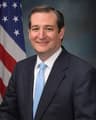 Ted Cruz
Republican · Texas