Bill · S. 647· Senate(119-S-647)
Regional Leadership in Wildland Fire Research Act of 2025
- Introduced
- 2/20/2025
- Last activity
- 2/20/2025 — Read twice and referred to the Committee on Commerce, Science, and Transportation.
- Sponsored by
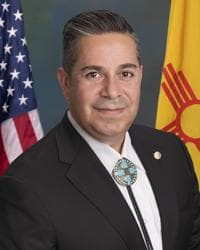
- Ben Luján
- Cosponsors
- - 1 - 2
- Introduced
- In Committee
What this bill would do
The Regional Leadership in Wildland Fire Research Act of 2025 directs the Secretary of Commerce to establish regional wildland fire research centers. These centers will be distributed across several specific geographic regions, including Alaska, California, and the Southeast. The bill mandates a competitive process to select at least seven institutions of higher education or land-grant colleges to lead these efforts. A National Center Coordination Board and several Regional Advisory Boards will be created to oversee and guide research goals. The primary objective is to improve the understanding of wildland fire behavior, impacts, and mitigation strategies. This legislation includes specific funding authorizations for both the centers and the coordination board through the year 2030.
Yes· 3 of 9
Does this put more money into scientific research?+8
The bill authorizes significant funding for the establishment and administration of regional wildland fire research centers.
Does this better protect air, water and wildlife?+6
The bill funds research into land treatments to reduce fire severity and protects watersheds from post-fire risks.
Does this invest in rural communities?+3
The establishment of regional centers provides research and workforce development resources to various geographic regions including rural ones.
The opposite
No question was scored the opposite.
Who it would affect, and how
Potential Positive Impacts for People
-
Improved Wildfire Understanding and Prediction: The creation of regional centers aims to develop models to predict fire potential, spread, behavior, and smoke, which can help people understand risks (Section 3(b)(3)(C)).
-
Increased Safety for Firefighters and Communities: Research is intended to develop technologies to improve the safety of wildland fire managers and firefighters, as well as to reduce the impact of smoke on communities (Section 3(b)(3)(C)(E)).
-
Environmental and Landscape Protection: The bill seeks to improve understanding of post-fire risks, such as flash flooding and watershed impacts, and to develop tools for land treatments to reduce fire severity (Section 3(b)(3)(D-F)).
-
Workforce Development: The act includes the development of career pathway training programs related to wildland fire research (Section 3(b)(3)(H)).
-
Support for Diverse Institutions: The selection process prioritizes institutions that are minority-serving or have existing partnerships and programs in wildland fire research (Section 3(b)(2)(A)).
Potential Negative Impacts for People
- No specific negative impacts or burdens are explicitly detailed in the provided text.
Groups and Interests Ranking
Every group the model scored this bill for, from -10 to +10. Hover a score for the reason it gave.
- Environment Energy And Infrastructure
- Improves Environmental Protections+6Improves Rural Development+3
- Education And Technology
- Increases Scientific Research Funding+8
- Demographic And Interest Groups
- Good For African Americans+2Good For Hispanic Americans+2Good For Union Workers+2Good For Low Income Households+1
- Economy And Finance
- Increases Job Creation+3
- Social Issues And Justice
- Improves Poverty Reduction+1
- 2/20/2025
- Read twice and referred to the Committee on Commerce, Science, and Transportation.
- 3 Cosponsors added.
- Introduced in Senate
 Alex Padilla
Democrat · California
 Dan Sullivan
Republican · Alaska
 Tim Sheehy
Republican · Montana