Bill · S. 636· Senate(119-S-636)
Public Safety Employer-Employee Cooperation Act
- Introduced
- 2/19/2025
- Last activity
- 2/19/2025 — Read twice and referred to the Committee on Health, Education, Labor, and Pensions.
- Sponsored by
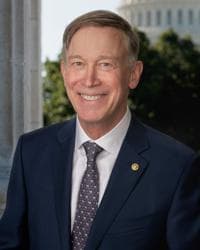
- John Hickenlooper
- Cosponsors
- - 2 - 0
- Introduced
- In Committee
What this bill would do
The Public Safety Employer-Employee Cooperation Act aims to provide collective bargaining rights for public safety officers employed by States or their political subdivisions. It establishes the Federal Labor Relations Authority as the body responsible for determining if a State provides sufficient rights and responsibilities to its officers. If a State does not meet these standards, the Authority will issue regulations and procedures to establish minimum standards for collective bargaining. The bill covers various roles, including law enforcement, firefighters, and emergency medical services employees. It also establishes rules for union recognition, bargaining over working conditions, and interest arbitration. Finally, the Act prohibits certain organized job actions that would disrupt emergency services.
Yes
Would union members be better off under this?+8
The bill significantly enhances the collective bargaining rights of public safety workers.
Does this strengthen the rights of workers to organise?+7
The bill establishes essential collective bargaining rights and union recognition for public safety officers.
Does this give the federal government more power?+5
The bill expands federal oversight of state-level public safety employment by empowering the Federal Labor Relations Authority.
The opposite
Does this leave more decisions to the states?-3
The bill potentially preempts state laws if they are found not to provide sufficient collective bargaining rights.
Would business owners be better off under this?-2
The bill imposes new regulatory requirements on public safety employers.
Who it would affect, and how
Potential Positive Impacts for People
-
Collective Bargaining Rights: Public safety officers gain the right to form and join labor organizations and have those organizations recognized as exclusive bargaining representatives (Section 4(b)(1)-(2)).
-
Improved Working Conditions: Officers have the right to bargain regarding hours, wages, and the terms and conditions of their employment (Section 4(b)(3)).
-
Conflict Resolution: The bill provides a right to binding interest arbitration to help resolve impasses during negotiations (Section 4(b)(4)).
-
Enforcement of Rights: Employees have the right to enforce their rights and written contracts through a State administrative agency or a court of competent jurisdiction (Section 4(b)(5)).
-
National Security and Stability: The policy states that cooperation between employers and employees is essential for responding to terrorist attacks, natural disasters, and mass casualty incidents (Section 2(2)).
Potential Negative Impacts for People
-
Prohibition of Job Actions: Public safety employers, officers, or labor organizations are prohibited from engaging in lockouts, sickouts, work slowdowns, or strikes that measurably disrupt emergency services (Section 6(a)).
-
Federal Oversight of State Laws: If the Federal Labor Relations Authority determines a State does not provide adequate rights, the State becomes subject to federal regulations and procedures (Section 4(d)(1)).
-
Limited Enforcement Power: The Authority's power to enforce provisions with respect to State employees is exclusive, unless a State's sovereign immunity is waived (Section 8(a)(4)).
Groups and Interests Ranking
Every group the model scored this bill for, from -10 to +10. Hover a score for the reason it gave.
- Economy And Finance
- Improves Union Protections+7
- Demographic And Interest Groups
- Good For Union Workers+8Good For Business Owners-2
- Governance And Ideology
- Increases Federal Power+5Increase States Rights-3
- 5/12/2026
- 1 Cosponsor added.
- 2/19/2025
- Read twice and referred to the Committee on Health, Education, Labor, and Pensions.
- 1 Cosponsor added.
- Introduced in Senate
 Maggie Hassan
Democrat · New Hampshire
 Elissa Slotkin
Democrat · Michigan